
Stainless Steel Sheet and Plate
Source stainless sheet, plate and cut blanks by grade, thickness, surface, flatness, inspection plan and finished dimensions.
Sheet versus plate is not decided reliably by a universal thickness number. Commercial usage changes by market, mill and standard, so a workable purchase description names the product standard, delivery condition and exact dimensions. Cold-rolled sheet is usually selected where tighter gauge control, a smoother starting surface or decorative finishing matters. Hot-rolled plate is normally the better starting form for heavier fabrication, machining allowance and many pressure-equipment components. The quotation should therefore identify the required form instead of asking only for “stainless steel flat material.”
Dimensions need more than thickness, width and length when the blank must fit a downstream operation. Identify thickness tolerance, width and length tolerance, flatness basis, diagonal difference, local waviness and the critical side or critical face where applicable. Laser-cut panels may need a different flatness discussion from heavy plate that will be machined. Sheared blanks need agreed edge, burr and squareness criteria; waterjet or laser blanks may need kerf, heat-affected-edge or machining-allowance instructions. Tighter values should be attached to the drawing or RFQ rather than assumed from the word “precision.”
Surface language must connect a finish designation to an acceptance method. 2B and BA are cold-rolled starting finishes, while No. 1 is associated with hot-rolled, heat-treated and descaled material. No. 4, hairline and mirror surfaces add mechanical finishing variables such as abrasive sequence, grain direction, gloss, viewing distance and acceptable shade. Name one or both critical faces, agree a reference sample for appearance-sensitive work, and specify whether welding or forming will alter the visible face. A finish label by itself does not guarantee identical tone between coils, plates or production lots.
Protective film is also a process input, not a generic packing accessory. Standard PVC or PE film can protect handling surfaces, while laser film must be compatible with the cutting equipment and power settings. State film type, color if relevant, peel direction, adhesive expectations and removal point. Film left on too long, exposed to heat or applied over contamination can leave residue or conceal defects. For cut-to-size orders, confirm whether each blank remains filmed, which face is protected, and how pieces are separated to prevent edge damage and metal-to-metal rubbing.
Send the inspection document, heat traceability, dimensional report and any PMI, ultrasonic or corrosion check with the RFQ. We quote those extras with the packing method: flat support for thin sheet, clean separators for polished faces, and lifting points for heavy plate.
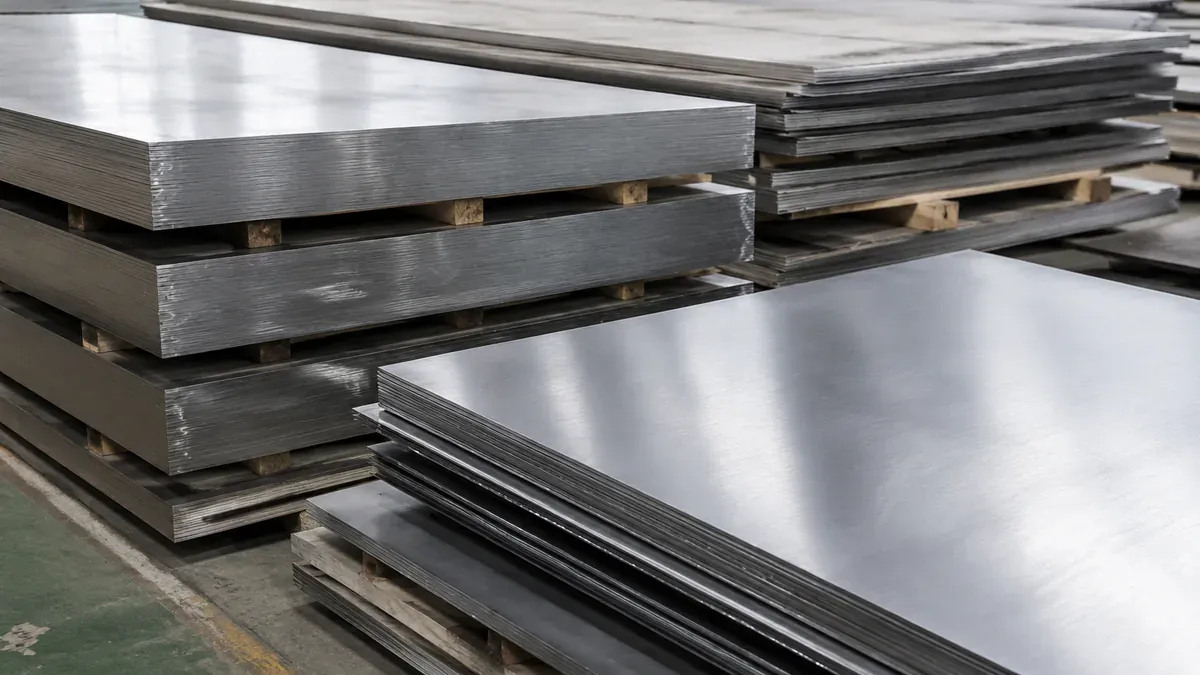
What to send for a quotation
- Is the order sheet, plate or a processed blank under the governing product standard?
- Which thickness, flatness and dimensional tolerances control downstream fabrication?
- Does the exposed surface require a defined finish, sample or protective film?
- Which inspection documents and supplementary tests must be included in the quotation?
Product form matrix
Choose the product form first. We quote the matching purchase standard and dimensional description for that form.
| Product form | Reference standards | How to state dimensions | Common uses |
|---|---|---|---|
| Cold rolled sheet | ASTM A240/A240M; EN 10088-2 | Thickness by width by length, with finish, flatness and edge condition. | fabricated equipment, panels, enclosures |
| Hot rolled plate | ASTM A240/A240M; EN 10088-2 | Plate thickness by width by length, including cut tolerance and delivery condition. | process equipment, pressure-retaining fabrication, structural components |
How to choose
- Choose grade from the service environment and fabrication route, not from appearance alone.
- Distinguish cold rolled sheet from hot rolled plate before applying dimensional tolerances.
- Define the viewing surface, finish comparison basis and protective film requirement.
- State whether blanks need shearing, laser cutting, waterjet cutting or machining allowance.
Dimensions and tolerances
Sheet and plate are ordered by thickness, width and length; flatness, diagonal, edge, surface and cut tolerances must be stated separately when the default standard is insufficient.
Send the ordered sizes and any tighter project tolerances. We quote the matching sheet & plate route against the governing dimensional system.
Processing and finishing
- Match the cutting route to thickness, edge quality, heat input and the next fabrication step; cut-to-size blanks still need an agreed dimensional and squareness tolerance.
- Define 2B, BA, No. 1, No. 4, hairline or mirror appearance together with the critical face, grain direction, comparison sample and acceptable surface variation.
- Select standard PVC, PE or laser film for the actual cutting and forming process, and confirm whether film must remain intact through delivery or be removed before packing.
2BBANo.1No.4HairlineMirror / 8KStainless Steel Cut-to-Length and LevelingStainless Steel ShearingStainless Steel Laser CuttingStainless Steel Waterjet CuttingStainless Steel Bending and FormingStainless Steel Polishing and Surface FinishingCustom Packaging and Export Loading
Inspection and documents
- Verify thickness, width, length, flatness, surface and ordered cut dimensions.
- Match heat traceability and inspection document type to the purchase specification.
- Send supplementary corrosion, ultrasonic or PMI requirements with the RFQ when they apply.
Packing and handling risks
RISK 01
Exposed finishes can be scratched by metal-to-metal contact or unsuitable protective film.
RISK 02
Thin sheet edges and large panels can deform without suitable support and handling controls.
RISK 03
Heavy plate packages require weight and lifting-point confirmation for the transport route.
Detailed stainless steel products
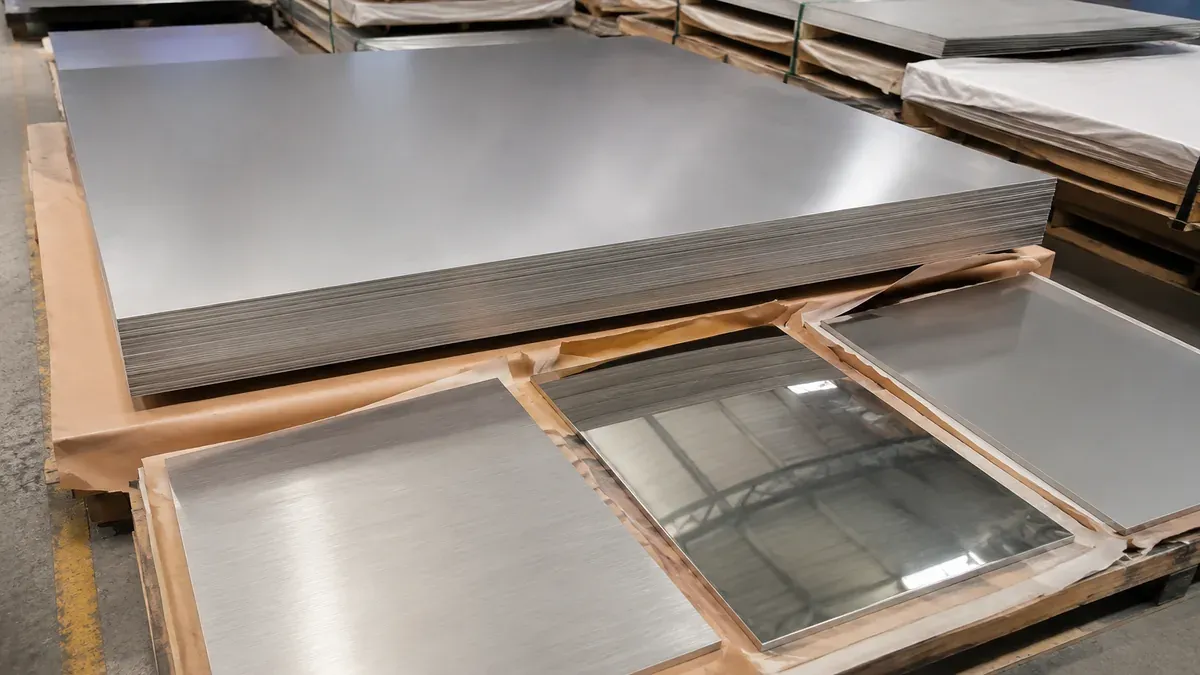
304 Stainless Steel Sheet
304/304L ASTM A240 sheet in 2B, BA, No.4 and mirror. Common inquiry range 0.3–6.0 mm, 1000/1219/1500 mm widths, cut to size with quoted documents.
View details →
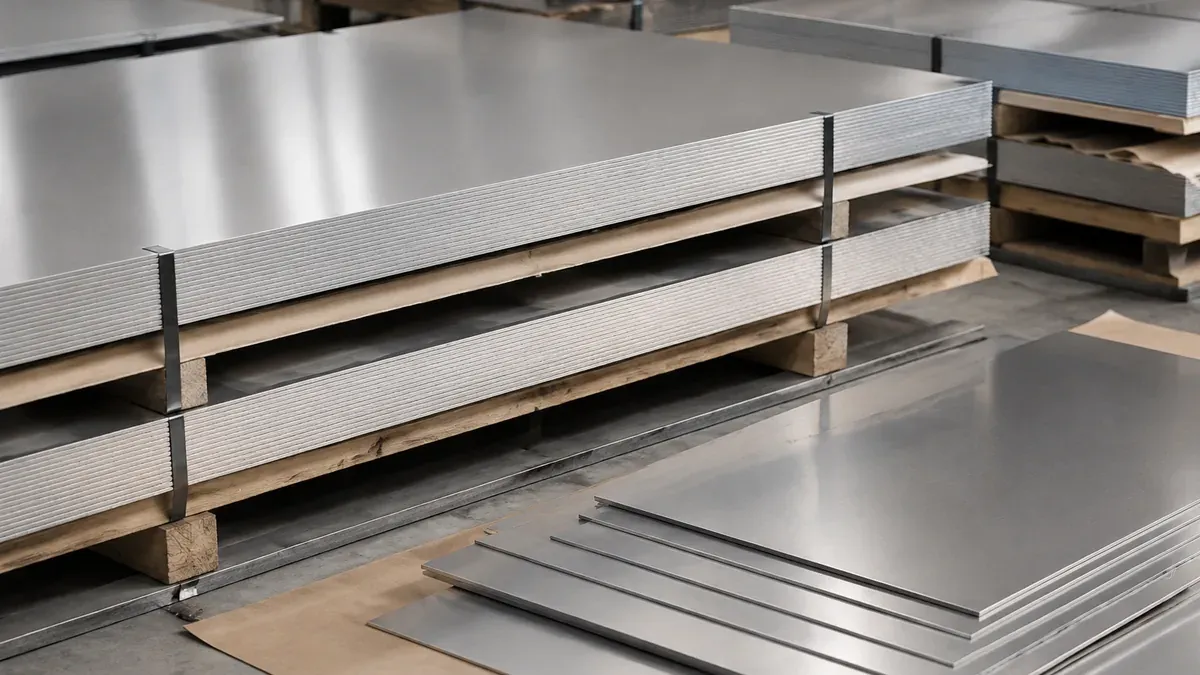
316L Stainless Steel Sheet
316/316L stainless sheet for chloride and chemical service in 2B, BA and brushed finishes. Common inquiry range 0.3–6.0 mm, 1000/1219/1500 mm, cut to size.
View details →
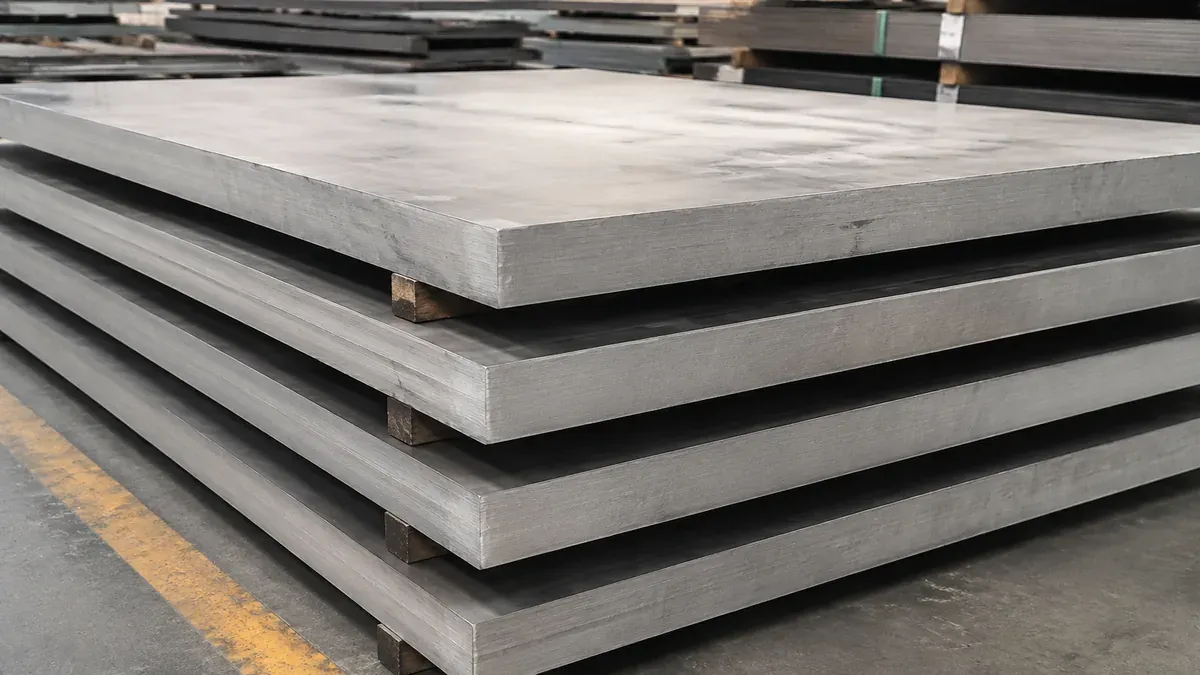
2205 Duplex Stainless Steel Plate
2205 duplex stainless steel plate to ASTM A240 for chloride, chemical and structural service, supplied solution annealed with cutting, testing and traceability options.
View details →
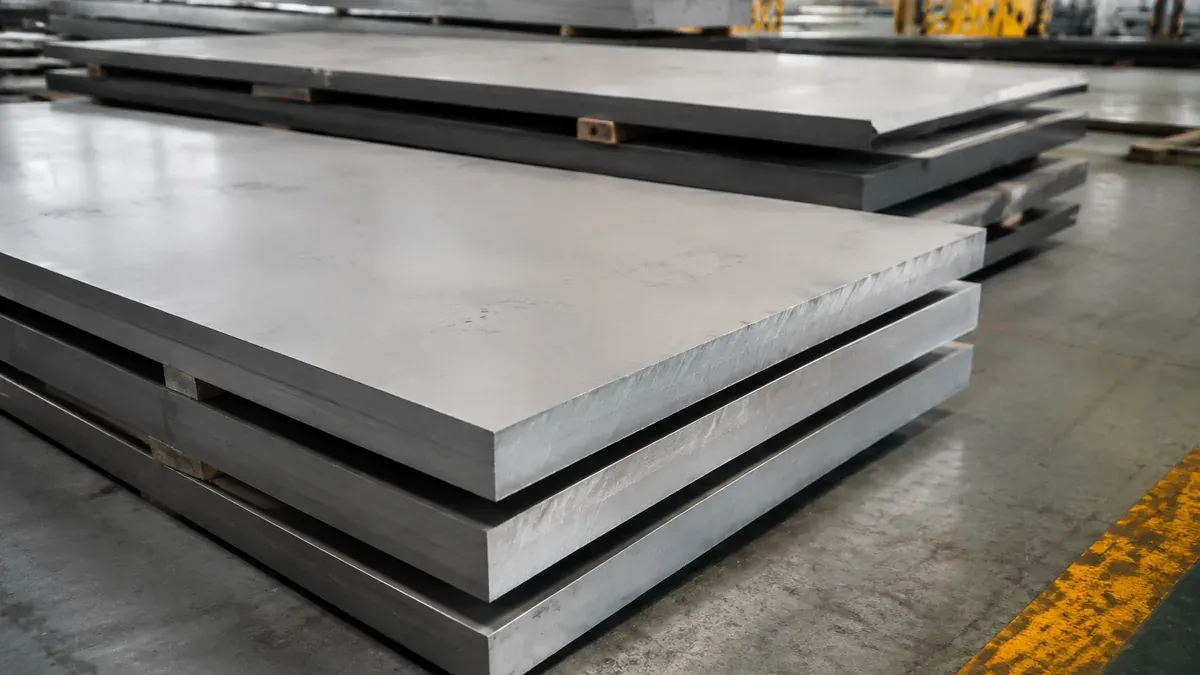
904L Stainless Steel Plate
904L high-alloy austenitic stainless steel plate for selected sulfuric acid and aggressive process duties, supplied to ASTM A240 with cut parts and ordered testing.
View details →
Related grades, standards and applications
Published standards
Application guides
Frequently asked questions
How should a buyer distinguish stainless sheet from plate in an RFQ?
Name the governing product standard, thickness, delivery condition and dimensional standard because commercial terminology alone can vary by market.
Which surface details are needed for decorative stainless sheet?
State the finish designation, viewing side, acceptable comparison sample, grain direction, protective film and final fabrication process.
When should flatness be specified separately from thickness tolerance?
Specify flatness, diagonal and local waviness when laser cutting, cladding or visible panels require tighter control than the product standard.
Can plate testing be added after a quotation is accepted?
Supplementary examination affects the material route and acceptance plan. Send required testing and reporting with the RFQ so we can quote them in the same order file.
Category RFQ checklist
Send the following details by size and line item. We quote the matching route, inspection plan, packing method and delivery window.
- 01Grade and governing product standard
- 02Sheet, plate or cut-blank form
- 03Thickness, width, length and quantity
- 04Dimensional and flatness tolerances
- 05Surface finish, viewing side and protective film
- 06Processing and edge condition
- 07Inspection documents and supplementary tests
- 08Packing unit, destination and delivery term
Need a Sheet & Plate quotation?
Send product, grade and quantity. We quote the confirmed supply route.