
316L Stainless Steel Sheet
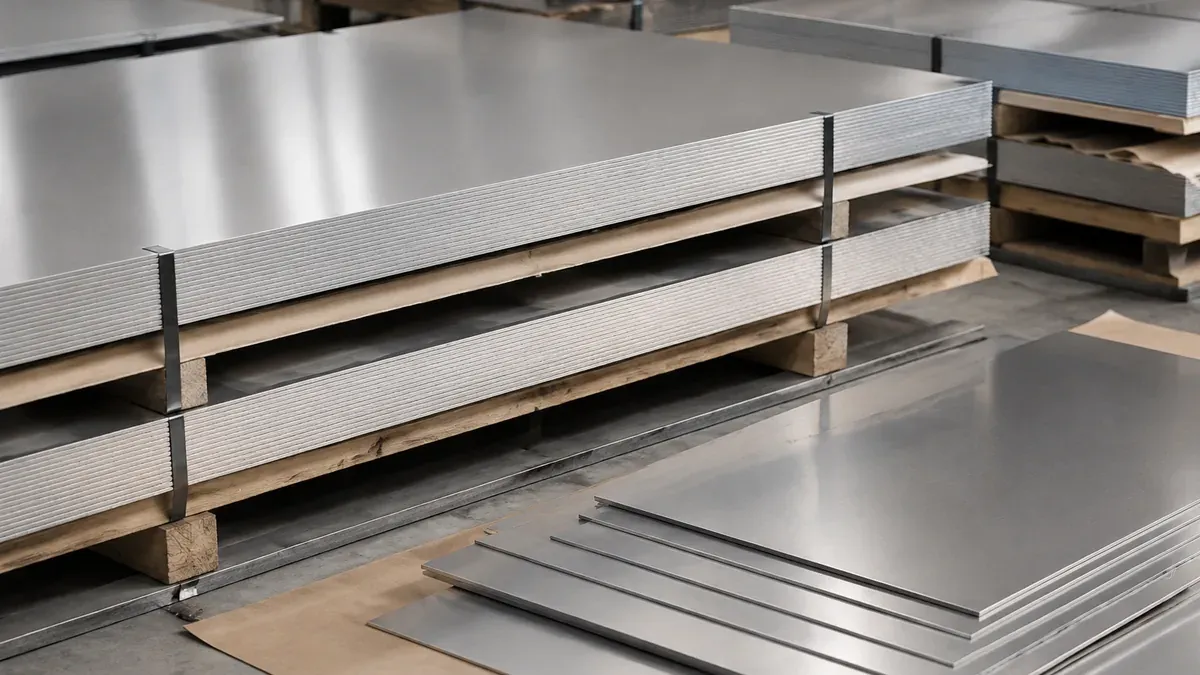
316L stainless steel sheet is quoted as ASTM A240 molybdenum-bearing flat product for chloride, cleaning or chemical service. Common inquiry range: 0.3–6.0 mm, 1000/1219/1500 mm widths, 2B / BA / brushed. Send 316, 316L or dual certification with the RFQ.
Supply routes
- In-house production or processing
- Qualified partner-mill sourcing
- Stock coordination
Where this product solves the job
- Fabricated equipment where the materials review has selected 316L for greater pitting resistance than common 304 grades.
- Hygienic or pharmaceutical sheet fabrication when surface condition, weld treatment and cleaning acceptance are defined separately.
- Coastal architectural parts where grade, fabrication contamination control and maintenance expectations are project-approved.
When we recommend another route
- Seawater, high-temperature chloride or concentrated chemical duties where 316L has not been confirmed by corrosion data or the project engineer.
- Cosmetic sheet orders that name only 2B or No.4 but omit critical face, visual sample, grain direction and film requirements.
- Automatic replacement of 316, duplex or nickel alloy without checking strength, product standard, welding and code implications.
Standards we quote against
Send the product standard, edition and any dimensional or finish standard with the RFQ. We quote the ordered combination, not a generic grade name.
Ordered product standards: ASTM A240/A240M · EN 10088
What to send so we can quote the right route
- Specify 316L, 316 or allowed dual certification and ensure the ordered inspection document demonstrates the exact designation.
- State product standard and edition, sheet dimensions, thickness tolerance, flatness, diagonal and any cut-part drawing requirements.
- Define 2B, BA, brushed or polished surface by incoming condition, critical face, grain, sample, Ra or visual acceptance as applicable.
- Describe fabrication sequence, weld cleaning or passivation expectations and whether protective film must survive laser cutting or forming.
- Name PMI, traceability, supplementary testing, document type, marking transfer and export packing only where the project requires them.
Specifications
| Grade | 316L / 316; dual certification only when the ordered material and MTC meet both designations |
|---|---|
| Standard | ASTM A240/A240M, EN 10088-2 |
| Thickness | Common inquiry range: 0.3–6.0 mm (plate 6–80 mm on request). |
| Width | Common inquiry range: 1000 / 1219 / 1500 mm, or slit to size. |
| Length | Common inquiry range: 2000 / 2438 / 3000 mm, or cut to size. |
| Finish | 2B, BA, No.4, hairline |
| Protection | PVC / laser film on polished finishes |
| Commercial basis | Quantity, MOQ, production route and delivery schedule are quoted for the ordered specification. |
Dimensions and Tolerances
| Thickness | Common inquiry range: 0.3–6.0 mm (plate 6–80 mm on request). |
|---|---|
| Width | Common inquiry range: 1000 / 1219 / 1500 mm, or slit to size. |
| Length | Common inquiry range: 2000 / 2438 / 3000 mm, or cut to size. |
| Order basis | Governing product and dimensional standard, delivery condition and any drawing-specific limits. |
| Special tolerances | Send special tolerances in the RFQ; we quote the accepted production route. |
Published ranges are technical references, not a live-stock or production-capability promise. We confirm the ordered size range, MOQ and delivery schedule in the quotation.
Edge or end condition
- Edge, end or facing condition as ordered from the product form, standard and fabrication need.
Testing and inspection
- Tests required by the purchased product standard.
- PMI, NDE, corrosion, roughness or other supplementary inspection quoted when the RFQ names method, lot scope and acceptance.
Order documents
- Heat identity with EN 10204 3.1, or the inspection document named in the RFQ, against mill, stock or partner-mill route.
- Supplementary reports linked to the ordered test plan.
Export packaging
- Sheets interleaved and film-wrapped where the finish needs it, strapped on export skids.
- Moisture protection selected for the sea route; packing method stated in the quotation.
Quote 316L where 304 is not enough
The 2–3% molybdenum in 316L makes the difference anywhere chlorides are present: coastal buildings, swimming pool surrounds, food plants washed with chlorinated cleaners, and chemical process equipment. If your project has ever seen tea staining on 304, 316L is the standard fix — see the full 316L datasheet for composition and equivalents.
Dual certification we quote
Send 316, 316L or dual certification with the RFQ. We quote only the designation supported by the ordered product, condition and MTC.
Documents we quote
Send the EN 10204 inspection document and any PMI method, sampling and acceptance with the RFQ. We include them in the quotation and inspection plan.
Common ordering mistakes
- Assuming a 316L grade label guarantees suitability for any chloride environment without temperature, concentration, deposits and cleaning data.
- Accepting visual similarity as grade verification even though 304 and 316L cannot be reliably separated by appearance.
- Requesting a polished hygienic result without coordinating base sheet, weld treatment, roughness measurement and acceptance locations.
- Omitting the permitted designation on a dual-certified inquiry and then discovering the certificate does not meet the project wording.
Handling and transport risks
- Mixing 316L sheets or remnants with 304 material can defeat grade control unless heat identity and segregation are maintained.
- Iron contamination from carbon-steel tables, grinding dust or lifting hardware can produce rust staining after fabrication.
- Polished faces can show pressure marks, abrasion and moisture staining when separators, film and pack supports are inadequate.
- Large thin sheets can oil-can or bend in handling, so skid spacing and lifting method must match the ordered dimensions.
Technical content updated: 2026-07-31
Published by Tsingshan (Shandong) Iron & Steel Co., Ltd..Sources, update policy and technical limitations.
Typical Applications
Related technical resources
Published standards
Applicable standards
ASTM A240/A240M · EN 10088
What to Include in Your RFQ
Send the known values first. We use them to quote the ordered option, inspection plan and delivery route.
- Grade and governing standard
- 316L, 316; ASTM A240/A240M, EN 10088. State the exact ordered combination.
- Dimensions and tolerances
- Provide thickness, width, length and identify which order basis, special tolerances requirements govern acceptance.
- Finish, processing and edge or end condition
- 2B, BA, No.4, Hairline; Stainless Steel Cut-to-Length and Leveling, Stainless Steel Laser Cutting, Stainless Steel Polishing and Surface Finishing; Edge, end or facing condition as ordered from the product form, standard and fabrication need..
- Inspection, documents and packing
- Testing: Tests required by the purchased product standard.; PMI, NDE, corrosion, roughness or other supplementary inspection quoted when the RFQ names method, lot scope and acceptance. Documents: Heat identity with EN 10204 3.1, or the inspection document named in the RFQ, against mill, stock or partner-mill route.; Supplementary reports linked to the ordered test plan. Packing: Sheets interleaved and film-wrapped where the finish needs it, strapped on export skids.; Moisture protection selected for the sea route; packing method stated in the quotation.
- Quantity, destination and requested delivery window
- Send quantity per size, unit, destination city or port, trade term and requested delivery window so we can quote the supply and freight route.
Product RFQ Example
RFQ example: ASTM A240 Type 316L sheet, 1.5 x 1500 x 3000 mm, 2B critical surface, project flatness and diagonal limits attached, 80 sheets, PMI before processing plus the ordered inspection document, heat identification retained, moisture-protected export skid to the named destination; quote the confirmed supply and processing route.
Frequently Asked Questions
Does 316L sheet eliminate chloride pitting risk?
No. Its molybdenum improves pitting resistance relative to common 304 grades, but suitability still depends on chloride level, temperature, deposits, cleaning chemistry, stress and design. The project materials authority must approve the selection.
How can a buyer distinguish 316L sheet from 304 during an order?
Use ordered heat traceability and the specified inspection document, with PMI at defined stages when the project requires it. Visual appearance is not a grade-identification method.
When is 316 and 316L dual certification acceptable?
Only when the purchased material, condition, chemistry, mechanical requirements and certificate meet both designations under the governing standard and the project permits that wording.
What should a sanitary fabrication RFQ say about the sheet surface?
State base finish, critical side, forming and welding sequence, required weld restoration, roughness measurement locations, cleaning or passivation scope and visual or sample acceptance.
Can polished 316L sheet be supplied with protective film?
Film can be requested, but adhesive type, laser compatibility, forming conditions, storage duration and removal conditions need confirmation with the finish and packing route.
Quote request
Get a Stainless Steel Quote
Send the product, grade and quantity you already have. We will complete the specification and quote the supply route.