
Stainless Steel Coil, Strip and Foil
Specify stainless coil and precision strip by grade, gauge, width, temper, edge, camber, coil geometry and downstream processing route.
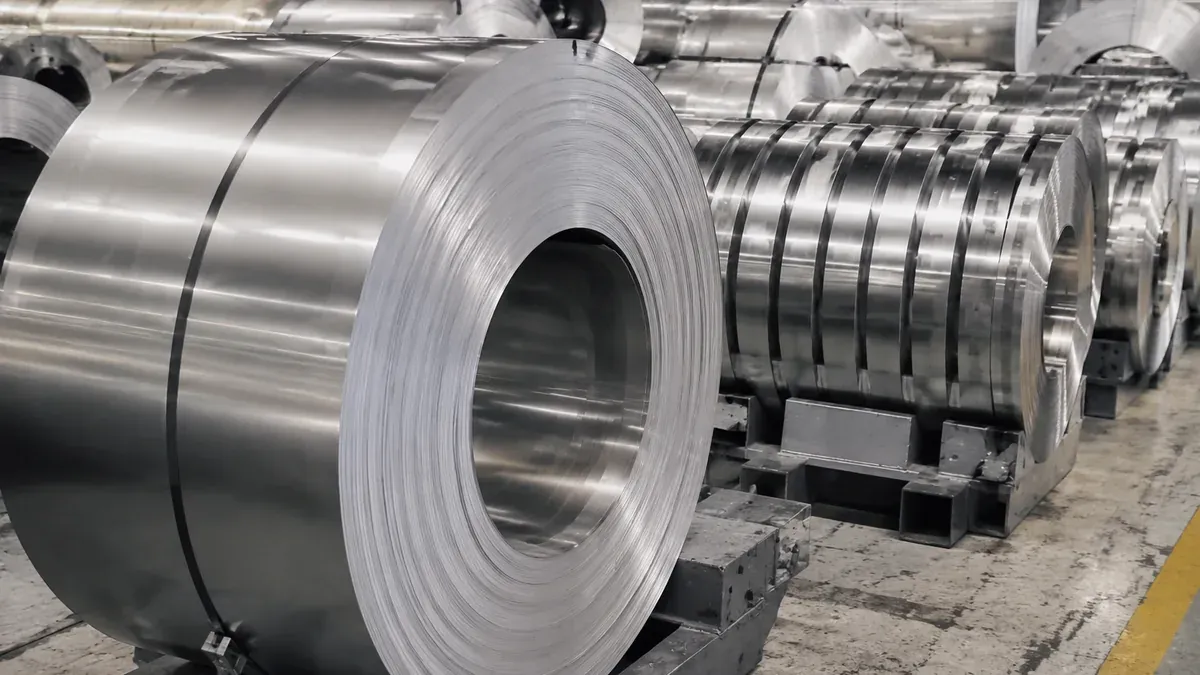
Coil and strip purchasing begins with the buyer’s processing line because coil geometry, edge and temper can be as important as grade and gauge. A master coil intended for a service center is not described in the same way as slit coils feeding a roll former, precision strip for stamping or foil for a thin-gauge component. Name the form and downstream operation first. That decision sets the practical discussion around tolerances, winding, joints, handling and the processing route used to reach the ordered width.
Thickness and width are only part of a coil description. Confirm inside diameter, permitted outside diameter, target or maximum unit weight, eye orientation and winding direction against the uncoiler, lifting equipment and storage method. A coil that meets gauge and width can still be unusable if its mass exceeds the line limit or its eye orientation conflicts with handling. Where changeovers or welds matter, state permissible coil-weight variation and restrictions on internal joints before the quotation route is selected.
Slitting requirements should connect edge type to the final operation. State mill edge or slit edge, maximum burr height, burr direction, corner condition and any deburring request. Camber, flatness and telescoping need measurement lengths and acceptance values rather than general words such as “straight” or “tight.” For spring or precision strip, add temper or tensile range, hardness basis, grain direction and forming expectations. Deep drawing, stamping and tube making place different demands on ductility, surface, width control and edge integrity, so intended use belongs in the RFQ.
Send eye orientation, skid constraints, edge protectors and moisture protection with the RFQ. We quote slit widths, unit weights, tolerances and the coil build that fits the uncoiler.
What to send for a quotation
- Is the requirement master coil, slit coil, precision strip or thin foil?
- Which gauge, width, temper, edge and camber limits control the production line?
- What coil inside diameter, outside diameter and maximum unit weight can the line accept?
- Does the surface require interleaving, film or direction-controlled handling?
Product form matrix
Choose the product form first. We quote the matching purchase standard and dimensional description for that form.
| Product form | Reference standards | How to state dimensions | Common uses |
|---|---|---|---|
| Master coil | ASTM A240/A240M; EN 10088-2 | Thickness and width with coil ID, maximum OD, unit weight, finish and edge. | tube production, cut-to-length feed, appliance production |
| Precision strip | ASTM A666; EN 10151 | Gauge and slit width with temper, edge, burr, camber and coil geometry limits. | stamping, springs, precision formed components |
How to choose
- Select master coil, slit coil or precision strip from the downstream process and tolerance requirement.
- Match temper and mechanical condition to forming, spring or roll-forming demand.
- Send slit edge, burr direction and camber limits with the RFQ.
- Confirm coil geometry and unit weight against uncoiler and lifting limits.
Dimensions and tolerances
Coil orders combine gauge and width with inside diameter, outside diameter, unit weight, winding direction, edge condition, burr and camber; each variable must fit the buyer's line.
Send the ordered sizes and any tighter project tolerances. We quote the matching coil & strip route against the governing dimensional system.
Processing and finishing
- Define master-coil, slit-coil, strip or foil processing before setting width, edge, burr and camber acceptance because each route creates different controls.
- Match 2B, BA or polished surface requirements to the forming line, critical face, grain direction, interleaving and protective-film behavior.
- Confirm winding direction, eye orientation, splice restrictions and package geometry so slitting, recoiling and downstream pay-off remain compatible.
2BBANo.4HairlineStainless Steel Coil SlittingStainless Steel Cut-to-Length and LevelingStainless Steel Bending and FormingStainless Steel Polishing and Surface FinishingCustom Packaging and Export Loading
Inspection and documents
- Measure gauge, slit width, burr, camber, edge condition and coil geometry as ordered.
- Confirm surface, winding condition and telescoping acceptance before packing.
- Link heat or coil traceability and inspection documents to the ordered lots.
Packing and handling risks
RISK 01
Loose winding, telescoping and edge impact can interrupt automated feeding.
RISK 02
Moisture trapped between wraps can stain surfaces during ocean transport.
RISK 03
Incorrect eye orientation or skid design can conflict with unloading equipment.
Detailed stainless steel products
201 Stainless Steel Coil
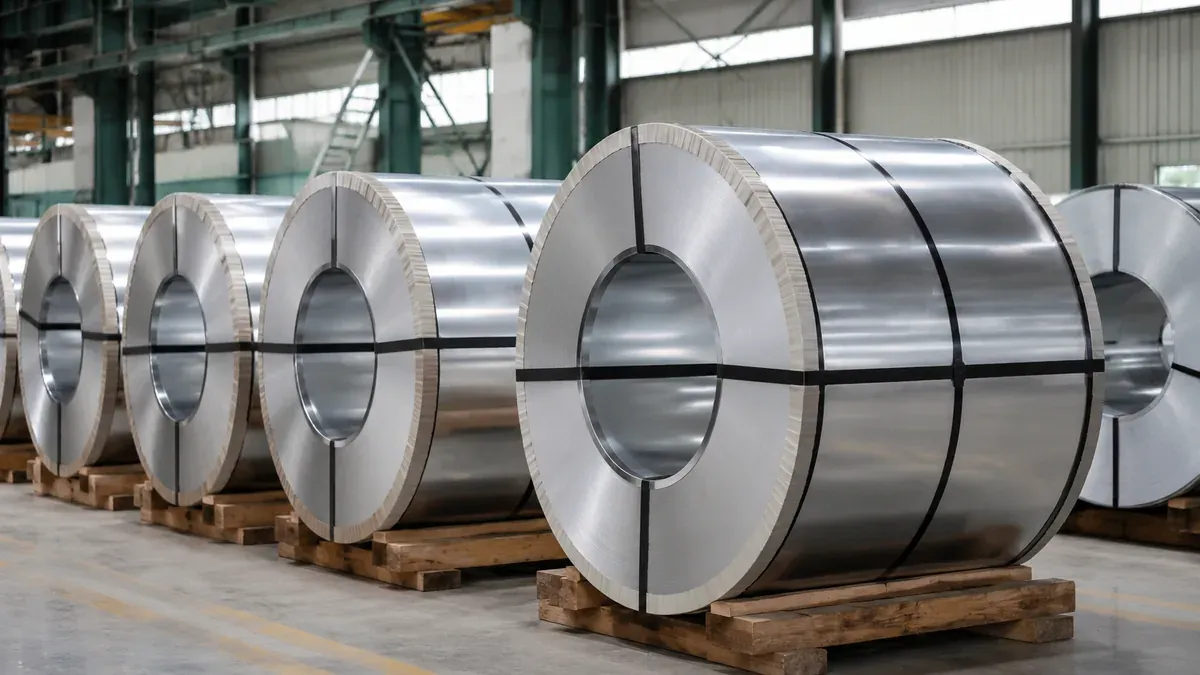
Cold-rolled 201 coil in 2B and BA, J1/J2 as ordered. Common inquiry range 0.2–3.0 mm, 1000/1219 mm or slit from 20 mm, for tube mills and appliances.
View details →
430 Stainless Steel Coil
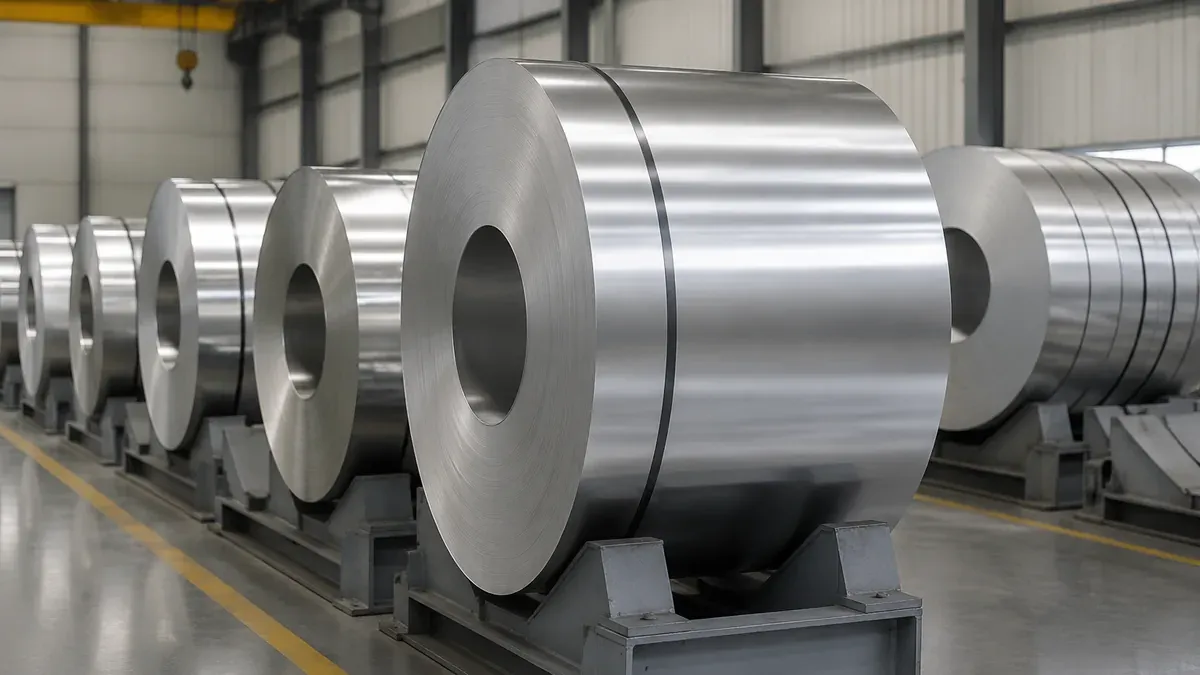
Ferritic 430 coil in BA, 2B and No.4. Common inquiry range 0.2–3.0 mm, 1000/1219 mm or slit from 20 mm, for appliance panels, trim and kitchen equipment.
View details →
304 Stainless Steel Precision Strip
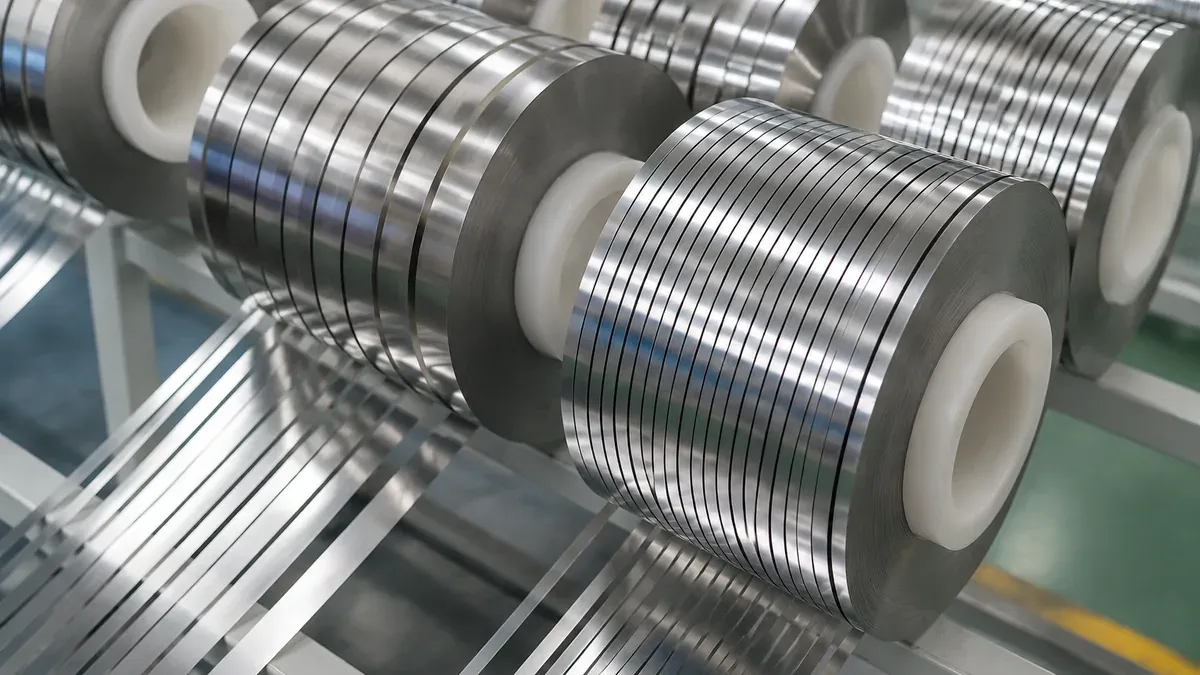
304 stainless steel precision strip slit to controlled width, temper, edge and coil weight for stamping, springs, electronics and precision formed components.
View details →
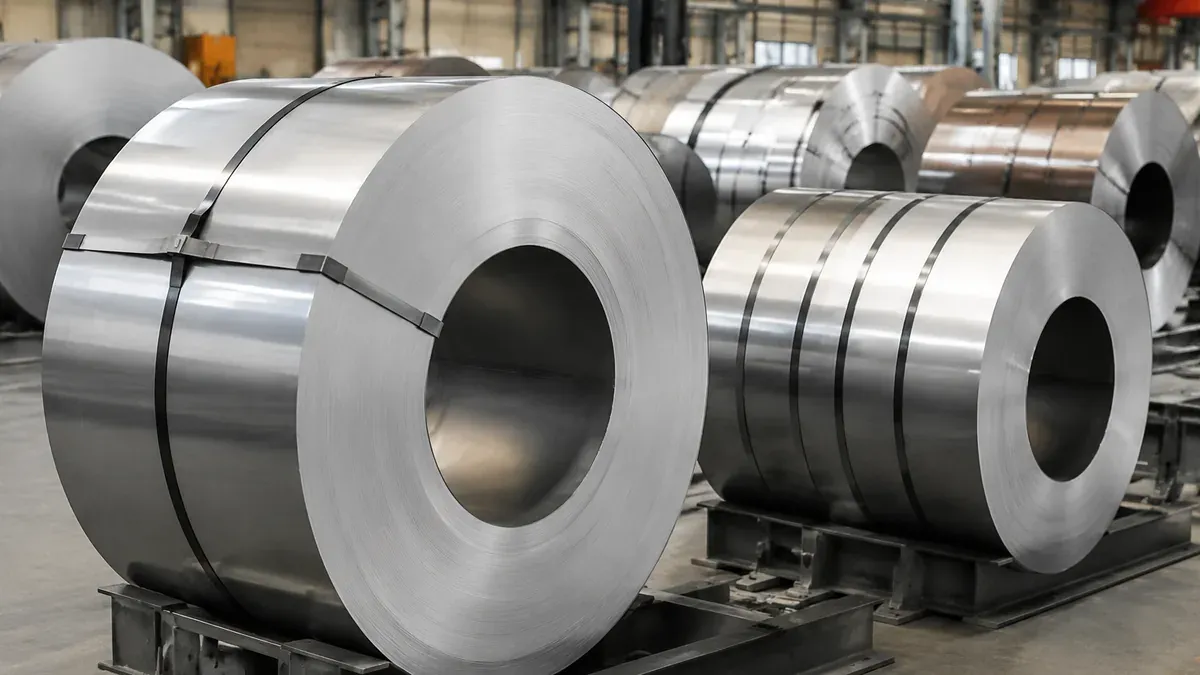
316L Stainless Steel Coil
316L stainless steel coil in cold-rolled 2B or BA and hot-rolled No.1 condition, supplied as master coil, slit coil or cut-to-length sheet for corrosive service.
View details →
Related grades, standards and applications
Published standards
Application guides
Frequently asked questions
Which coil dimensions must be included in an RFQ?
State gauge, width, coil ID, maximum OD, target or maximum unit weight, winding direction, edge and applicable tolerances.
What separates precision strip from ordinary slit coil?
Precision strip usually requires tighter gauge and width control plus defined temper, edge, burr, camber and surface acceptance.
Why does maximum coil weight matter before sourcing?
Coil weight affects the production route, uncoiler capacity, lifting method, container loading plan and number of welds or changeovers.
How should a buyer specify a slit edge?
Name the edge type, allowable burr height and direction, corner condition and any deburring requirement tied to the final operation.
Category RFQ checklist
Send the following details by size and line item. We quote the matching route, inspection plan, packing method and delivery window.
- 01Grade, product standard and delivery condition
- 02Master coil, slit coil, strip or foil
- 03Thickness, width and tolerances
- 04Temper and mechanical requirements
- 05Coil ID, maximum OD and unit weight
- 06Edge, burr, camber and winding direction
- 07Finish, interleaving and surface protection
- 08Inspection, packing and destination
Need a Coil & Strip quotation?
Send product, grade and quantity. We quote the confirmed supply route.