
304 Stainless Steel Sheet
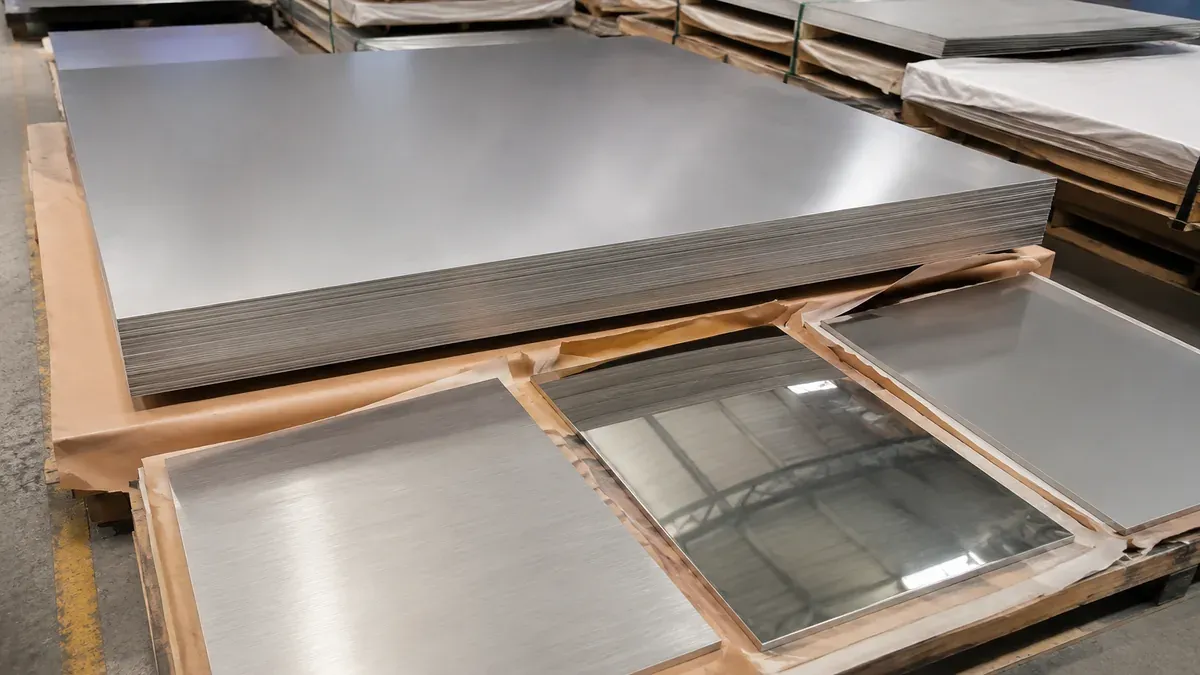
304 stainless steel sheet is quoted as ASTM A240 / JIS G4304 cold-rolled flat product in 304, 304L or dual certification. Common inquiry range: 0.3–6.0 mm, 1000/1219/1500 mm widths, 2B / BA / No.4 / mirror. Send the designation, size, finish and documents; we quote the matching route.
Supply routes
- In-house production or processing
- Qualified partner-mill sourcing
- Stock coordination
Where this product solves the job
- General fabricated panels, enclosures and equipment where 304 corrosion resistance is accepted by the project.
- Kitchen and food-equipment components when the cleaning chemistry, fabrication route and hygienic finish are separately approved.
- Decorative panels that need an agreed brushed or polished appearance, grain direction and removable surface protection.
When we recommend another route
- Chloride-bearing or coastal duties where the project corrosion review calls for a molybdenum-bearing or higher-alloy grade.
- Pressure-retaining design without confirmation of the applicable design code, product condition and project approvals.
- Laser-cut panels with unstated flatness, diagonal or residual-stress limits beyond the governing commercial tolerance.
Standards we quote against
Send the product standard, edition and any dimensional or finish standard with the RFQ. We quote the ordered combination, not a generic grade name.
Ordered product standards: ASTM A240/A240M · JIS G4304
What to send so we can quote the right route
- Confirm 304, 304L or an expressly permitted dual-certified heat together with the governing product standard and edition.
- State thickness, width, length, quantity per size and whether mill edges, trimmed edges or drawing-based blanks are required.
- Identify the incoming finish, critical face, grain direction, reference sample and protective-film compatibility with downstream processing.
- Define thickness, flatness, diagonal, squareness and cut-edge acceptance wherever the standard default is insufficient.
- List ordered inspection documents, heat traceability, supplementary checks, marking and export packing by final sheet geometry.
Specifications
| Grade | 304 / 304L; dual certification only when the ordered material and MTC meet both designations |
|---|---|
| Standard | ASTM A240/A240M, JIS G4304 |
| Thickness | Common inquiry range: 0.3–6.0 mm (plate 6–80 mm on request). |
| Width | Common inquiry range: 1000 / 1219 / 1500 mm, or slit to size. |
| Length | Common inquiry range: 2000 / 2438 / 3000 mm, or cut to size. |
| Finish | 2B, BA, No.4, hairline, 8K mirror |
| Protection | PVC / laser film on polished finishes |
| Commercial basis | Quantity, MOQ, production route and delivery schedule are quoted for the ordered specification. |
Dimensions and Tolerances
| Thickness | Common inquiry range: 0.3–6.0 mm (plate 6–80 mm on request). |
|---|---|
| Width | Common inquiry range: 1000 / 1219 / 1500 mm, or slit to size. |
| Length | Common inquiry range: 2000 / 2438 / 3000 mm, or cut to size. |
| Order basis | Governing product and dimensional standard, delivery condition and any drawing-specific limits. |
| Special tolerances | Send special tolerances in the RFQ; we quote the accepted production route. |
Published ranges are technical references, not a live-stock or production-capability promise. We confirm the ordered size range, MOQ and delivery schedule in the quotation.
Edge or end condition
- Edge, end or facing condition as ordered from the product form, standard and fabrication need.
Testing and inspection
- Tests required by the purchased product standard.
- PMI, NDE, corrosion, roughness or other supplementary inspection quoted when the RFQ names method, lot scope and acceptance.
Order documents
- Heat identity with EN 10204 3.1, or the inspection document named in the RFQ, against mill, stock or partner-mill route.
- Supplementary reports linked to the ordered test plan.
Export packaging
- Sheets interleaved and film-wrapped where the finish needs it, strapped on export skids.
- Moisture protection selected for the sea route; packing method stated in the quotation.
Quote the finish with the sheet
Most fabrication work uses 2B — the smooth, matte cold rolled finish that welds and forms predictably. BA (bright annealed) suits appliance fronts and reflectors; No.4 and hairline are the standard brushed decorative finishes; 8K mirror is used for elevator cabins and feature walls. Send the finish, critical face and protective film with the RFQ; we quote them with the packing route.
Tolerance and flatness
Thickness tolerance follows the governing dimensional standard. Send tighter thickness, flatness or diagonal limits for laser-cut panels with the RFQ; we quote the matching processing route.
Documents we quote
Send the inspection document, PMI and any supplementary verification with the RFQ. We include them in the quotation and inspection plan. See our quality control process for the full inspection flow.
Common ordering mistakes
- Treating 304 and 304L as automatically interchangeable without checking the certificate, welding requirement and purchase specification.
- Ordering No.4 or hairline by name alone without a sample, abrasive route, grain direction, gloss expectation or viewing condition.
- Giving nominal panel dimensions but omitting flatness and diagonal requirements that control fit-up after laser cutting.
- Choosing adhesive film without confirming laser, bending, storage and removal conditions, which can leave residue or fail during processing.
Handling and transport risks
- Decorative faces can be scratched by metal-to-metal contact, trapped scale or unsuitable lifting tools during sheet separation.
- Thin sheets and narrow cut panels can distort when banding pressure, support spacing or fork placement is not matched to the pack.
- Moisture trapped beneath film or between sheets can stain the surface during long storage or sea transport.
- Carbon-steel contact can introduce surface contamination that later appears as rust staining even when the base sheet is stainless.
Technical content updated: 2026-07-31
Published by Tsingshan (Shandong) Iron & Steel Co., Ltd..Sources, update policy and technical limitations.
Typical Applications
Related technical resources
Published standards
Applicable standards
ASTM A240/A240M · JIS G4304
What to Include in Your RFQ
Send the known values first. We use them to quote the ordered option, inspection plan and delivery route.
- Grade and governing standard
- 304, 304L; ASTM A240/A240M, JIS G4304. State the exact ordered combination.
- Dimensions and tolerances
- Provide thickness, width, length and identify which order basis, special tolerances requirements govern acceptance.
- Finish, processing and edge or end condition
- 2B, BA, No.4, Hairline, Mirror / 8K; Stainless Steel Cut-to-Length and Leveling, Stainless Steel Laser Cutting, Stainless Steel Polishing and Surface Finishing; Edge, end or facing condition as ordered from the product form, standard and fabrication need..
- Inspection, documents and packing
- Testing: Tests required by the purchased product standard.; PMI, NDE, corrosion, roughness or other supplementary inspection quoted when the RFQ names method, lot scope and acceptance. Documents: Heat identity with EN 10204 3.1, or the inspection document named in the RFQ, against mill, stock or partner-mill route.; Supplementary reports linked to the ordered test plan. Packing: Sheets interleaved and film-wrapped where the finish needs it, strapped on export skids.; Moisture protection selected for the sea route; packing method stated in the quotation.
- Quantity, destination and requested delivery window
- Send quantity per size, unit, destination city or port, trade term and requested delivery window so we can quote the supply and freight route.
Product RFQ Example
RFQ example: ASTM A240 Type 304L cold-rolled sheet, 2.0 x 1219 x 2438 mm, 2B on both sides, thickness tolerance to the named standard, laser-film requirement on the critical face, 120 sheets, ordered inspection document and heat marking, packed on seaworthy skids for delivery to the named port; we quote the matching route and delivery window.
Frequently Asked Questions
Should a welded sheet fabrication be ordered as 304 or 304L?
The choice depends on the welding procedure, service and project specification. If low-carbon chemistry or dual certification is required, name it in the purchase description and verify it against the ordered inspection document.
How should flatness be specified for laser-cut 304 panels?
State the governing tolerance, finished panel size, critical face, support and measurement method, and any tighter flatness or diagonal limit. A basic sheet standard does not automatically define drawing-specific cut-part acceptance.
What separates a useful No.4 finish order from a finish name alone?
Identify the starting surface, abrasive or reference sample, grain direction, critical side, acceptable visual variation, film and inspection lighting. These inputs matter more than the finish label by itself.
Can heat traceability remain with 304 sheet blanks after cutting?
It can be included when the RFQ defines parent-sheet identification, marking transfer, cut-part map and required documents before processing. The accepted traceability route must match the final blank geometry.
Which packing details protect polished 304 sheet during export?
Define interleaving or film, face orientation, edge and corner protection, skid support, moisture barrier and maximum pack geometry. Packing is then confirmed against sheet thickness, panel size and transport route.
Quote request
Get a Stainless Steel Quote
Send the product, grade and quantity you already have. We will complete the specification and quote the supply route.