
Procurement standard brief
ASTM A240/A240M: Stainless Steel Plate, Sheet and Strip
Use ASTM A240/A240M to define the stainless flat-product material basis, then complete the order with the applicable general-requirements standard, dimensions, tolerances, finish, testing, documents, and project rules. The designation alone does not identify one product condition or make a plate suitable for a pressure vessel, food line, chemical tank, or structural part. Procurement should freeze the contract edition and every required option before the mill or service center prices the material.
- Use this guide for
- Specification drafting and quotation comparison
- Relevant to
- Plate, sheet, coil, vessel, tank, and fabricated-equipment buyers
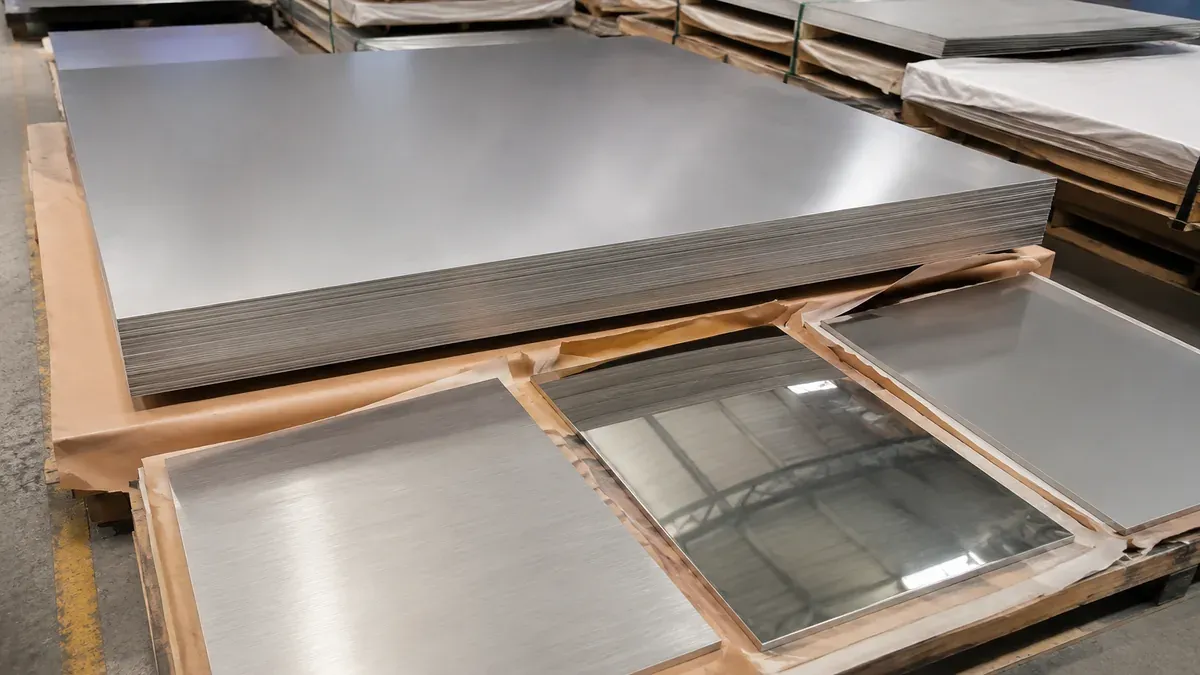
Contract responsibility
Scope and Explicit Exclusions
What this material standard controls
Material and grade
A240/A240M establishes covered stainless grade designations and the associated chemical, mechanical, and heat-treatment requirements for plate, sheet, and strip. The order still needs one grade or UNS designation and any project chemistry controls.
Flat-product condition
The specification distinguishes product and delivery conditions that affect properties and inspection. State whether the item is hot rolled or cold rolled, the required heat-treated condition, and whether the purchase is plate, cut sheet, or strip in coil.
Conformity evidence
The contract edition provides the material test and certification framework. Buyers must identify supplementary examinations, test-report content, heat traceability, marking transfer, and any witness or hold points that exceed the base order.
What it does not control alone
- A240/A240M does not by itself provide the complete dimensional tolerance, flatness, edge, surface, and general delivery package normally coordinated with ASTM A480/A480M.
- It is not a pressure-vessel design code and does not establish component geometry, allowable stress, welding procedure, corrosion allowance, fabrication inspection, or final equipment acceptance.
- A material grade listed in the specification is not an unconditional service selection. Fluid chemistry, cleaning, temperature cycle, deposits, fabrication, and the responsible engineer still govern alloy approval.
Specification stack
Related Standards and Responsibility Chain
| Document | Procurement role | Boundary |
|---|---|---|
| ASTM A240/A240M | Defines the stainless flat-product material specification, grade requirements, delivery condition, testing framework, and material marking basis. | The exact clause set depends on the edition named by the order; this page does not reproduce controlled tables or acceptance values. |
| ASTM A480/A480M | Supplies general requirements commonly invoked for flat products, including dimensional, tolerance, finish, testing, and ordering provisions. | The buyer must name any special flatness, thickness tolerance, edge, surface, or repair restriction instead of assuming one commercial interpretation. |
| Project or equipment specification | Adds service conditions, selected grade, corrosion allowance, fabrication, welding, inspection, surface, document, and approval requirements. | The project owner decides which clauses and supplementary controls apply to the finished equipment. |
| Drawing and purchase order | Converts the material basis into line items with dimensions, quantities, cut pattern, finish side, film, marking, packing, and delivery terms. | A quotation cannot resolve missing drawing revisions, ambiguous units, or unspecified acceptance criteria. |
Line-item completeness
How to Order to This Standard
| Field | What to state | Why it matters |
|---|---|---|
| Standard and edition | State ASTM A240/A240M and the revision adopted by the purchase order, plus ASTM A480/A480M where invoked. | Prevents parties from pricing different clause sets or tolerance bases. |
| Grade and condition | Give the grade or UNS designation, low-carbon or stabilized variant where required, and ordered heat-treated condition. | Similar trade names can carry different chemistry, processing, and welding implications. |
| Product form | Identify plate, cut sheet, strip, or coil and whether the route is hot rolled or cold rolled. | Product form changes available finish, tolerance, flatness, testing, and packing. |
| Dimensions and quantity | List thickness, width, length or coil ID/OD and weight, units, permitted tolerances, piece count, and quantity basis. | Nominal dimensions alone do not settle tolerance class or ordered mass. |
| Surface and edges | Name the mill or processed finish, critical side, roughness or sample if applicable, grain direction, film, and edge condition. | A finish label does not establish cosmetic matching or downstream fabrication protection. |
| Testing and inspection | State material tests, supplementary examinations, PMI, ultrasonic testing, witness points, and acceptance responsibility when required. | Optional examination cannot be added after production without schedule and sampling consequences. |
| Documents and traceability | Define certificate type, heat and plate identity, marking transfer, report language, document index, and digital format. | Document expectations must follow each cut piece when traceability is required. |
| Packing and release | Specify interleaving, film, skid or crate, corrosion and moisture protection, labels, destination, Incoterm, and release approval. | Surface and identity can be lost during handling even when material tests pass. |
Copy structure, replace values
Purchase Description Example
Pre-award review
Ordering Mistakes and Corrections
| Mistake | Likely consequence | Correction |
|---|---|---|
| Ordering only "A240 316L plate". | The supplier must guess thickness tolerance, finish, edge, dimensions, product route, tests, certificate, and packing, so quotations are not commercially or technically comparable. | Issue a line item that names form, condition, dimensions, tolerance basis, surface, inspection, documents, quantity, and delivery terms. |
| Treating A240 as the finished-equipment rule. | Material can meet the flat-product specification while the vessel or tank still lacks approved design, weld, NDE, pressure test, cleaning, or service-selection requirements. | Separate material compliance from the governing design code, project specification, fabrication plan, and final equipment acceptance. |
| Accepting a generic 2B, No.1, or No.4 label for a visual assembly. | Mill, coil, polishing route, gloss, grain, film, and fabrication can produce visible variation that the material designation does not control. | Define the critical face, process, approved sample or measurable criterion, batch matching, grain direction, and protection through fabrication. |
| Requesting special tests after the heat or plate is allocated. | The original sampling, specimen, witness, or traceability route may not support the late request. | Place supplementary testing and documentation requirements in the inquiry and purchase order before material is reserved. |
Continue the specification
Products, Grades, Applications, and Adjacent Standards
Product forms
Grade datasheets
Adjacent standards
Application briefs
Surface guidance
Buyer questions
Frequently Asked Questions
Does ASTM A240 include stainless coil?
It covers plate, sheet, and strip material forms, but the order must identify the form, dimensions, condition, finish, tolerance framework, testing, and packing. A coil inquiry also needs width, thickness, ID, OD or maximum coil mass, edge, and quantity basis.
What is the relationship between ASTM A240 and ASTM A480?
A240/A240M provides the material specification for covered stainless flat products. A480/A480M commonly supplies general requirements such as ordering, dimensions, tolerances, finishes, and other delivery provisions. The purchase order should state the adopted editions and any special requirements.
Does A240 material automatically meet a pressure-vessel requirement?
No. Material conformity is only one input. The equipment designer must select the grade and thickness under the governing construction code and project specification, then define welding, forming, heat treatment, examination, traceability, and final acceptance.
Published by Tsingshan (Shandong) Iron & Steel Co., Ltd..Sources, update policy and technical limitations.
Quotation package
What to Include in the RFQ
- ASTM A240/A240M and A480/A480M contract editions
- Grade or UNS designation and ordered condition
- Plate, sheet, strip, or coil route
- Thickness, width, length, coil ID/OD, tolerance, and quantity
- Finish, critical side, roughness or approved sample, edge, and film
- Supplementary testing, PMI, UT, witness, and acceptance scope
- Certificate, heat traceability, marking, and document index
- Packing, destination, Incoterm, drawing revision, and requested schedule
Quote request
Get a Stainless Steel Quote
Send the product, grade and quantity you already have. We will complete the specification and quote the supply route.