
Stainless Steel Flanges
Specify stainless weld-neck, slip-on, blind and other flanges by material, standard, class, facing, bore, marking and protection.
Flange procurement is controlled by type, class, dimensional standard, facing and matching bore as well as the ordered stainless grade. Weld-neck, slip-on, blind, socket-weld, threaded, lap-joint and plate flanges serve different connection details. A purchase description should name the flange type, NPS, pressure class and dimensional standard before material is evaluated. For larger diameters, also identify the applicable standard series where it changes dimensions; pressure class alone does not establish one universal flange geometry.
Keep the material product standard separate from the dimensional standard. ASTM A182/A182M may govern forged stainless material while ASME B16.5 or B16.47 controls many flange dimensions. A project may restrict forged versus plate manufacture, heat treatment, grain flow, examinations or repairs. Do not assume a plate-cut route can replace a forged requirement because the shape appears similar. State grade, product specification and permitted manufacturing route, then add any project-specific testing, PMI, corrosion testing or witness requirements before sourcing.
Connection details must match the adjoining pipe, gasket and bolting design. Define raised face, flat face, ring-type joint or other facing; gasket-contact surface finish; weld-neck bore or matching pipe schedule; hub and weld-end details; and bolt drilling where the standard does not fully resolve the requirement. Slip-on and lap-joint arrangements have their own bore and companion-component questions. Special facing, drilling or bore work should be tied to a drawing and revision so final machining can be inspected against the intended assembly.
Send the inspection document, marking format and any dimensional or NDE report with the RFQ. We quote rigid face protectors, piece-level identification for mixed classes and packing matched to unit weight.
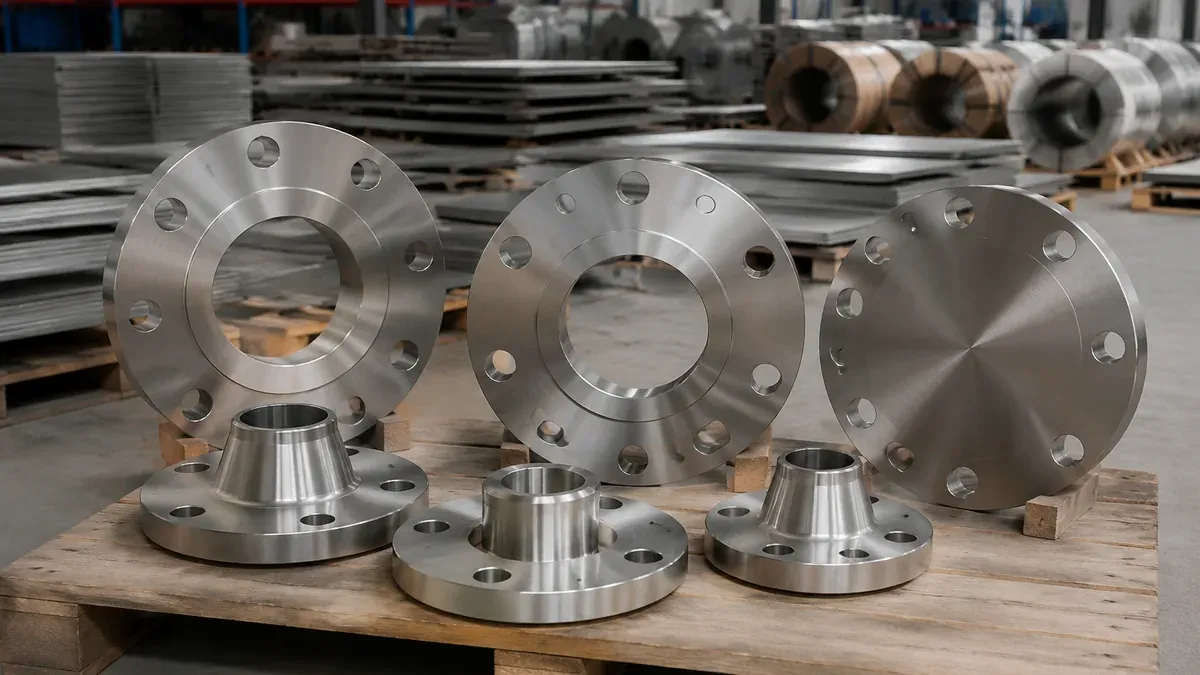
What to send for a quotation
- Which flange type, dimensional standard and pressure class govern the connection?
- What material product standard, grade and heat treatment are required?
- Which facing, finish, bore and weld-end details must match the piping system?
- What marking, examination and material documents are required by the project?
Product form matrix
Choose the product form first. We quote the matching purchase standard and dimensional description for that form.
| Product form | Reference standards | How to state dimensions | Common uses |
|---|---|---|---|
| Weld-neck flange | ASTM A182/A182M; ASME B16.5 | NPS and class with facing, bore or schedule, hub and weld-end details. | process piping, pressure systems, cyclic service |
| Blind or slip-on flange | ASTM A182/A182M; ASME B16.5 | Flange type by NPS, class, facing, bore and dimensional standard. | line closure, equipment connections, general piping |
How to choose
- Select type and class from the piping design code and connection duty.
- Match forged or approved plate route to the material and project specification.
- Define facing type and gasket-contact finish using the governing standard.
- State bore or matching pipe schedule for weld-neck and slip-on connections.
Dimensions and tolerances
Flanges combine NPS, pressure class, type and facing under a dimensional standard; bore, schedule, hub, bolt drilling and gasket contact finish must match the connected system.
Send the ordered sizes and any tighter project tolerances. We quote the matching flanges route against the governing dimensional system.
Processing and finishing
- Define the forged or permitted plate route, heat treatment and machining allowance before final dimensions and mechanical acceptance are evaluated.
- State facing type, gasket-contact surface finish, bore or matching schedule and weld-end preparation as controlled connection details rather than general finish requests.
- Identify drilling, special facing, coating restrictions, piece marking and any supplementary fabrication that moves the item beyond a standard flange description.
Pickled & PassivatedStainless Steel Waterjet CuttingStainless Steel Polishing and Surface FinishingCustom Packaging and Export Loading
Inspection and documents
- Verify dimensions, bolt circle, hole size, thickness, hub, bore and facing geometry.
- Confirm marking, material grade, heat treatment and traceability against the order.
- Send supplementary NDE, PMI or corrosion testing with the RFQ when required.
Packing and handling risks
RISK 01
Machined gasket faces can be scratched, dented or corroded without rigid protectors.
RISK 02
Mixed classes, facings and bores can be confused without piece-level identification.
RISK 03
Heavy flanges require packaging and lifting plans matched to unit and package weight.
Detailed stainless steel products
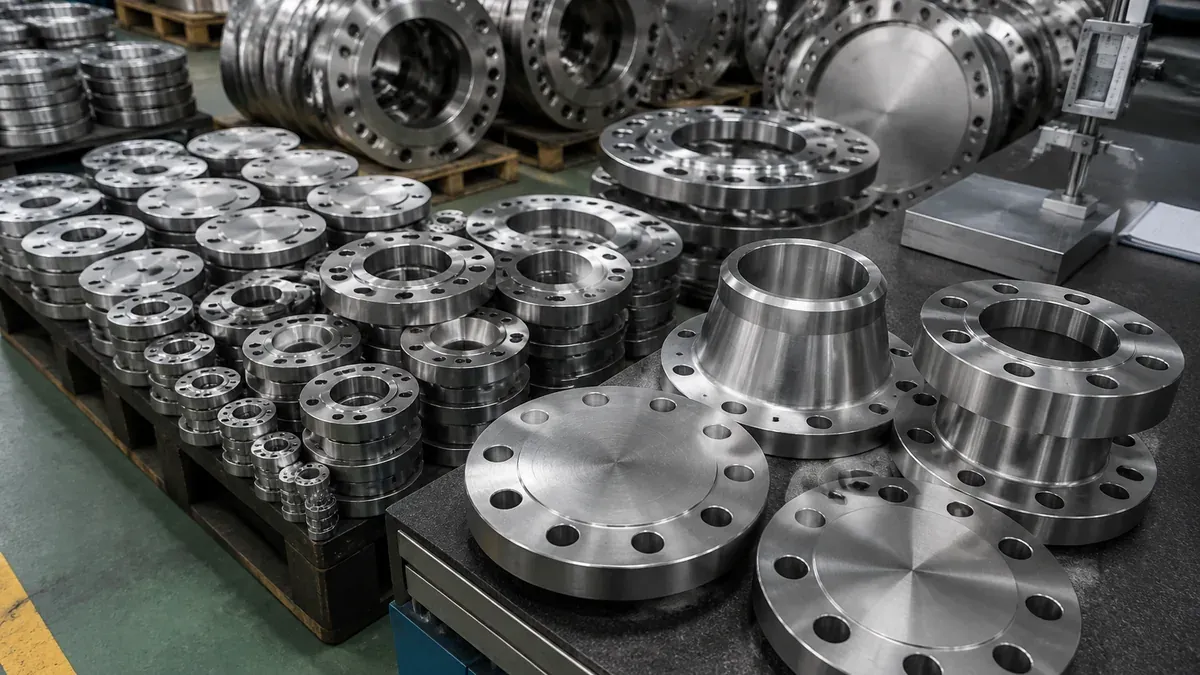
316L Stainless Steel Forged Flanges
316L forged stainless steel weld-neck, slip-on, blind, socket-weld and threaded flanges to ASTM A182 and ASME B16.5 for process piping.
View details →
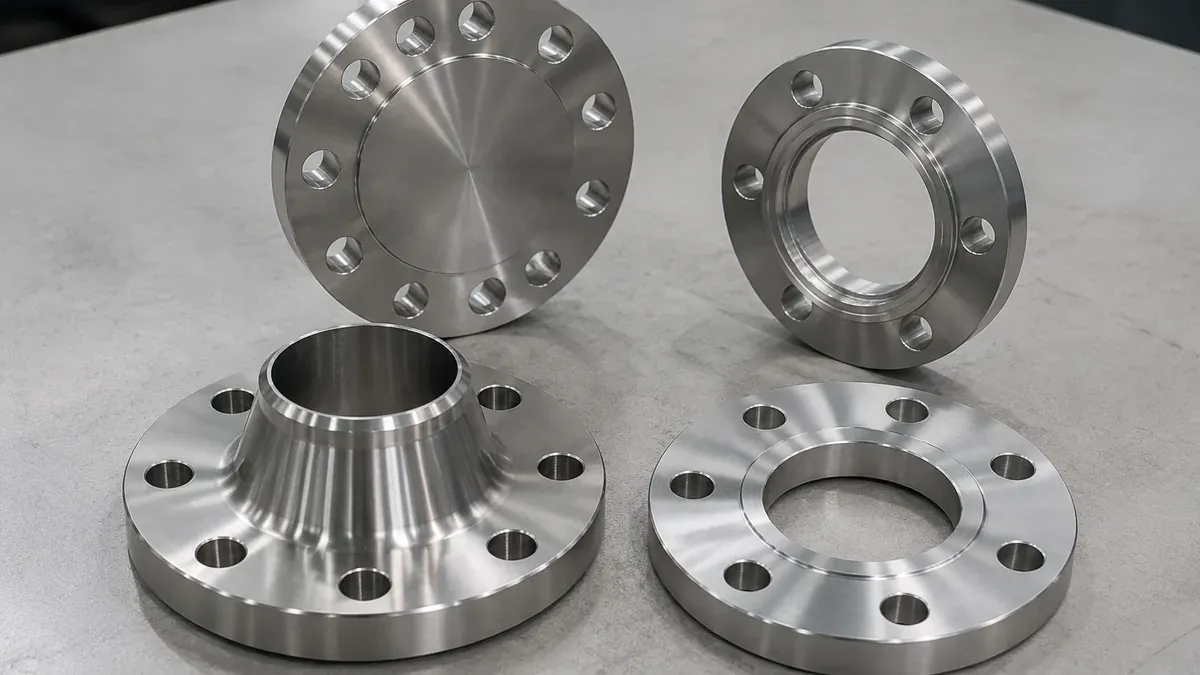
2205 Duplex Stainless Steel Flanges
2205 duplex stainless steel forged flanges for chloride, offshore and water systems, supplied to ASTM A182 with ASME dimensions and duplex-specific testing options.
View details →
Related grades, standards and applications
Published standards
Application guides
Frequently asked questions
Which flange details are mandatory for a quotation?
Include type, standard, NPS, class, material grade, facing, bore or schedule, quantity and required documents.
Why must facing and surface finish be specified together?
Facing geometry and gasket-contact finish work together with the selected gasket and cannot be inferred from pressure class alone.
Can a plate flange replace a forged flange?
Only when the governing material, dimensional and project specifications permit that route and all required properties and examinations are met.
How should machined flange faces be protected?
Specify rigid face protectors, dry wrapping, separation and package orientation suitable for the facing and transport conditions.
Category RFQ checklist
Send the following details by size and line item. We quote the matching route, inspection plan, packing method and delivery window.
- 01Flange type and dimensional standard
- 02NPS and pressure class
- 03Material grade and product standard
- 04Facing and surface finish
- 05Bore, schedule and weld-end details
- 06Marking and traceability
- 07Examination and inspection documents
- 08Quantity, face protection and destination
Need a Flanges quotation?
Send product, grade and quantity. We quote the confirmed supply route.