
Application specification brief
Stainless Steel for Chemical Processing
Build the request from a process data sheet, design basis, corrosion review, piping class, and inspection plan. Chemical name alone is insufficient: concentration, water, contaminants, temperature, pressure, aeration, velocity, deposits, crevices, stress, and shutdown state can change the controlling mechanism. The project engineer must approve material and corrosion allowance for each equipment item and line class.
Send the service, product form and inspection plan. We quote the matching stainless product forms; the project authority keeps final service approval.
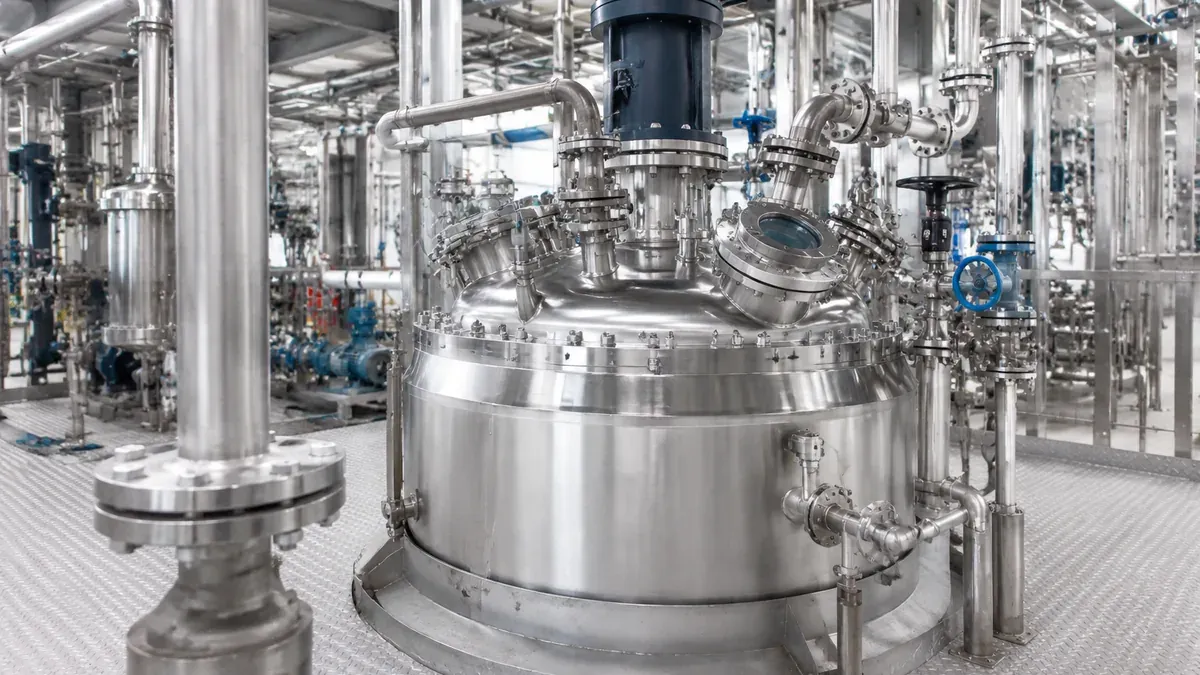
Four-state review
Service Boundary
Review the complete operating cycle, not only nominal process conditions.
Normal operation
Provide every process component and concentration range, temperature and pressure envelope, phase, dissolved gas, solids, aeration, velocity, residence time, and expected wetting pattern at the exact equipment location.
Cleaning and maintenance
List flushing, neutralization, cleaning, steaming, decontamination, and maintenance chemicals with sequence, concentration, temperature, duration, disposal path, and whether residual process chemical can mix with them.
Shutdown and standby
Describe drain and purge performance, stagnant heels, vapor condensation, deposits, water ingress, preservation, and restart. Idle equipment may experience concentration or aeration conditions absent during normal flow.
Upset and abnormal cases
State credible feed errors, loss of dilution or cooling, contaminant ingress, boiling or condensation, blocked flow, over-temperature, and extended hold cases for engineering review and material approval.
Inputs before the RFQ
Operating Environment
| Variable | What to review | Procurement impact |
|---|---|---|
| Full composition | Give all process components, concentration ranges, trace halides, oxidizers, reducing species, water content, and likely contamination. | Supports alloy screening and prevents a generic corrosion chart from becoming a purchase guarantee. |
| Temperature and phase | Record continuous and transient temperatures, pressure, liquid, vapor, condensate, two-phase regions, and heat-transfer surfaces. | Defines the relevant corrosion mechanism, mechanical design inputs, product form, and code review. |
| Flow and deposits | Identify velocity range, impingement, solids, settling, under-deposit zones, stagnant branches, and crevice geometries. | Affects component design, surface and weld acceptance, corrosion margin, and inspection access. |
| Stress and fabrication | Provide forming, welding, heat treatment, residual-stress controls, hardness limits, and required corrosion testing. | Links grade choice to the fabricated condition rather than nominal solution-annealed reference data. |
Design and fabrication risks
Failure Modes and Controls
| Failure mode | Drivers to review | Specification control |
|---|---|---|
| General corrosion | Acid concentration, water content, contaminants, temperature, aeration, and mass transfer outside the selected alloy's approved range. | Use process-specific corrosion data or testing accepted by the design authority and define corrosion allowance and monitoring separately. |
| Pitting and crevice corrosion | Halides, oxidizing conditions, deposits, gasket interfaces, stagnant pockets, weld discoloration, and elevated temperature. | Review worst local chemistry and geometry, improve fabrication and drainage, and select alloy margin through project engineering. |
| Stress-corrosion cracking | Susceptible metallurgy combined with tensile stress and a specific chemical and temperature environment. | Evaluate material family, fabrication stress, environment, shutdown cases, and governing project restrictions together. |
| Fabrication-related degradation | Unsuitable filler, heat tint, contamination, sensitization, duplex phase imbalance, or unapproved heat treatment and repair. | Specify qualified welding, heat-treatment boundaries, treatment, PMI, examination, and repair records for the actual product form. |
Screening ladder
Material Selection
Grades are screening routes, not unconditional substitutes. Product standards, fabricated condition, and project approval still govern.
| Grade reference | Where to screen it | Approval boundary |
|---|---|---|
| 316L Stainless Steel | Quote for general chemical equipment where the documented environment and fabrication route fall within the project-approved corrosion basis. | Do not infer suitability for hot chlorides, reducing acids, mixed contaminants, or crevices from the 316L name alone. |
| 2205 Stainless Steel | Quote for piping, vessels, and heat-transfer equipment when the project needs higher strength and improved chloride screening. | Temperature, code acceptance, welding, phase balance, toughness, and service chemistry require explicit review. |
| 2507 Stainless Steel | Quote for more severe chloride-bearing duties when the project corrosion study and fabrication controls support super duplex. | It is not a universal seawater or chemical-service approval; component standards, welding, testing, and design limits govern. |
| 904L Stainless Steel | Quote for selected acid environments where a high-alloy austenitic route is supported by process-specific evidence. | Do not rank it universally above duplex; chloride, reducing conditions, strength, code, and fabrication lead to different decisions. |
Supply route
Product Forms and Ordering Basis
| Form | Typical scope | Order basis |
|---|---|---|
| Plate and sheet | Vessels, columns, reactors, trays, internals, linings, heat-exchanger components, and fabricated covers. | State material standard, grade, thickness, dimensions, tolerances, condition, surface, forming, testing, traceability, and corrosion-test requirements. |
| Pipe and tube | Process lines, utility lines, heat exchangers, instrument connections, and fabricated spools. | Define seamless or welded route, material and dimensional standards, NPS or OD, schedule or wall, ends, heat treatment, tests, and marking. |
| Fittings | Elbows, tees, reducers, caps, stub ends, and branch components matched to the piping class. | Specify material standard, type, dimensions, wall or schedule match, manufacturing route, heat treatment, examination, marking, and certificates. |
| Flanges and forgings | Flanged joints, nozzles, valve parts, tube sheets, rings, and pressure-containing machined components. | Name material standard, grade, type, pressure class, facing, bore, dimensions, heat treatment, testing, marking, and machined-surface protection. |
Delivered condition
Fabrication, Welding, Surface, and Cleaning
Material control
Maintain positive identification and heat traceability across plate, pipe, fittings, flanges, weld consumables, cut pieces, and repaired areas.
Welding engineering
Provide approved procedures, filler selection, heat-input and interpass controls, purge requirements, heat treatment boundaries, and repair rules.
Surface restoration
Define removal of scale, embedded iron, heat tint, and fabrication contamination plus pickling, passivation, flushing, and acceptance.
Geometry and access
Address crevices, dead legs, drainability, gasket interfaces, branch details, inspection access, and allowance for corrosion monitoring.
Mixed-alloy package
Control transitions, galvanic interfaces, bolting, gaskets, weld-metal compatibility, marking, and segregation in packing and installation.
Release evidence
Inspection and Documents
| Stage | Required evidence |
|---|---|
| Engineering submittal | Submit material data, standards and editions, manufacturing route, deviations, welding and treatment procedures, and inspection plan for approval. |
| Raw material | Verify heat certificates, chemistry, mechanical and heat-treatment results, dimensions, condition, PMI scope, and any ordered corrosion testing. |
| Fabrication | Record material maps, weld maps, procedure and operator identity, consumables, heat treatment, NDT, dimensional checks, and repairs. |
| Pressure and final tests | Apply leak, hydrostatic, NDT, surface-treatment, cleanliness, marking, and final visual checks according to the approved inspection plan. |
| Release dossier | Index approved documents, certificates, reports, concessions, traceability, packing list, preservation, and release note by item or line class. |
Continue the specification
Related Standards and Grade Decisions
Product and dimensional standards
Related grade comparisons
Buyer questions
Frequently Asked Questions
When should 2205 replace 316L?
Use 2205 when chloride pitting or stress-corrosion cracking threatens 316L and its higher strength adds design value.
Is 904L always better than 2205?
No. 904L suits selected reducing acids; 2205 is stronger and often better in chloride service. Process conditions decide.
Why is PMI important?
Many grades look identical. Positive material identification helps prevent grade mix-ups before fabrication or shipment.
Published by Tsingshan (Shandong) Iron & Steel Co., Ltd..Sources, update policy and technical limitations.
Quotation package
What to Include in the RFQ
- Process data sheet with all chemicals, concentration ranges, contaminants, phases, and solids
- Normal, cleaning, shutdown, startup, and credible upset temperature, pressure, flow, and duration
- Equipment tag or piping class, design code, corrosion allowance, design life basis, and approval authority
- Grade, product form, material and dimensional standards with contracted editions, dimensions, and quantity
- Manufacturing route, heat treatment, surface, welding, filler, purge, treatment, and repair requirements
- PMI, corrosion test, mechanical test, NDT, leak or hydrotest, dimensional, and witness requirements
- Certificate type, heat and item traceability, document index, deviation process, and third-party inspection
Quote request
Get a Stainless Steel Quote
Send the product, grade and quantity you already have. We will complete the specification and quote the supply route.