
Application specification brief
Architectural & Decorative Stainless Steel
Treat corrosion performance and visual acceptance as connected but separate decisions. Map interior, exterior, sheltered, coastal, de-icing-salt, and cleaning zones before screening a grade. For visible work, freeze a representative sample, viewing conditions, finish route, direction, lot strategy, protective film, installation controls, and cleaning method. A finish label alone does not define color, gloss, texture, or acceptable variation. Project-specific criteria require architect and buyer approval.
Send the service, product form and inspection plan. We quote the matching stainless product forms; the project authority keeps final service approval.
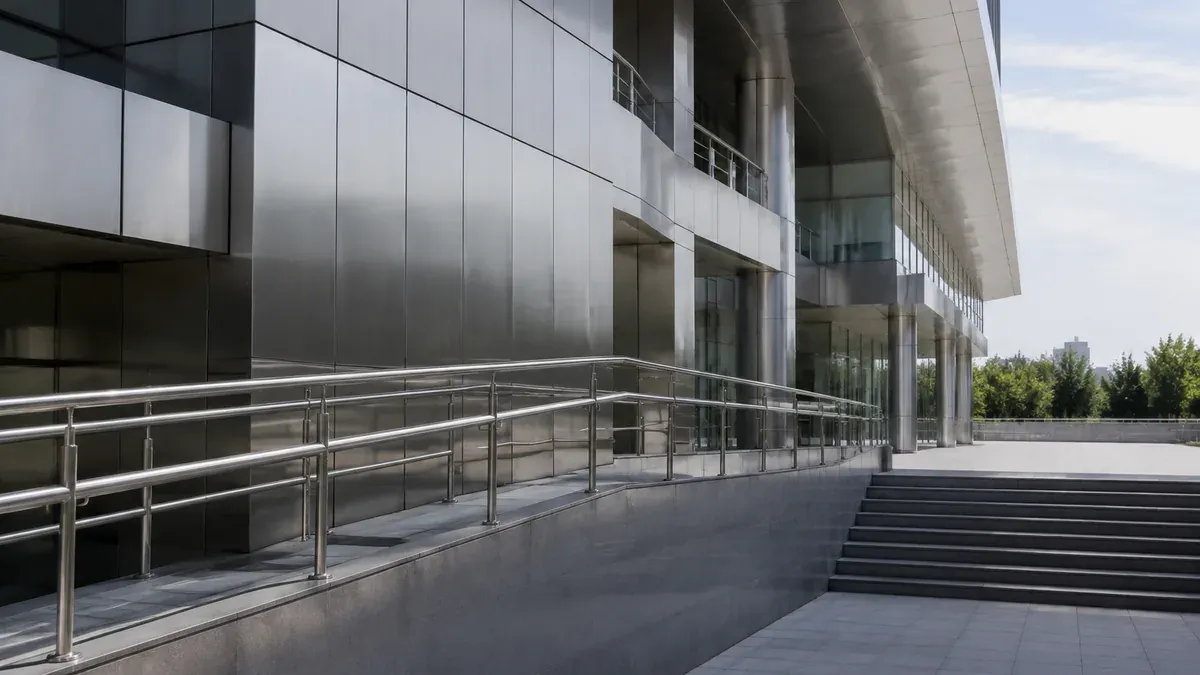
Four-state review
Service Boundary
Review the complete operating cycle, not only nominal process conditions.
Normal operation
Record location, salt or industrial sources, sheltering, rainfall washing, orientation, humidity, hand contact, runoff, adjacent materials, and cleaning access. Separate visible elevations and hidden supports where exposure differs.
Cleaning and maintenance
State chemicals, water, tools, frequency, rinse, drying, and handover responsibility. Review abrasive pads, chlorides, masonry cleaners, and carbon-steel tools for finish change or contamination.
Shutdown and standby
For construction pauses, define storage, ventilation, wrapping, film-removal timing, dust and salt protection, drainage, and restart inspection. Trapped moisture under covers differs from completed-facade exposure.
Upset and abnormal cases
Describe coastal storms, de-icing splash, grinding debris, acid overspray, blocked drainage, wet wrapping, graffiti removal, and film ageing. These cases require project assessment.
Inputs before the RFQ
Operating Environment
| Variable | What to review | Procurement impact |
|---|---|---|
| Exposure zone | Classify inland, urban, industrial, coastal, splash, sheltered, pool, kitchen, transit, and de-icing-salt locations by actual deposition and washing. | Sets the grade-screening margin, surface route, maintenance assumptions, sampling plan, and need for project corrosion review. |
| Visual field | Map primary elevations, returns, soffits, trims, welds, corners, repair areas, and pieces seen together under the same light. | Controls master samples, lot grouping, grain alignment, sheet layout, replacement stock, and inspection zones. |
| Finish definition | Provide source material, mechanical or patterned route, abrasive, roughness or gloss where meaningful, color treatment, and viewing conditions. | Converts ambiguous names such as hairline or mirror into a repeatable purchase and acceptance basis. |
| Site interfaces | Identify carbon steel, masonry, sealants, gaskets, fasteners, drainage, welding, grinding, lifting, and temporary works touching the stainless. | Drives isolation, compatible consumables, contamination prevention, handling, protection, and cleaning instructions. |
Design and fabrication risks
Failure Modes and Controls
| Failure mode | Drivers to review | Specification control |
|---|---|---|
| Tea staining or localized corrosion | Salt or industrial deposition, sheltered wetting, crevices, rough or heat-tinted areas, poor drainage, contamination, and insufficient cleaning. | Assess the real exposure, select an appropriate margin, detail for drainage and washing, restore fabricated surfaces, and agree a maintenance plan. |
| Embedded iron contamination | Shared benches, carbon-steel brushes, grinding sparks, lifting equipment, storage racks, runoff, site cutting, or contaminated abrasives. | Segregate fabrication and storage, use dedicated tools, protect finished work, inspect affected areas, and define corrective cleaning and acceptance. |
| Shade, gloss, texture, or grain mismatch | Different substrates, mills, coils, abrasives, belt condition, polishing direction, pressure, panel orientation, repairs, and light. | Use approved samples, record route and direction, group visible work by controlled lots, label panels, and inspect under agreed conditions. |
Screening ladder
Material Selection
Grades are screening routes, not unconditional substitutes. Product standards, fabricated condition, and project approval still govern.
| Grade reference | Where to screen it | Approval boundary |
|---|---|---|
| 304 Stainless Steel | Quote for interior, frequently cleaned, or mild inland architectural components with controlled fabrication. | Actual deposition, shelter, crevices, finish, cleaning access, and adjacent materials can require a different margin. |
| 316L Stainless Steel | Quote for exterior, coastal, de-icing-salt, pool-adjacent, or otherwise chloride-exposed visible work. | Molybdenum does not remove the need for exposure mapping, detailing, contamination control, surface restoration, and maintenance. |
| 430 Stainless Steel | Quote for dry interior trim where ferritic behavior, fabrication route, appearance, and corrosion environment are accepted. | Do not transfer an interior decision to wet, exterior, chloride, welded, or difficult-to-clean locations without review. |
| 201 Stainless Steel | Quote for controlled interior components when chemistry, forming, finish consistency, environment, and buyer requirements support it. | Nominal appearance is not evidence of equivalence to 304; grade identity and application limits must remain explicit. |
Supply route
Product Forms and Ordering Basis
| Form | Typical scope | Order basis |
|---|---|---|
| Decorative sheet and plate | Facade panels, column covers, doors, lift interiors, work surfaces, trims, signage, and feature panels. | State grade, product standard, thickness, flatness, dimensions, base and final finish, direction, sample, lot, film, edges, and tolerances. |
| Architectural tube | Handrails, balustrades, frames, furniture, canopies, screens, and exposed structural details. | Define material and dimensional standard, OD or section, wall, weld condition, straightness, finish, grain, end preparation, and inspection. |
| Profiles and formed sections | Angles, channels, trims, flashings, mullion covers, folded panels, and custom decorative shapes. | Provide drawings, radii, visible faces, grain relation, forming route, tolerances, welds, surface blending, film, and packing orientation. |
Delivered condition
Fabrication, Welding, Surface, and Cleaning
Control samples and mock-ups
Approve representative flat and fabricated samples showing substrate, finish direction, welds, corners, edges, fasteners, sealants, cleaning, and expected variation under agreed lighting.
Grain and panel scheduling
Mark rolling or polishing direction on drawings and protective film, define rotation rules, group visible panels, and retain traceability from approved lot to elevation.
Forming, joining, and repair
Validate bend radii, tooling, springback, weld process, distortion control, heat-tint removal, blending sequence, and the visual limit of local repairs before production.
Protective film and packing
Specify adhesive and thickness for cutting, laser, forming, climate, and dwell; define edge protection, interleaving, stack direction, crate marking, removal timing, and residue checks.
Release evidence
Inspection and Documents
| Stage | Required evidence |
|---|---|
| Submittal approval | Review material standard and grade, finish route, control samples, mock-up plan, drawings, grain maps, lot strategy, film data, cleaning method, and inspection plan. |
| Incoming material | Verify certificates and heat identity, dimensions, flatness, surface, finish direction, color or gloss criteria, film, damage, and source-lot traceability. |
| First-off fabrication | Compare formed and welded first articles with approved samples for direction, shade, texture, distortion, heat tint, corners, edges, repairs, and protection. |
Continue the specification
Related Standards and Grade Decisions
Product and dimensional standards
Related grade comparisons
Buyer questions
Frequently Asked Questions
Should an exterior facade use 304 or 316?
304 often performs inland; coastal salt, road salt and difficult cleaning favor 316L.
Why do hairline lots look different?
Abrasive, belt condition, pressure, substrate and viewing direction affect appearance.
Does protective film prevent every scratch?
No. Cutting debris, trapped grit, poor stacking and wrong adhesive can still damage the surface.
Published by Tsingshan (Shandong) Iron & Steel Co., Ltd..Sources, update policy and technical limitations.
Quotation package
What to Include in the RFQ
- Project location, exposure map, sheltered and salt-deposition zones, design life basis, maintenance access, and approving parties
- Component schedule, drawings, visible faces, viewing distance and lighting, panel orientation, interfaces, drainage, and replacement strategy
- Grade, product and dimensional standards with editions, sheet, tube or profile form, thickness, dimensions, tolerances, quantity, and lot grouping
- Base material and final finish route, grain direction, gloss, texture or roughness criteria where applicable, color treatment, master sample, and mock-up
- Cutting, forming, welding, filler, heat-tint removal, blending, repair, contamination-control, sealant, fastener, and isolation requirements
- Protective film for each process, dwell and climate, interleaving, edge protection, packing orientation, site storage, removal, and final cleaning
- Certificate, traceability, sample retention, first-off, visual and dimensional inspection, acceptance zones, deviation control, and handover records
Quote request
Get a Stainless Steel Quote
Send the product, grade and quantity you already have. We will complete the specification and quote the supply route.