
From PO to release
Quality Control for Stainless Steel Supply
Send the inspection document, supplementary tests and witness points with the RFQ. We select tests by product standard and purchase order, then link them to material identity before shipment.
01
Contract review
Grade, standard, product form, dimensions, tolerances, surface, edge or end, testing, marking, documents and packing are translated into the order file.
02
Source verification
The proposed mill or stock route is checked against material and product requirements before production or allocation.
03
Material identity
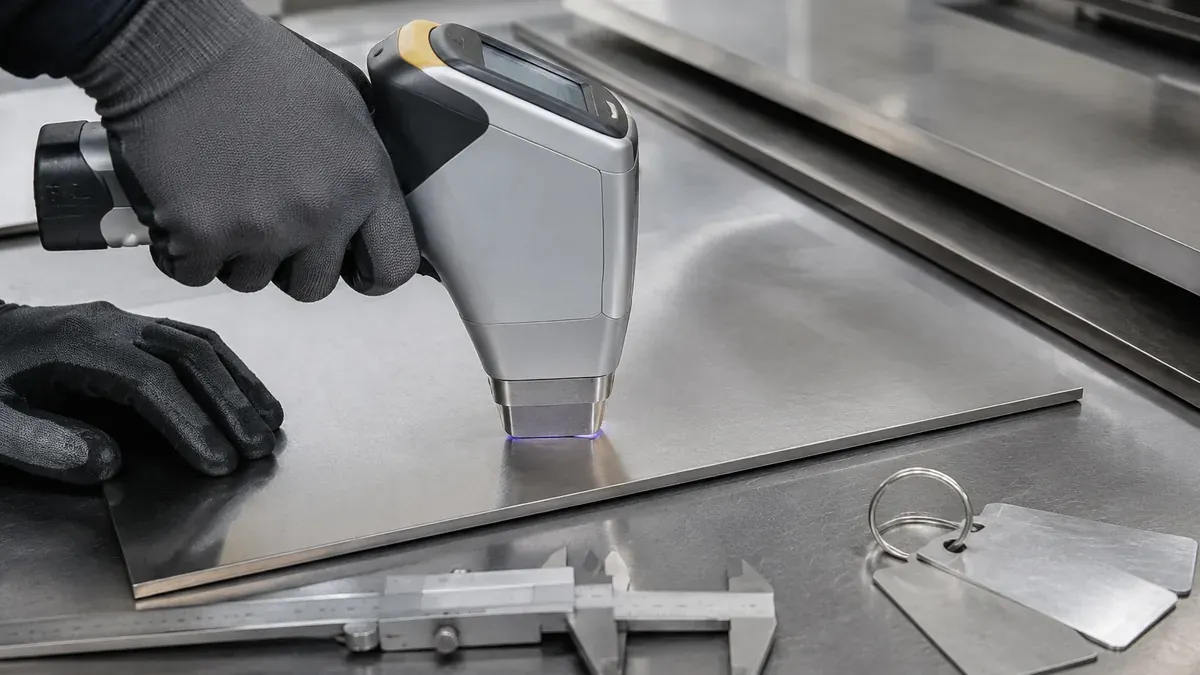
Heat and grade identification are reviewed. PMI is quoted by lot scope, method and acceptance when named in the RFQ.
04
Dimensional and visual inspection
Specified dimensions, tolerance points, surface condition, edge or end preparation, quantity and marking are checked using the applicable sampling plan.
05
Testing and documents
Ordered material certificates, mechanical or corrosion tests, NDT and third-party records are reviewed for consistency with the purchase order.
06
Release and packing
Nonconformities are resolved before release; bundle or coil identification is carried into export packing and shipment records.
Inspection options we quote
- /EN 10204 3.1, or the inspection document named in the RFQ
- /PMI quoted by lot scope, method and acceptance
- /Dimensional, visual and quantity reports
- /Hydrostatic, eddy-current, ultrasonic or other product-specific testing
- /Intergranular or pitting-corrosion tests for specified grades and services
- /Third-party inspection by an agreed independent agency
Who performs the tests
Heat chemistry, mechanical properties and ordered corrosion tests are performed and reported by the producing mill or qualified test laboratory for the selected supply route. Our release review checks the named standard, material identity, results and document references against the purchase order. Independent inspection can witness or verify agreed hold points when included in the order.
Product-specific NDT and pressure scope
Hydrostatic testing applies to ordered pipe or tube only when the product specification or purchase order requires it. Eddy-current or ultrasonic examination may apply to seamless or welded tubular products under the governing standard. Weld examination applies only to welded products, using the ordered method, sampling and acceptance criteria; these checks are not universal requirements for sheet, plate, bar or every fitting.
For company-level quality, environmental and occupational health and safety documents, review our management system certifications. These remain separate from shipment-specific inspection documents.
Quote request
Get a Stainless Steel Quote
Send the product, grade and quantity you already have. We will complete the specification and quote the supply route.