
316L Stainless Steel Coil
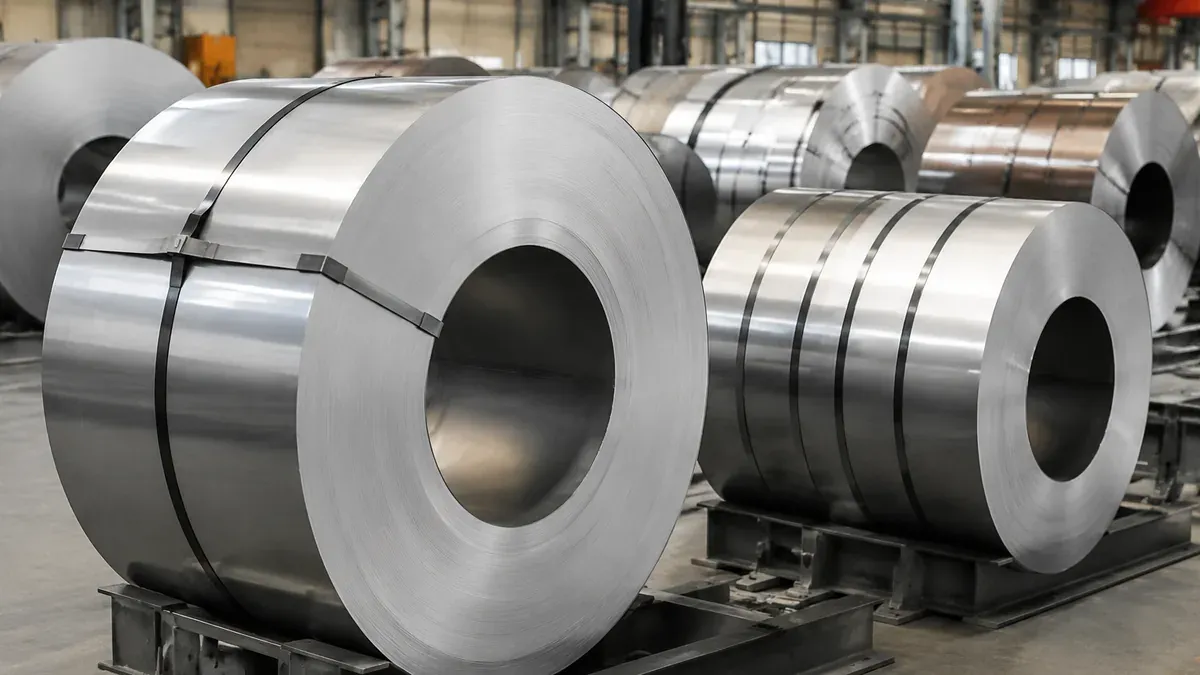
316L stainless steel coil is quoted as molybdenum-bearing flat-rolled feedstock in master, slit or cut-to-length form. Common inquiry range: cold-rolled 2B/BA or hot-rolled No.1, standard mill widths or slit to the ordered width. Send grade, thickness, coil ID/OD and documents.
Supply routes
- Qualified partner-mill sourcing
- Stock coordination
- In-house production or processing
Where this product solves the job
- Continuous forming, tube or fabricated-equipment programs where the project has approved 316L for the service environment.
- Hygienic component production that starts from an agreed 2B or BA surface and controls weld restoration and cleanliness downstream.
- Slit-coil orders requiring heat traceability, PMI or supplementary inspection at defined processing stages.
When we recommend another route
- Unreviewed seawater or aggressive chloride duties where 316L may not provide the required corrosion margin.
- Orders that need cut-sheet flatness but specify only master-coil tolerances and omit leveling or residual coil-set criteria.
- Decorative finish programs with no sample, grain direction, critical face, film or process-sequence definition.
Standards we quote against
Send the product standard, edition and any dimensional or finish standard with the RFQ. We quote the ordered combination, not a generic grade name.
Ordered product standards: ASTM A240/A240M · EN 10088
What to send so we can quote the right route
- Confirm 316L, 316 or permitted dual certification with product standard, edition and inspection-document wording.
- Select cold-rolled 2B or BA, hot-rolled No.1, or a processed surface and state critical face and downstream sequence.
- Give thickness, master or finished width, slit tolerance, edge, burr, camber and any flatness or coil-set acceptance.
- Define coil ID, OD or weight limits, winding direction, eye orientation, splice policy and handling equipment constraints.
- State PMI or traceability stages, quantity per size, packing, moisture protection and delivery destination.
Specifications
| Grades | 316 / 316L, dual certification as ordered |
|---|---|
| Product standard | ASTM A240/A240M or EN 10088-2 |
| Typical thickness | Common inquiry range: 0.3–6.0 mm cold rolled; heavier hot rolled on request. |
| Typical width | Common inquiry range: 600–2000 mm or slit to order. |
| Coil ID | Common inquiry range: 508 mm or 610 mm, source dependent. |
| Surface | 2B, BA, No.1 or processed finish |
| Documentation | Inspection documents and traceability records as ordered and confirmed in the quotation. |
| Commercial basis | Quantity, MOQ, production route and delivery schedule are quoted for the ordered specification. |
Dimensions and Tolerances
| Thickness | Common inquiry range: 0.3–6.0 mm cold rolled; heavier hot rolled on request. |
|---|---|
| Width | Common inquiry range: 600–2000 mm or slit to order. |
| Order basis | Governing product and dimensional standard, delivery condition and any drawing-specific limits. |
| Special tolerances | Send special tolerances in the RFQ; we quote the accepted production route. |
Published ranges are technical references, not a live-stock or production-capability promise. We confirm the ordered size range, MOQ and delivery schedule in the quotation.
Edge or end condition
- Edge, end or facing condition as ordered from the product form, standard and fabrication need.
Testing and inspection
- Tests required by the purchased product standard.
- PMI, NDE, corrosion, roughness or other supplementary inspection quoted when the RFQ names method, lot scope and acceptance.
Order documents
- Heat identity with EN 10204 3.1, or the inspection document named in the RFQ, against mill, stock or partner-mill route.
- Supplementary reports linked to the ordered test plan.
Export packaging
- Coils wrapped with edge protection and moisture barrier; eye orientation as ordered.
- Unit weight and ID/OD stated in the quotation for lifting and pay-off.
Quote coil route and surface
Cold-rolled 2B is quoted for general fabrication; BA where a brighter base surface helps appearance or forming. Hot-rolled and pickled coil is quoted for heavier-gauge processing. Send sample, grain direction and film for decorative polish.
Quote slit and cut-to-length
Send finished width or sheet length, tolerance, edge, coil ID, target weight and surface protection. Send flatness and residual coil set for laser blanks separately from basic dimensional tolerance.
Quote grade verification
Send PMI and heat-number traceability with the RFQ. We include them in the inspection plan before processing and shipment.
Common ordering mistakes
- Treating coil and cut sheet as the same tolerance problem without defining leveling, flatness and residual coil set.
- Requesting 316L but accepting a certificate or label that does not match the permitted grade or dual-certification wording.
- Omitting slit edge and burr limits for roll forming or tube production where they affect weld fit-up and tooling.
- Specifying a very large coil weight without checking uncoiler, crane, floor and transport limitations.
Handling and transport risks
- Master and slit coils can telescope, collapse or suffer edge damage if banding and support do not match width and winding tension.
- Grade mixing with 304 is difficult to see, making marking, segregation and any ordered PMI stage critical to traceability.
- Moisture trapped under wraps or between laps can stain surfaces during marine transport or extended storage.
- Improper lifting through the eye or against slit edges can deform the bore and make the coil unsafe or difficult to mount.
Technical content updated: 2026-07-31
Published by Tsingshan (Shandong) Iron & Steel Co., Ltd..Sources, update policy and technical limitations.
Typical Applications
Related technical resources
Published standards
Applicable standards
ASTM A240/A240M · EN 10088
What to Include in Your RFQ
Send the known values first. We use them to quote the ordered option, inspection plan and delivery route.
- Grade and governing standard
- 316L, 316; ASTM A240/A240M, EN 10088. State the exact ordered combination.
- Dimensions and tolerances
- Provide thickness, width and identify which order basis, special tolerances requirements govern acceptance.
- Finish, processing and edge or end condition
- 2B, BA, No.1, No.4; Stainless Steel Coil Slitting, Stainless Steel Cut-to-Length and Leveling, Stainless Steel Polishing and Surface Finishing; Edge, end or facing condition as ordered from the product form, standard and fabrication need..
- Inspection, documents and packing
- Testing: Tests required by the purchased product standard.; PMI, NDE, corrosion, roughness or other supplementary inspection quoted when the RFQ names method, lot scope and acceptance. Documents: Heat identity with EN 10204 3.1, or the inspection document named in the RFQ, against mill, stock or partner-mill route.; Supplementary reports linked to the ordered test plan. Packing: Coils wrapped with edge protection and moisture barrier; eye orientation as ordered.; Unit weight and ID/OD stated in the quotation for lifting and pay-off.
- Quantity, destination and requested delivery window
- Send quantity per size, unit, destination city or port, trade term and requested delivery window so we can quote the supply and freight route.
Product RFQ Example
RFQ example: ASTM A240 Type 316L cold-rolled 2B coil, 1.20 x 1000 mm master width for subsequent slitting, named thickness and crown tolerances, 508 mm ID with buyer OD and weight limits, critical surface outward, no unapproved splice, ordered inspection document and PMI before slitting, eye-horizontal moisture-protected export packing to the named port.
Frequently Asked Questions
Should 316L coil be ordered as 2B, BA or No.1?
Choose from the downstream process and thickness route. 2B is a common cold-rolled fabrication base, BA is brighter, and No.1 is a hot-rolled pickled condition; any final appearance still needs its own acceptance criteria.
How is 316L coil verified before slitting?
Use ordered heat traceability and the inspection document, with PMI at the defined incoming or processing stage when required. The plan should explain how child coils retain parent-coil identity.
Which limits prevent a slit 316L coil from disrupting a tube line?
State finished width, edge, burr, camber, thickness, winding direction, ID, coil build and payoff limits, plus the surface orientation needed for the welded product.
Does a coil thickness tolerance guarantee flat cut sheets?
No. Leveling route, residual coil set, flatness measurement and final blank dimensions are separate ordering inputs and should be defined when cut-sheet performance matters.
How should a 316L coil be packed for sea freight?
Confirm eye orientation, skid or cradle, bore and edge guards, banding, wrap and moisture barrier based on coil width, ID, weight and handling route.
Quote request
Get a Stainless Steel Quote
Send the product, grade and quantity you already have. We will complete the specification and quote the supply route.