
304 Stainless Steel Precision Strip
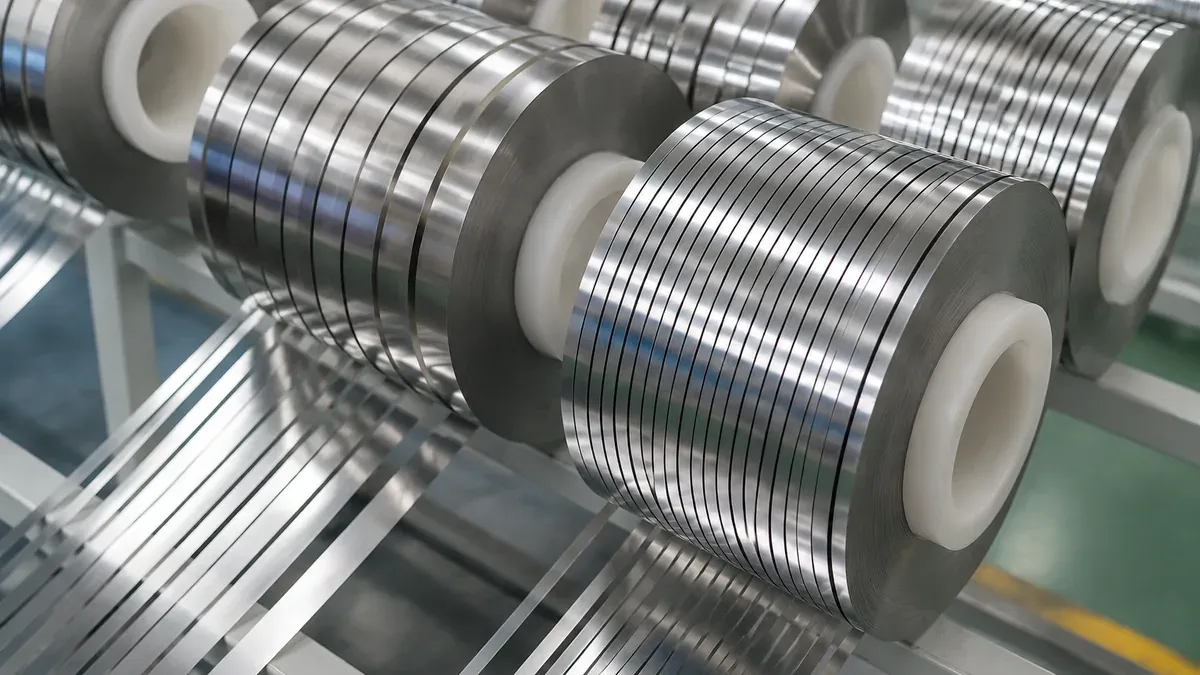
304 stainless steel precision strip is quoted as narrow cold-rolled material by grade, temper, thickness, slit width, edge, burr and camber. Common inquiry range: 0.05–1.5 mm thick, 5–600 mm slit width. Send measurable acceptance limits with the RFQ.
Supply routes
- In-house production or processing
- Qualified partner-mill sourcing
Where this product solves the job
- Progressive stamping and precision formed parts that need an agreed width, edge and coil-feeding condition.
- Clips, contacts and spring-like components when the drawing defines the required temper or mechanical-property range.
- Electronics and instrument parts that require controlled surface, winding direction and lot traceability.
When we recommend another route
- Spring designs that assume 301 and 304 have identical work-hardening response without material validation.
- Purchases defined only as hard strip with no tensile, hardness, bend or forming acceptance criteria.
- Components whose burr, camber or coil-set limits are tighter than the quoted slitting and rolling route can confirm.
Standards we quote against
Send the product standard, edition and any dimensional or finish standard with the RFQ. We quote the ordered combination, not a generic grade name.
Ordered product standards: ASTM A666 · EN 10088
What to send so we can quote the right route
- Specify 304 or another expressly approved grade, the strip standard and edition, condition and required mechanical-property range.
- State finished thickness and width with tolerances, edge class, maximum burr and the burr measurement method and side.
- Define camber, flatness or coil-set acceptance over a named gauge length relevant to the feed system.
- Provide coil ID, maximum OD and weight, winding direction, pancake or traverse format and splice restrictions.
- Identify the critical surface, finish, protective interleaving, marking, sampling plan and ordered inspection document.
Specifications
| Grades | 304 / 301 by required temper |
|---|---|
| Typical thickness | Common inquiry range: 0.05–1.5 mm. |
| Typical slit width | Common inquiry range: 5–600 mm. |
| Temper | Annealed, quarter hard, half hard or full hard |
| Edge | Slit, deburred or conditioned edge |
| Coil format | ID, OD and weight made to line requirements |
| Packing | Eye-to-sky or eye-to-wall with moisture protection |
| Commercial basis | Quantity, MOQ, production route and delivery schedule are quoted for the ordered specification. |
Dimensions and Tolerances
| Thickness | Common inquiry range: 0.05–1.5 mm. |
|---|---|
| Width | Common inquiry range: 5–600 mm. |
| Order basis | Governing product and dimensional standard, delivery condition and any drawing-specific limits. |
| Special tolerances | Send special tolerances in the RFQ; we quote the accepted production route. |
Published ranges are technical references, not a live-stock or production-capability promise. We confirm the ordered size range, MOQ and delivery schedule in the quotation.
Edge or end condition
- Slit, deburred or conditioned edge; final condition as ordered.
Testing and inspection
- Tests required by the purchased product standard.
- PMI, NDE, corrosion, roughness or other supplementary inspection quoted when the RFQ names method, lot scope and acceptance.
Order documents
- Heat identity with EN 10204 3.1, or the inspection document named in the RFQ, against mill, stock or partner-mill route.
- Supplementary reports linked to the ordered test plan.
Export packaging
- Coils wrapped with edge protection and moisture barrier; eye orientation as ordered.
- Unit weight and ID/OD stated in the quotation for lifting and pay-off.
Quote temper with the grade
Annealed material is quoted for forming routes that need ductility; cold work raises strength and springback. Send the required tensile or hardness range, part geometry and forming test. A 301 substitution needs separate design approval.
Quote slitting inputs
Send finished width and tolerance, thickness, edge class, burr method, camber gauge length, coil ID and OD, maximum coil weight, winding direction and surface protection. We quote burr and camber against the ordered thickness, condition and edge-processing route.
Quote traceability
Send how slit-coil identity, master-coil or heat reference and the document set must follow each finished coil. Critical stampings can use an agreed sampling and mechanical-test plan.
Common ordering mistakes
- Ordering by quarter-hard or full-hard terminology without the numerical property range needed by the part design.
- Leaving the burr measurement side and method undefined, which makes edge acceptance difficult to reproduce.
- Specifying finished width but omitting camber, coil set and winding direction required by the stamping line.
- Changing from 304 to 301 to gain strength without rechecking forming, corrosion and springback behavior.
Handling and transport risks
- Thin slit edges can be damaged by loose wraps, unsuitable separators or handling tools contacting the coil face.
- Narrow coils may telescope or collapse when winding tension, support and banding are not matched to coil geometry.
- Mixed coil orientation or unreadable tags can interrupt automated feeding and lot traceability at the press.
- Moisture and carbon-steel particles can stain precision surfaces during storage even when the base strip is stainless.
Technical content updated: 2026-07-31
Published by Tsingshan (Shandong) Iron & Steel Co., Ltd..Sources, update policy and technical limitations.
Typical Applications
Related technical resources
Published standards
Applicable standards
ASTM A666 · EN 10088
What to Include in Your RFQ
Send the known values first. We use them to quote the ordered option, inspection plan and delivery route.
- Grade and governing standard
- 304, 301; ASTM A666, EN 10088. State the exact ordered combination.
- Dimensions and tolerances
- Provide thickness, width and identify which order basis, special tolerances requirements govern acceptance.
- Finish, processing and edge or end condition
- 2B, BA; Stainless Steel Coil Slitting, Stainless Steel Cut-to-Length and Leveling, Stainless Steel Polishing and Surface Finishing; Slit, deburred or conditioned edge; final condition as ordered..
- Inspection, documents and packing
- Testing: Tests required by the purchased product standard.; PMI, NDE, corrosion, roughness or other supplementary inspection quoted when the RFQ names method, lot scope and acceptance. Documents: Heat identity with EN 10204 3.1, or the inspection document named in the RFQ, against mill, stock or partner-mill route.; Supplementary reports linked to the ordered test plan. Packing: Coils wrapped with edge protection and moisture barrier; eye orientation as ordered.; Unit weight and ID/OD stated in the quotation for lifting and pay-off.
- Quantity, destination and requested delivery window
- Send quantity per size, unit, destination city or port, trade term and requested delivery window so we can quote the supply and freight route.
Product RFQ Example
RFQ example: ASTM A666 Type 304 precision strip in the specified cold-worked condition, 0.30 x 18.00 mm, stated thickness and width tolerances, tensile and hardness range per drawing, deburred edge with named burr limit and measurement method, agreed camber over the specified gauge length, 300 mm ID, maximum OD and coil weight, winding direction, ordered inspection document and moisture-protected export packing; quote the confirmed production route and delivery separately.
Frequently Asked Questions
Is a commercial temper name enough to order 304 precision strip?
Usually not for a critical stamped or spring part. State the required tensile, yield or hardness range and any bend or forming test so the condition can be evaluated against measurable acceptance criteria.
How should burr be defined on a slit strip order?
Name the maximum burr, measurement instrument and location, which edge or side is critical, sampling frequency and whether further edge conditioning is required. Burr capability depends on thickness, condition and slitting route.
Why does camber need a gauge length?
A numerical camber value is not reproducible without a defined measurement length and method. Use a gauge length related to the feed path and state any separate flatness or coil-set requirement.
Can 301 strip be substituted when 304 cannot meet the target spring strength?
Only with design approval. The grades differ in work-hardening, forming and corrosion behavior, so the part geometry, service and property range should be validated before a substitution is accepted.
Which coil details prevent feeding problems at a stamping line?
Confirm ID, maximum OD and weight, winding direction, edge orientation, coil set, splice policy, tag location and package orientation. These details connect the material order to the actual decoiler and feed system.
Quote request
Get a Stainless Steel Quote
Send the product, grade and quantity you already have. We will complete the specification and quote the supply route.