
201 Stainless Steel Coil
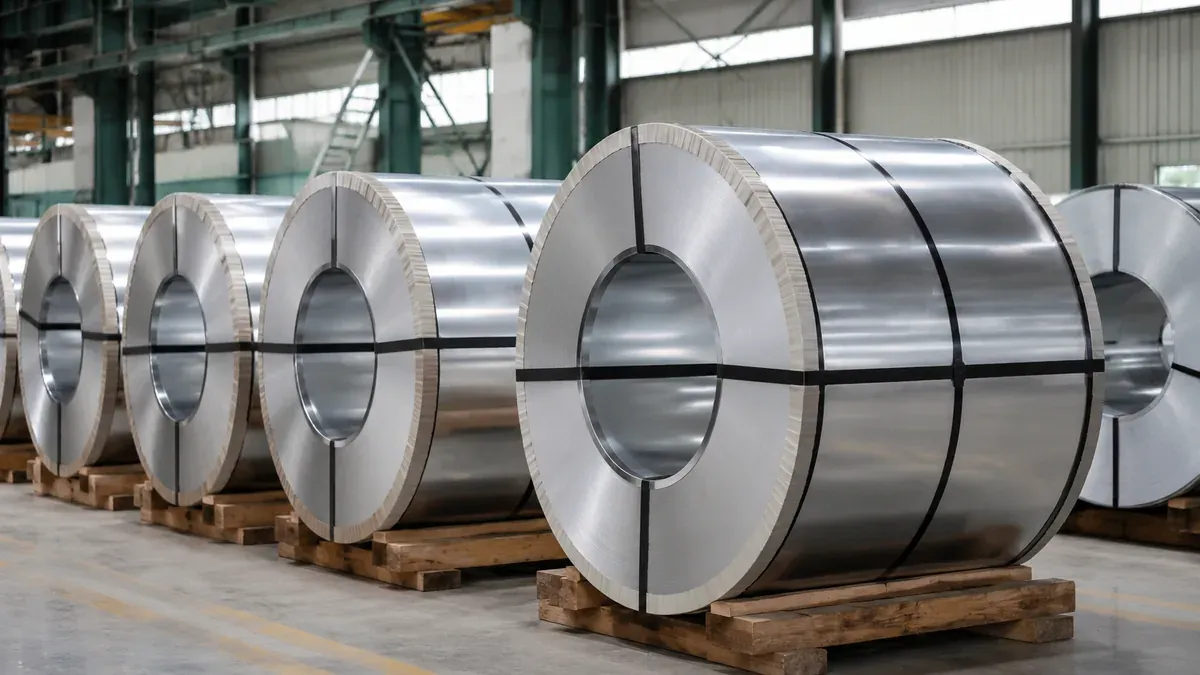
201 stainless steel coil is quoted as chromium-manganese-nickel cold-rolled feedstock by J1 or J2 composition basis, hardness, surface and coil build. Common inquiry range: 0.2–3.0 mm, 1000/1219 mm or slit from 20 mm. Send the forming or tube-making duty with the RFQ.
Supply routes
- In-house production or processing
- Qualified partner-mill sourcing
- Stock coordination
Grade datasheets:201
Where this product solves the job
- Indoor decorative tube and formed-component production where the selected 201 variant has been proven in the buyer's process.
- Cost-sensitive kitchenware or appliance parts after drawing depth, hardness, surface and corrosion exposure have been reviewed.
- Slit-coil programs that define finished width, edge, burr, camber, ID, winding direction and downstream payoff conditions.
When we recommend another route
- Automatic replacement of 304 in exterior, frequently wet, chloride-cleaned or corrosive service.
- Deep drawing based on a generic 201 label without an agreed variant, hardness range and trial or historical forming evidence.
- Tube lines that omit slit-edge, camber, weld orientation and coil-build limits from their purchase description.
Standards we quote against
Send the product standard, edition and any dimensional or finish standard with the RFQ. We quote the ordered combination, not a generic grade name.
Ordered product standards: ASTM A240/A240M · JIS G4305
What to send so we can quote the right route
- Define the accepted grade or J1/J2 composition basis, governing standard, temper or hardness and intended forming or tube-making operation.
- State thickness, finished slit width, tolerances, edge condition, maximum burr, camber and flatness acceptance.
- Give coil ID, permitted OD or weight, winding direction, eye orientation, splice policy and payoff equipment limits.
- Specify 2B or BA starting surface, critical face, film if any, visual acceptance and whether downstream polishing is planned.
- List quantity per width, trial-coil needs, inspection document, identification, packing and destination constraints.
Specifications
| Grade | 201 (J1 / J2 variants) |
|---|---|
| Standard | ASTM A240/A240M, JIS G4305 |
| Thickness | Common inquiry range: 0.2–3.0 mm. |
| Width | Common inquiry range: 1000 / 1219 mm, slit from 20 mm. |
| Coil ID | Common inquiry range: 508 / 610 mm. |
| Coil weight | Common inquiry range: 3–12 t, or as required. |
| Finish | 2B, BA |
| Commercial basis | Quantity, MOQ, production route and delivery schedule are quoted for the ordered specification. |
Dimensions and Tolerances
| Thickness | Common inquiry range: 0.2–3.0 mm. |
|---|---|
| Width | Common inquiry range: 1000 / 1219 mm, slit from 20 mm. |
| Order basis | Governing product and dimensional standard, delivery condition and any drawing-specific limits. |
| Special tolerances | Send special tolerances in the RFQ; we quote the accepted production route. |
Published ranges are technical references, not a live-stock or production-capability promise. We confirm the ordered size range, MOQ and delivery schedule in the quotation.
Edge or end condition
- Edge, end or facing condition as ordered from the product form, standard and fabrication need.
Testing and inspection
- Tests required by the purchased product standard.
- PMI, NDE, corrosion, roughness or other supplementary inspection quoted when the RFQ names method, lot scope and acceptance.
Order documents
- Heat identity with EN 10204 3.1, or the inspection document named in the RFQ, against mill, stock or partner-mill route.
- Supplementary reports linked to the ordered test plan.
Export packaging
- Coils wrapped with edge protection and moisture barrier; eye orientation as ordered.
- Unit weight and ID/OD stated in the quotation for lifting and pay-off.
Quote J1 or J2 with the coil
Chinese mills produce 201 in copper-bearing variants: J1 (higher copper, better deep-drawing, used for kitchenware) and J2 (harder, used for tube and panels). Send the variant or the end use with the RFQ; we quote the matching coil route.
For tube mills
For tube-mill strip, state slit width, edge condition, camber limit, thickness tolerance and coil build in the RFQ. Send these as order-specific acceptance criteria; we quote the matching coil route.
Where 201 is the right buy
201 can reduce alloy cost in suitable indoor service. For outdoor or frequently wet duty, send the service with the RFQ so we can quote 201 or a higher-alloy route. See the 201 datasheet and compare with 304.
Common ordering mistakes
- Ordering simply 201 and expecting every source variant to have identical copper, hardness and deep-drawing behavior.
- Comparing 201 with 304 only by purchase cost while ignoring corrosion exposure, forming yield and downstream rejection risk.
- Specifying nominal slit width but no edge, burr or camber criteria for a continuous tube or stamping process.
- Choosing coil weight without checking uncoiler capacity, ID, OD, aisle handling and line-change requirements.
Handling and transport risks
- Slit edges can be sharp and can telescope or collapse if banding, eye orientation and side protection do not match coil geometry.
- Mixed 201 variants can cause forming inconsistency unless coils and certificates remain segregated by the ordered composition basis.
- Surface rub, band marks and moisture staining can affect decorative tube yield before any polishing operation.
- An overweight or oversized coil can be unsafe or unusable on the buyer's uncoiler even when strip dimensions are correct.
Technical content updated: 2026-07-31
Published by Tsingshan (Shandong) Iron & Steel Co., Ltd..Sources, update policy and technical limitations.
Typical Applications
Related technical resources
Grades
Published standards
Applicable standards
ASTM A240/A240M · JIS G4305
What to Include in Your RFQ
Send the known values first. We use them to quote the ordered option, inspection plan and delivery route.
- Grade and governing standard
- 201; ASTM A240/A240M, JIS G4305. State the exact ordered combination.
- Dimensions and tolerances
- Provide thickness, width and identify which order basis, special tolerances requirements govern acceptance.
- Finish, processing and edge or end condition
- 2B, BA; Stainless Steel Coil Slitting, Stainless Steel Cut-to-Length and Leveling, Stainless Steel Polishing and Surface Finishing; Edge, end or facing condition as ordered from the product form, standard and fabrication need..
- Inspection, documents and packing
- Testing: Tests required by the purchased product standard.; PMI, NDE, corrosion, roughness or other supplementary inspection quoted when the RFQ names method, lot scope and acceptance. Documents: Heat identity with EN 10204 3.1, or the inspection document named in the RFQ, against mill, stock or partner-mill route.; Supplementary reports linked to the ordered test plan. Packing: Coils wrapped with edge protection and moisture barrier; eye orientation as ordered.; Unit weight and ID/OD stated in the quotation for lifting and pay-off.
- Quantity, destination and requested delivery window
- Send quantity per size, unit, destination city or port, trade term and requested delivery window so we can quote the supply and freight route.
Product RFQ Example
RFQ example: cold-rolled 201 J1 coil for decorative tube production, ordered composition basis attached, 0.60 x 62.0 mm slit strip, stated thickness and width tolerances, deburred slit edge with maximum burr and camber limits, 508 mm ID, buyer equipment OD and weight limits, 2B critical face, winding direction marked, trial quantity and export eye-to-sky packing to the named destination.
Prepare the product context
Define the 201 coil route
J1 and J2 are market variant labels, not complete international purchase standards. Send the accepted composition basis and downstream process so we can quote the coil route.
Frequently Asked Questions
What is the practical difference between 201 J1 and J2 coil?
These are market variant labels rather than complete international purchase standards. Copper, hardness and forming response can differ, so define the accepted chemistry or source basis and validate it against the intended process.
Can 201 coil replace 304 for outdoor decorative tube?
Send the outdoor or wet service with the RFQ. 201 generally offers less corrosion margin than 304; we quote 201 or a higher-alloy route after that review.
Which slit-coil variables matter most to a tube mill?
Finished width and tolerance, edge and burr, camber, thickness, surface orientation, coil ID and build, winding direction, splice policy and payoff limits all affect line stability and weld fit-up.
How should a buyer specify hardness for formed 201 parts?
State the test method, unit, range, specimen location and forming operation, then align it with the ordered variant and delivery condition. A generic soft or hard description is not enough.
What prevents telescoping damage in a narrow 201 slit coil?
Confirm coil build, side support, band placement, eye orientation, pallet or skid design and lifting method for the actual width, ID and weight.
Quote request
Get a Stainless Steel Quote
Send the product, grade and quantity you already have. We will complete the specification and quote the supply route.