
Stainless Steel RFQ Checklist for Accurate Quotes
A practical stainless steel RFQ checklist covering product form, grade, standard, dimensions, tolerance, finish, testing, documents, packing and destination.
Published Jul 29, 2026 · Technical content updated: Jul 29, 2026 ·Tsingshan (Shandong) Iron & Steel Co., Ltd.
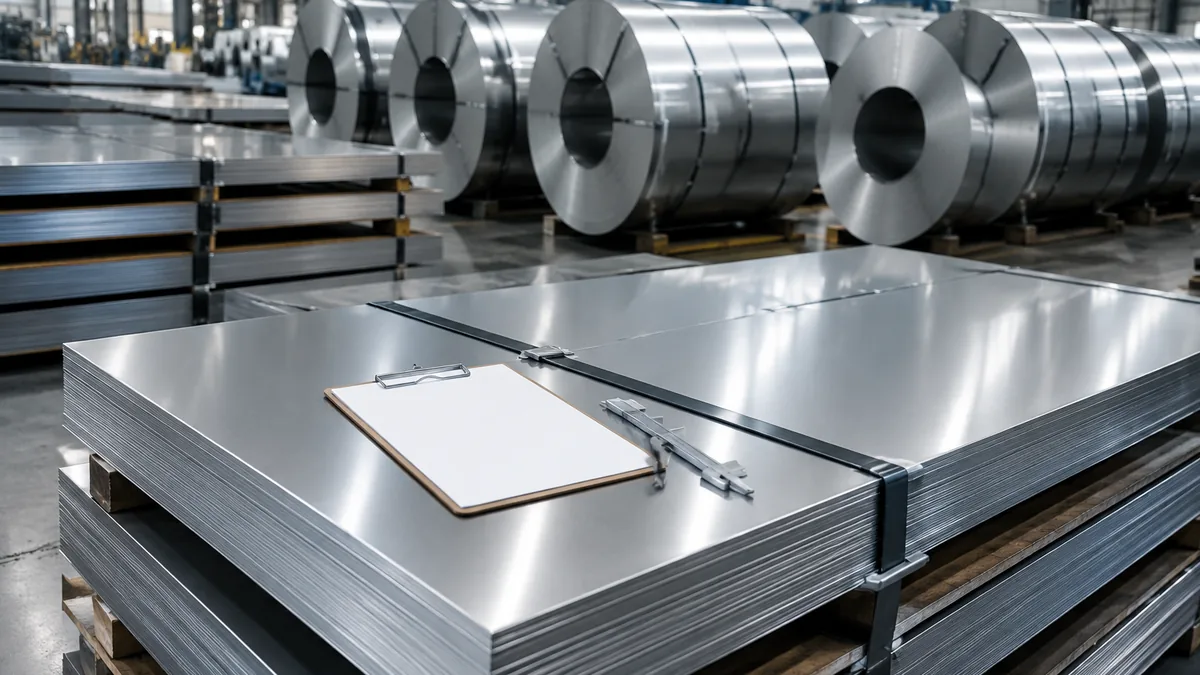
Reference image for this topic; it does not show Tsingshan Steel facilities, inventory or completed orders.
A useful stainless steel RFQ removes ambiguity before a supplier chooses material, production route and freight basis. The fastest quote is not the one with the fewest lines; it is the one where every line changes price, acceptance or delivery.
Use the checklist below for sheet, coil, pipe, bar, profiles, wire, fittings and flanges. For a broad starting point, review our eight stainless product families before selecting the form.
1. Name the product form precisely
“316L stainless, 10 tons” is not enough. The same grade can be plate, slit coil, seamless pipe, welded sanitary tube, ground bar or forged flange. Each form has a different product standard, dimensional system and production route.
State:
- product form and manufacturing route;
- grade and any UNS or EN designation;
- governing material and dimensional standards;
- end use when it affects corrosion, hygiene, pressure or appearance.
Our standards library explains what common ASTM, ASME and EN documents control.
2. Put dimensions and tolerances on the same line
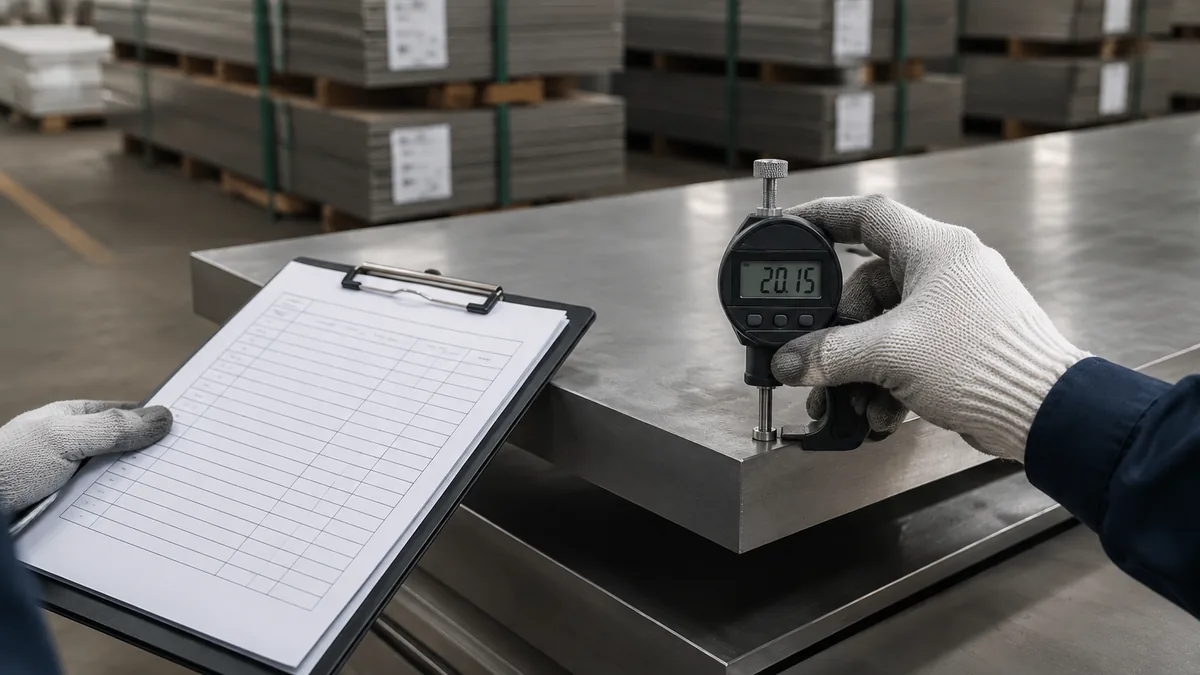
Nominal size and acceptable variation are different requirements. A plate RFQ may need thickness, width, length, flatness and diagonal tolerance. A pipe RFQ normally needs NPS and schedule or outside diameter and wall thickness. A coil RFQ also needs coil ID, OD and maximum weight.
| Product | Dimensions buyers often miss |
|---|---|
| Sheet / plate | Thickness tolerance, flatness, diagonal and edge condition |
| Coil / strip | Slit-width tolerance, burr, coil ID, OD, weight and winding direction |
| Pipe / tube | Route, OD or NPS, wall or schedule, length and ends |
| Bar / profile | Shape, straightness, corner condition, length and machining allowance |
| Fittings / flanges | Dimensional standard, pressure class, facing, bore and matching pipe schedule |
For cut parts, attach the drawing and write its revision in the RFQ. Do not let an old file attachment silently override the purchase-order revision.
3. Define finish as an acceptance criterion
2B, BA, No.4, hairline and mirror are useful commercial names, but they do not fully define appearance. Decorative work may also need an approved sample, grain direction, gloss range, visible side and protective film.
Use the stainless finish guides to identify which inputs belong on the order. If the surface will be polished after cutting or forming, explain the final fabrication route so the supplier can select suitable feedstock.
4. Separate quantity from logistics
State quantity per size, not only the total order weight. Add acceptable over- or under-delivery, bundle or coil limits, destination port or city, requested trade term and required delivery window.
Do not assume the closest port is automatically the best option. Cargo origin, sailing schedule, destination and freight can change the loading port used in the final quotation.
5. List tests and documents before pricing
“Certificate required” can mean very different things. Identify the inspection document and any supplementary test, such as PMI, ultrasonic testing, hydrostatic testing, roughness records or project-specific corrosion testing.
Before naming EN 10204 3.1, understand what it confirms in our mill test certificate guide. Test scope must match the product standard and purchase order; a certificate name does not create a test that was never ordered.
6. Match packing to the product and route
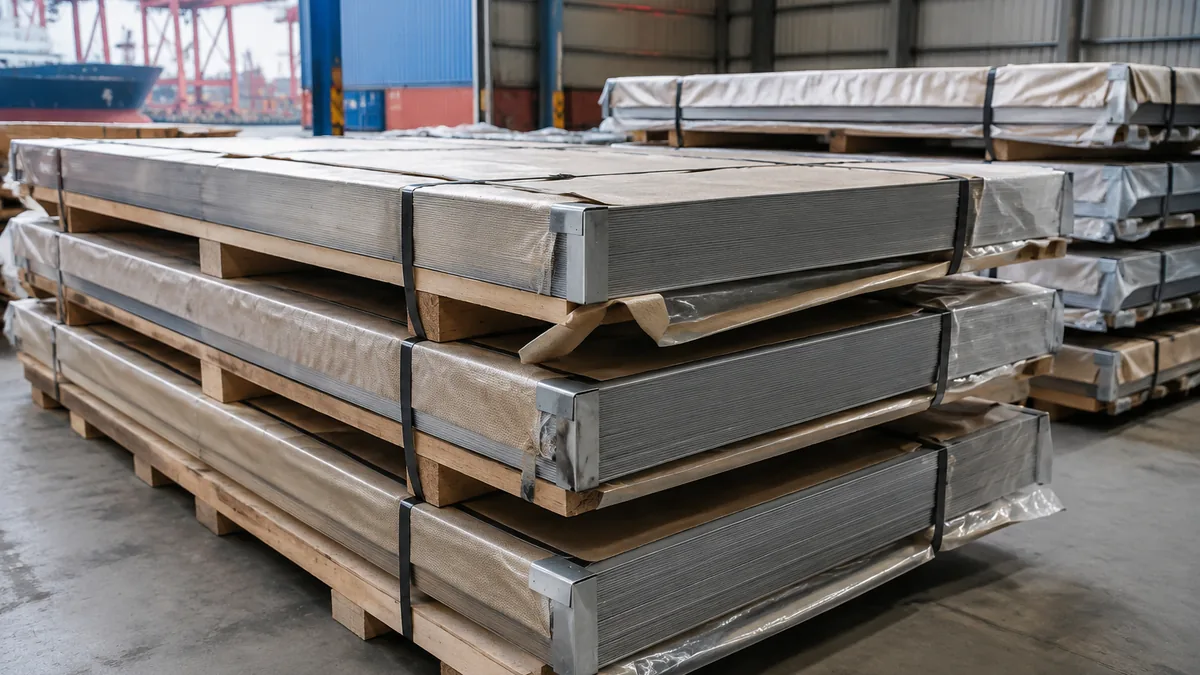
Packing affects surface condition, unloading and container safety. State moisture protection, edge guards, film, pallet or skid, maximum package weight, lifting access and any restrictions at the receiving warehouse.
Polished sheet, precision strip, machined flanges and ordinary pickled plate should not share one generic packing sentence. See the detailed packing and shipping workflow for form-specific examples.
A copy-ready RFQ structure
Product: 316L stainless steel cold-rolled sheet
Standard: ASTM A240/A240M, general requirements per ASTM A480/A480M
Size: 2.0 × 1500 × 3000 mm; state thickness and flatness tolerance offered
Finish: 2B, one-side laser film
Quantity: 20 metric tons, quantity per bundle to be confirmed
Inspection: EN 10204 3.1 document and PMI before shipment
Packing: seaworthy pallet with moisture and edge protection
Delivery: quote FOB named Chinese port and CIF destination as separate options
This example is a format, not a universal specification. Replace every line with the actual project and product requirements.
Final pre-send check
- Is the grade tied to a product standard?
- Are dimensions and tolerance both stated?
- Can the finish be inspected objectively?
- Are tests and documents listed separately?
- Is quantity split by item and size?
- Are packing, trade term and destination clear?
- Does every attachment show a revision?
When those answers are clear, submit the RFQ through our stainless steel inquiry form and attach or reference the controlled drawings in your follow-up email.
Build an RFQ that survives clarification
After the first quote, compare every supplier response against the same checklist. Mark whether the offer is based on nominal or measured weight, whether tolerance is included, which finish and edge condition are assumed, and which inspection documents are actually available. Ask the supplier to separate material, processing, testing, packing and freight assumptions so a later change can be priced without rewriting the entire order.
For a pipe inquiry, add seamless or welded route, NPS or OD, wall or schedule, length, ends, hydro or NDE requirement and applicable pressure or project code. For a coil inquiry, add slit width, burr, camber, ID, OD, winding direction and maximum coil weight. For a bar or profile, add shape drawing, straightness, corner condition, cut length and machining allowance. For fittings and flanges, add type, dimensions, pressure class, facing, bore, schedule match and face protection. Those fields are not interchangeable between product families.
Clarify alternatives instead of accepting silent substitutions
If the requested grade, finish, dimension or standard is not available on the proposed route, ask for a marked alternative. The response should name the requested line, the offered line, the technical difference, the reason for the change and any approval or test needed. Do not let a similar designation in a spreadsheet become an automatic replacement. Use the grade equivalence tool for a starting cross-reference, then confirm the product standard and project approval with the responsible engineer.
Finally, keep the RFQ version, drawings, source files and clarification log together. A clean revision trail prevents an old attachment from changing the quoted dimensions, and it gives the receiving team a clear basis for checking the certificate, package marks and delivered quantity.
When the checklist is complete, send the product form, grade and quantity. We quote the matching stainless route against the named standard, tests and documents. Do not treat a missing line as stock, dual certification or a default inspection package.
Sources and application limits
This guide supports purchasing decisions. The ordered product standard, project specification and approved inspection plan control the final decision.
- ASTM A240/A480 ordering inputs
- ASTM A312/A269 pipe and tube ordering inputs
- EN 10204 inspection-document categories
Technical content updated: Jul 29, 2026
Frequently Asked Questions
What is the minimum information for a stainless steel quote?
State product form, grade, governing standard, dimensions, quantity and destination. Add tolerance, finish, testing, documents and packing wherever they affect acceptance.
Can I request both 304 and 316L pricing?
Yes. Ask for clearly separated alternatives with the same dimensions, finish, testing and delivery basis so the commercial difference is meaningful.
Should I send a drawing or write dimensions in the email?
Use a controlled drawing for cut parts, profiles and fabricated items. Include its revision and repeat the critical commercial dimensions in the RFQ summary.
Send the product form, grade and quantity from this guide. We quote the matching stainless route.
Ready to quote your stainless specification?
Send product, grade and quantity. We quote the confirmed supply route.