
304L vs 316L Process Piping RFQ: When 304L Is Enough
RFQ 304L vs 316L process piping with chloride, weld and corrosion gates; freeze schedule/OD, finish, MTC and packing for Gulf and Southeast Asian plant buyers.
Published Sep 28, 2026 · Technical content updated: Sep 28, 2026 ·Tsingshan (Shandong) Iron & Steel Co., Ltd.
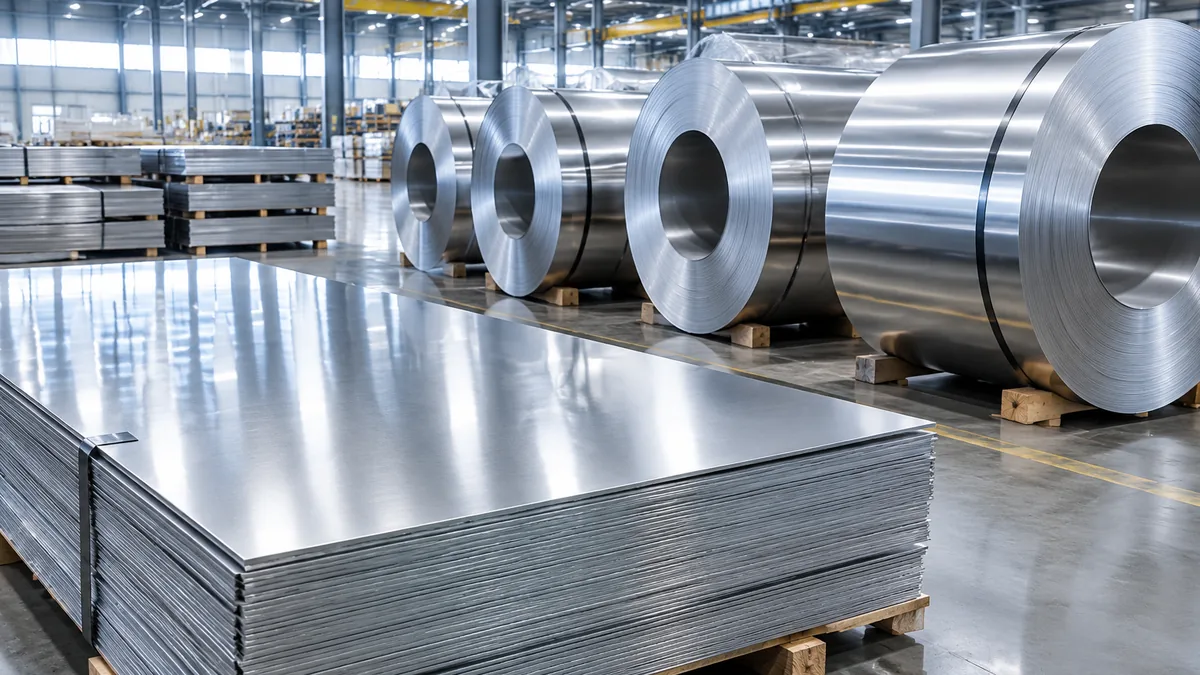
Reference image for this topic; it does not show Tsingshan Steel facilities, inventory or completed orders.
Featured answer
304L vs 316L for process piping is a duty gate, not a plant-wide nickname. Keep 304L when the owner corrosion basis still accepts low-chloride, mild process or utility pipe in the chromium-nickel austenitic family. Move the line to 316L when chlorides, brine/coastal exposure, crevices, aggressive cleaning or as-welded corrosion risk compress that envelope. Then freeze NPS + schedule (or OD + wall), ends, finish, manufacturing route if required, EN 10204 type and destination packing so MENA and Southeast Asia quotes stay comparable. For grade chemistry, see the stainless steel grades index (open the 304L and 316L grade pages from there). Full chemical-plant screening into duplex or 904L is covered on the chemical processing grade RFQ guide.
| Screening step | What you freeze | Typical next action |
|---|---|---|
| Duty split | Utility vs process; chloride/crevice notes | Keep 304L or fail to 316L |
| Grade gate | 304L vs 316L (dual-cert rules) | No brochure nickname |
| Wall language | NPS/schedule or OD/wall + edition | Comparable wall bids |
| Ends + finish | Bevel/plain/threaded; pickle/passivate as ordered | Same line as grade |
| Documents + packing | EN 10204, heat marks, export wrap | Export-ready award |
Separate utilities from process before you name a grade
Process-piping RFQs fail when one line says SS304L plant pipe across cooling water, condensate, solvent transfer, brine-adjacent headers and coastal utility loops. A grade nickname is not a corrosion certificate.
Capture at least:
- Line class — utility, process, drain, vent, cleaning circuit
- Fluid and contaminants — especially chlorides, solids and cleaning chemicals
- Temperature / pressure envelope and wetting pattern (flow vs stagnation)
- Crevices — flanges, under-deposit, dead legs, gasket faces
- Weld plan — shop vs field, multi-pass, post-weld anneal realistic or not
- Location — indoor dry, humid Gulf summer, SEA coastal plant, brine-adjacent yard
- Owner basis — which tags already accept 304L vs require molybdenum-bearing austenitic
If the duty already points past ordinary 316L into duplex or specialty alloys, stop this page and open the chemical processing grade RFQ guide. Seamless-versus-welded manufacturing route belongs on the seamless vs welded stainless pipe guide, not as a silent grade swap.
When 304L is enough for process piping
Use 304L as a commercial screen only where the owner basis already accepts that envelope.
1. Low-chloride mild process transfer
Clean solvents, dry gases or mild aqueous duties with low chloride and no brine adjacency — when the corrosion review still names 304L.
2. Plant utilities the basis already accepts
Indoor compressed air, nitrogen, low-chloride condensate and similar utilities often stay on 304L when the piping class document says so. Still freeze wall and ends.
3. As-welded shop spools with carbon control
Prefer the L-grade when assemblies stay as-welded and carbon control matters. That weld-carbon decision is deepened on the 304 vs 304L welding buyer guide; this page still needs the chloride gate before award.
4. SEA / Gulf packages with confirmed dry indoor duty
Southeast Asia and Middle East plants can RFQ 304L for indoor utilities and mild process tags when humidity and drainage keep chlorides off the line. Do not mix coastal brine tags into the same price line.
5. Owner-approved tag list only
If the P&ID or piping class already lists 304L for named tags, attach that class excerpt to the RFQ. Silent 316L downgrades or upgrades without a revision are not acceptance.
Chloride, weld and corrosion gates that force 316L
Escalate early. Rework after award costs more than a clarification email.
| Duty cue | Risk cue in Gulf and tropical service | First screen | Escalate when… |
|---|---|---|---|
| Low-chloride utility | Indoor dry plant air / N2 | 304L if basis accepts | Condensation + chloride cleaners appear |
| Mild aqueous process | Controlled chloride, no brine | 304L under review | Chloride or temperature rises on the datasheet |
| Coastal / Gulf humid utility | Salt air, yard headers | Prefer 316L | Owner insists on 304L without corrosion note |
| Brine-adjacent / wash-down | Splash, mist, dead legs | 316L baseline | Crevices + stagnation on flanges |
| As-welded multi-pass wet service | HAZ + chlorides | 316L + weld controls | Do not force 304L for price |
| Chemical reducing / severe chloride | Acids, FGDC-type notes | Off-ramp to chemical RFQ | Past ordinary austenitic pipe |
Molybdenum in 316L is a commercial screen for chloride and pitting risk under owner review — not a PREN nickname that replaces the materials engineer. If duplex or 904L already appears on the owner basis, leave this page.
Freeze wall: schedule vs OD, ends and finish
Grade alone does not freeze mill pipe.
| Field | What to write | Why it matters |
|---|---|---|
| Size language | NPS + schedule or OD + wall (not mixed on one line) | Prevents schedule-40 vs 3.0 mm wall swaps |
| Standard + edition | ASTM A312 (or named equivalent) + edition | Dimensional and test basis |
| Manufacturing route | SML / WLD / HCW if the project restricts route | Stops silent seamless/welded swaps |
| Ends | Plain, beveled, threaded — as ordered | Fabrication fit-up |
| Finish / surface | Pickled/passivated, OD polish class if required | Coastal and hygienic-adjacent tags |
| Length / tolerance | Random or cut lengths; project tolerance note | Yield and freight claims |
| Quantity / lots | By tag or line class | Keeps 304L and 316L crates split |
Pipe-versus-tube vocabulary and OD-only tube language belong on the site pipe-vs-tube buyer guide. Available forms are listed in the stainless steel product range.
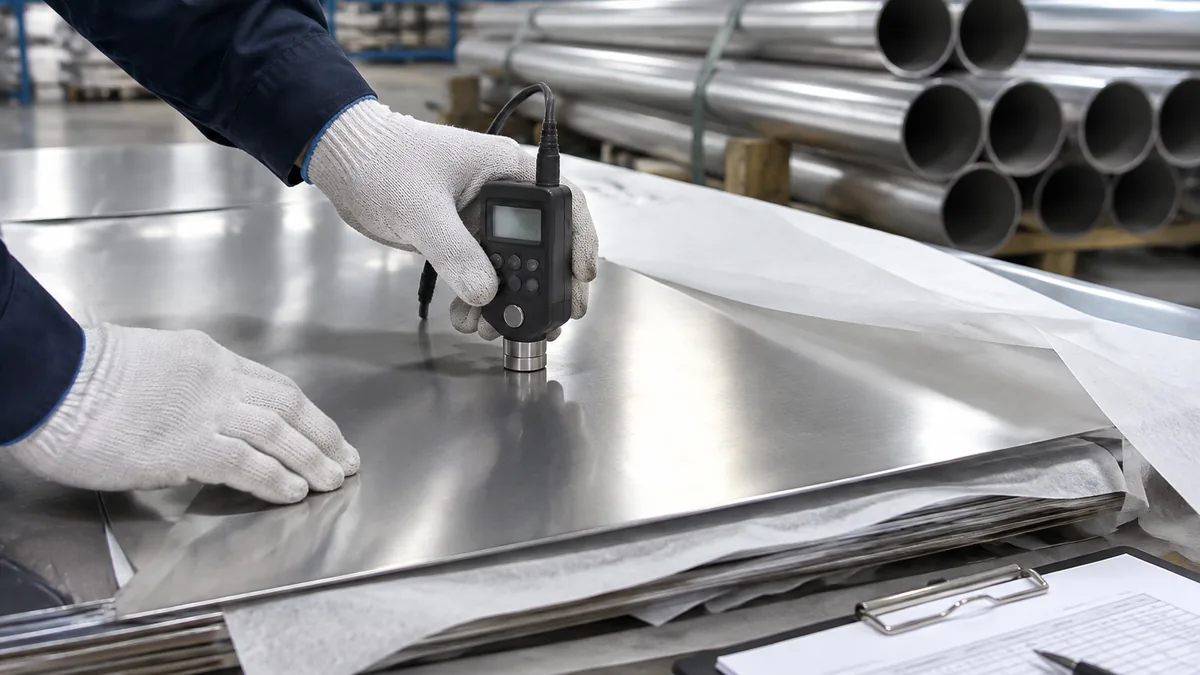
RFQ field checklist for 304L vs 316L pipe
Copy these fields into the clarification sheet before price comparison:
- Duty tag — utility / mild process / coastal / brine-adjacent note
- Grade — 304L or 316L (and any dual-cert rules the PO allows)
- Escalate rule — chloride/weld/corrosion conditions that force a 316L re-quote
- Size — NPS + schedule or OD + wall, with standard edition
- Route — SML / WLD / HCW if restricted
- Ends + finish — bevel/plain; pickle/passivate or polish class
- Weld / filler notes — as-welded vs anneal; PMI scope if required
- Quantity and delivery lot split by grade
- Documents — EN 10204 type, heat identity, marking
- Packing / destination — MENA or SEA marks, end caps, wrap, desiccant
- No silent substitution across 304L / 316L families
Keep chemical-plant duplex/904L screening on the chemical RFQ guide when the duty already leaves ordinary austenitic pipe.
MTC, marking and packing that keep mixed-grade bids comparable
Plant packages often mix 304L and 316L crates on the same vessel. Document type alone does not prevent swaps.
- Name EN 10204 type on the PO (Type 3.1 common; Type 3.2 only when required).
- Require heat/lot identity on tags that match crate and bundle marks.
- Ban silent 304L↔316L substitution on mixed process packages.
- For Gulf and Southeast Asian humidity, freeze end caps, wrap and desiccant expectations at RFQ — not after freight booking.
- Keep destination marks readable after wrap; unclear marks create receiving disputes on grade-split lots.
Practical notes from 304L / 316L piping RFQs
Patterns that burn weeks on Gulf plant and SEA EPC packages:
- One line 304L or 316L same price with no chloride or duty split
- Wall written as Sch 40 on one bid and 3 mm WT on another without a common basis
- Coastal yard headers awarded as 304L because indoor utility stock was cheaper
- Weld route left blank; seamless and welded prices mixed after award
- Ends omitted until the spool shop rejects square-cut pipe
- Mixed-grade containers without heat marks matching the MTC
- Packing left until the forwarder asks for end protectors and humidity wrap
If the team only needs a chemical-plant duplex tree, use the chemical processing grade RFQ guide. If the problem is SML vs WLD or pipe vs tube vocabulary, use those dedicated posts.
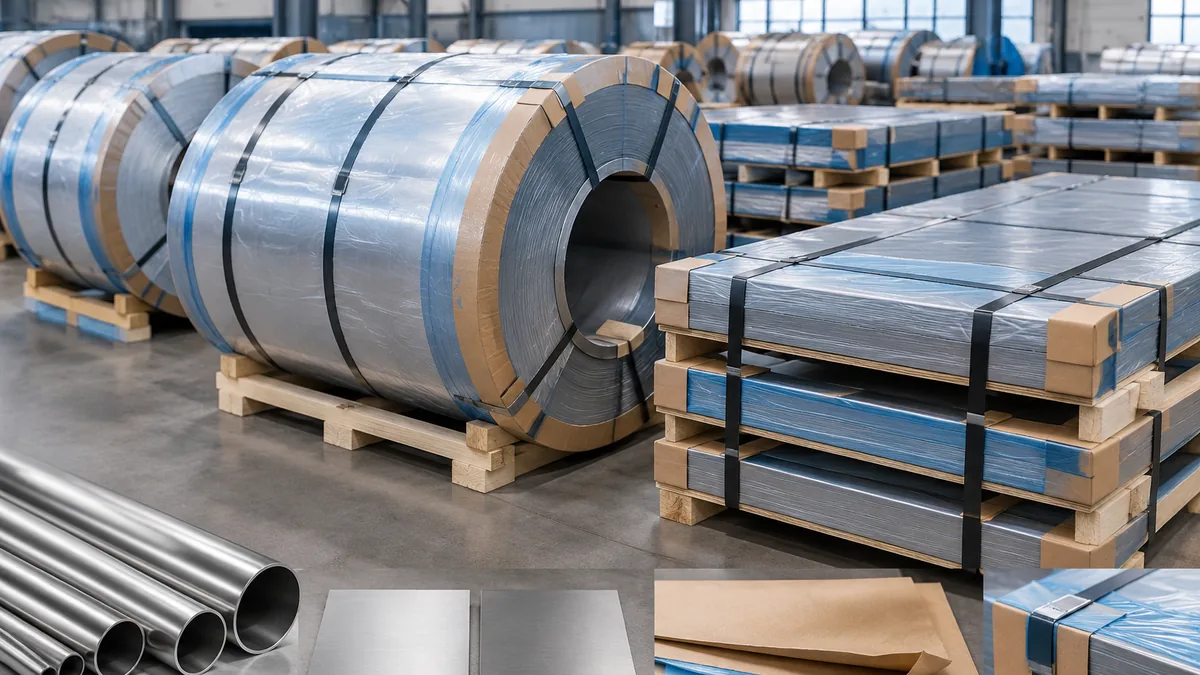
Freeze the RFQ line before material award
Award 304L or 316L process pipe only after the line can be read without guesses:
Duty [utility / mild process / coastal]: grade [304L / 316L] pipe per ASTM A312 [edition] (or named equivalent). Size [NPS + Sch … / OD × wall …]. Route [SML/WLD/HCW if restricted]. Ends […]; finish [pickle/passivate / polish class]. EN 10204 Type 3.1; heat identity on marks; packing and marks for [destination port]. Escalate to 316L (or higher per basis) if chlorides, brine, crevices or as-welded corrosion risk reject 304L. No silent substitution.
Send that freeze with quantities to contact. We quote against named process-piping fields for Middle East and Southeast Asia packages — not against an undefined 304L plant-pipe nickname.
Sources and application limits
This guide supports purchasing decisions. The ordered product standard, project specification and approved inspection plan control the final decision.
- ASTM A312/A312M austenitic stainless steel pipe naming practice with edition on the purchase order
- ASME B36.19M stainless steel pipe dimensional schedules commonly used with NPS ordering
- Industry materials practice that molybdenum-bearing 316L is screened when chlorides, crevices or as-welded corrosion risk compress the 304L envelope under owner review
- Common MENA and Southeast Asia procurement pattern that incomplete wall, ends and grade-split notes produce non-comparable 304L and 316L pipe bids
Technical content updated: Sep 28, 2026
Frequently Asked Questions
When is 304L enough for process piping instead of 316L?
When the duty is low-chloride, non-marine utility or mild process service the owner corrosion basis already accepts for chromium-nickel austenitic pipe, and welding stays within that approved envelope. Freeze NPS/schedule or OD/wall, ends, finish and documents on the same line. If chlorides, coastal/brine exposure, crevices, aggressive cleaning or as-welded corrosion risk compress that envelope, stop and screen 316L (or higher per basis) instead of forcing a 304L nickname.
Which fields freeze a 304L vs 316L process piping quote for Gulf and Southeast Asian buyers?
Freeze duty tag (utility vs process), grade (304L vs 316L and dual-cert rules), manufacturing route if required, NPS and schedule or OD and wall with standard edition, ends and finish, quantity/lots, EN 10204 type, heat identity, and destination packing/marks. Missing wall language or a mixed-grade line without duty split is the usual reason bids cannot be compared.
Does a cheaper 304L pipe RFQ always replace 316L?
No. Price alone is not a chloride or weld-corrosion certificate. 304L can fit mild process and many plant utilities the owner already accepts. Escalate to 316L when chlorides, brine, coastal air, crevice severity, cleaning chemicals or as-welded HAZ risk compress the 304L envelope under the project basis.
How is this different from the chemical-processing grade RFQ guide?
That guide starts from a full process data sheet and screens 316L into duplex, 904L and 6Mo trees. Use the chemical guide only when the duty already points past ordinary austenitic pipe.
Send the product form, grade and quantity from this guide. We quote the matching stainless route.
Ready to quote your stainless specification?
Send product, grade and quantity. We quote the confirmed supply route.