
Stainless Steel Purchase Order Wording Examples
Copy-ready stainless steel purchase order wording examples that freeze grade, standard, finish, size and documents so quotes and MTCs stay comparable.
Published Sep 9, 2026 · Technical content updated: Sep 9, 2026 ·Tsingshan (Shandong) Iron & Steel Co., Ltd.
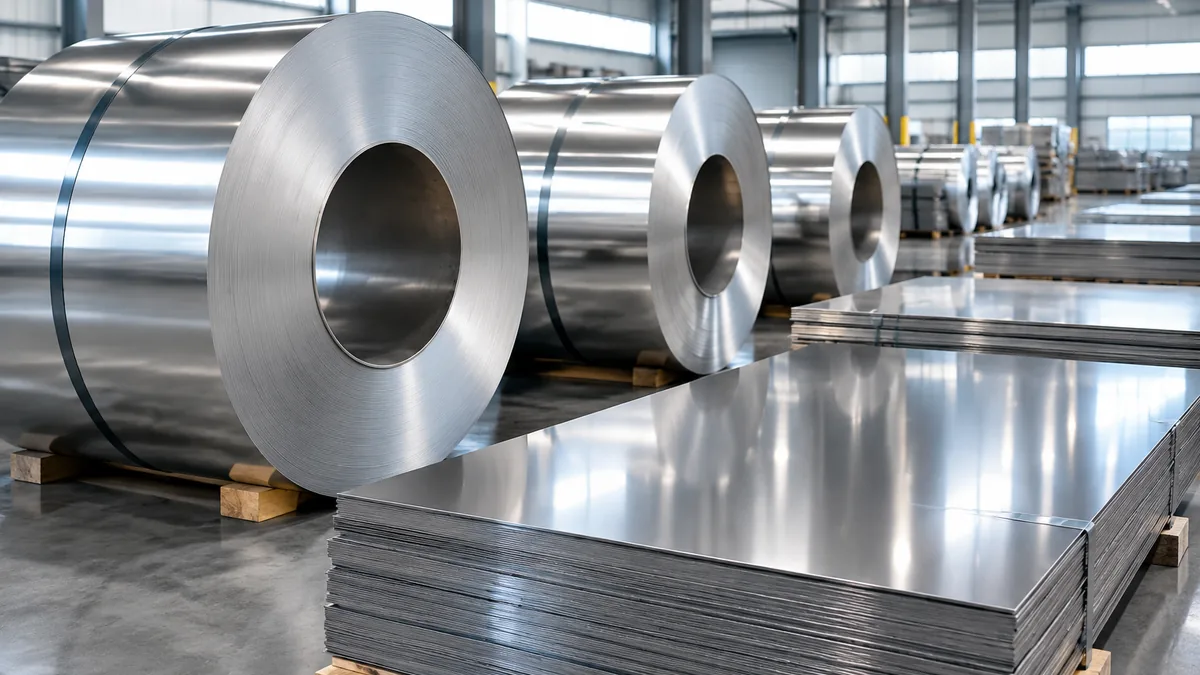
Reference image for this topic; it does not show Tsingshan Steel facilities, inventory or completed orders.
Featured answer
Stainless steel purchase order wording fails when one commercial line can be read as several material routes. Freeze product form, grade, product standard and edition, size with tolerance basis, finish or condition, quantity, and the document package on the same line. That is what makes supplier quotes comparable and what receiving teams later match to tags and the mill test certificate.
| PO field | Weak wording | Stronger wording |
|---|---|---|
| Grade + standard | 304 stainless | ASTM A240 304 / 304L dual-certified only if carbon meets 304L |
| Size | 3 mm sheet | 3.0 mm x 1219 mm x 2438 mm, thickness tolerance per ASTM A480 |
| Finish | nice 2B | 2B, PVC film on critical face, grain direction as marked |
| Documents | MTC required | Heat-linked EN 10204 Type 3.1 to the ordered product standard |
| Identity | as mill standard | Heat number on tags, packing list and certificate must match |
This page tears down the PO line fields that break quote and MTC comparability. For the broader inquiry template before you freeze a PO, use the stainless steel RFQ checklist. For on-product grade screening after the PO is placed, use the stainless steel PMI testing checklist rather than rewriting PMI rules here.
Which PO fields make quotes and MTCs incomparable
Treat every missing field as a silent permission for the supplier to choose the cheapest compliant interpretation.
| Missing or soft field | What suppliers may assume | Bid or receiving failure |
|---|---|---|
| Product form omitted | Sheet vs plate vs coil vs strip quoted interchangeably | Weight, packing, cutting and price unit diverge |
| Grade without product standard | ASTM, EN or mill commercial chemistry mixed | Certificate heading does not match the PO |
| Size without tolerance basis | Mill default vs buyer minimum wall or thickness | Dock rejection after under-tolerance delivery |
| Finish named without face or film | Cosmetic grade vs mill 2B stock | Scratches or wrong polish rejected late |
| “Certificate” without type | Any PDF called MTC | No heat link or wrong EN 10204 type |
| Dual grade without rule | 304/304L or 316/316L sold as either | Carbon or Mo result fails the intended duty |
PO field tear-down sequence
- Lock product form first: sheet, coil, plate, pipe, tube or bar — then open the matching stainless steel product catalogue family.
- Attach grade to a product standard and edition: do not leave “316L” floating without ASTM/EN/JIS product wording.
- Write size as acceptance language: nominal size plus the tolerance or minimum rule you will measure.
- Name finish or delivery condition as supplied: 2B, BA, No.4, No.1, polished OD/ID, annealed and pickled, and any film or critical face.
- Freeze documents and identity on the same line: inspection document type, heat traceability, packing list and tag rules.
If welded fabrication will follow, decide 304 versus 304L before the PO is typed using the 304 vs 304L welding buyer guide. Do not leave that decision to an order confirmation footnote.
Ambiguous stainless PO wording that fails later
These phrases look short and commercial. They create non-comparable quotes and weak receiving holds.
- “SS 304 plate” — No product standard, thickness tolerance, finish or document type.
- “Same as last order” — Last lot may have used a dual-certified heat, different finish film or a different mill route.
- “Certificate of quality” — Not an EN 10204 type and not a heat-linked product description.
- “316L or equivalent” — Equivalent is undefined; Mo chemistry and product form can drift.
- “Mirror polish” — No grit route, Ra if required, critical face or sample approval.
- “Pipe Sch 40” — Missing grade, product standard, seamless vs welded, and end finish.
- “Sanitary tube” — Missing OD/wall, hygienic standard family, ID finish and document scope; use the 316L sanitary tubing specification guide before freezing the PO line.
Rewrite each weak phrase into one line that a second supplier, a mill planner and a receiving inspector can read the same way.
Copy-paste stainless PO line examples by product form
Adapt the brackets. Keep grade, standard, finish, size and documents on one commercial description whenever your ERP allows.
Sheet / plate
Item: Stainless steel sheet, ASTM A240 Type 304, dual 304/304L acceptable only when
carbon meets 304L max on the heat MTC.
Size: 1.5 mm x 1219 mm x 2438 mm; thickness, flatness and diagonal per ASTM A480
commercial limits unless tighter values are attached.
Finish: 2B, PVC protective film on the critical face; film grade suitable for laser
cutting if stated on the drawing revision.
Qty: 8,000 kg (actual scale weight basis).
Documents: heat-linked EN 10204 Type 3.1; packing list and tags must show grade,
heat number, size and finish.
Coil / slit strip
Item: Stainless steel cold-rolled coil, ASTM A240 / A480 Type 316L.
Size: 0.80 mm x 1250 mm master coil; ID 508 mm; max coil OD and max coil weight as
quoted; thickness and width tolerance basis named on the order confirmation.
Finish: 2B with paper interleave or film as agreed; edge condition mill edge / slit
edge named.
Qty: 1 x 20GP target 25-28 MT, exact MT to be confirmed on booking.
Documents: heat-linked EN 10204 Type 3.1; coil map / packing list with heat numbers.
Pipe (NPS / schedule)
Item: Stainless steel welded pipe, ASTM A312 TP304L, ERW, annealed and pickled.
Size: NPS 2, Schedule 40S; length 6.0 m SRL; plain ends; wall acceptance per ASTM A312
unless a minimum ordered wall is written below.
Qty: 120 lengths.
Documents: heat-linked EN 10204 Type 3.1; hydrostatic or NDE only if expressly ordered;
tags must match heat and PO item.
Tube (OD / wall, including sanitary)
Item: Stainless steel sanitary tube, ASTM A270 316L, welded, OD 38.1 mm x wall 1.5 mm,
length 6.0 m.
Finish: mechanical polish OD/ID to project Ra target [state Ra and measurement method];
end caps and clean packing required.
Documents: heat-linked EN 10204 Type 3.1; finish and weld condition stated on the
certificate or attached inspection record as ordered.
Round bar
Item: Stainless steel round bar, ASTM A276 / A479 Type 304, peeled or centerless ground
as quoted.
Size: Dia 40 mm x 3000 mm; diameter tolerance and straightness named on confirmation.
Condition: annealed; free of injurious seams for the ordered condition.
Qty: 5,000 kg.
Documents: heat-linked EN 10204 Type 3.1; heat number on bars or bundle tags.
Use the stainless steel grades hub when you still need to confirm which grade family belongs on the line, then return to the PO wording above instead of leaving the grade as a naked commercial nickname.
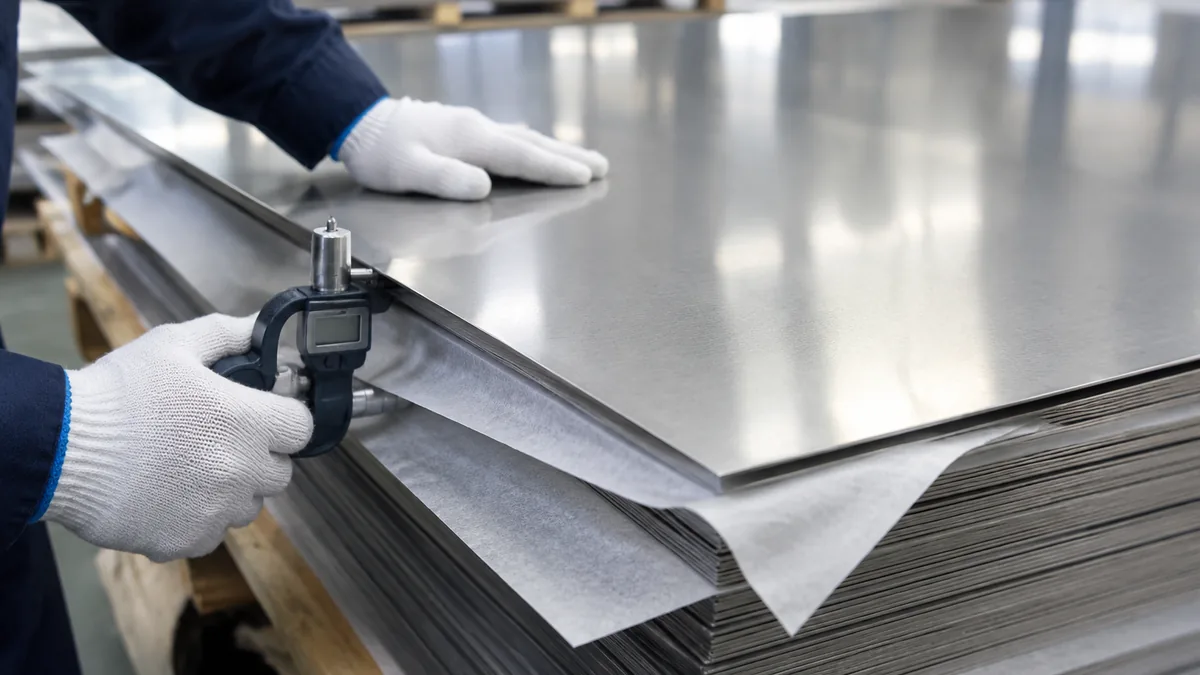
Documents and acceptance language on the same PO line
A clean dimensional description still fails if the document block is vague.
| Document decision | Put this on the PO | Why |
|---|---|---|
| Inspection document type | EN 10204 Type 3.1 or Type 3.2 as required | Stops “any certificate” substitution |
| Product standard on the certificate | Same standard and edition named on the PO item | Makes MTC heading match the order |
| Heat identity | Heat number on MTC, tags and packing list | Creates a receiving hold rule |
| Supplementary tests | PMI, IGC, UT, hardness only if ordered | Prevents assumed free extras |
| Weight basis | Actual scale vs theoretical | Avoids invoice disputes |
Choose 3.1 versus 3.2 with the EN 10204 3.1 vs 3.2 guide. Read the delivered file with how to read a mill test certificate. Put PMI on the PO only when you need on-product screening; do not treat PMI wording as a substitute for the inspection document type.
Surface names should stay measurable. If the finish itself is the acceptance rule, cross-check the finish vocabulary (2B / BA / No.4 / 8K) before you freeze cosmetic language on the PO.
Practical notes from export PO clarification
Export stainless orders usually break in the gap between a short PO description and a long verbal clarification chain.
Buyers send “304 sheet 3 mm” and receive three quotes: one on ASTM A240 2B with film, one on a local commercial sheet without film, and one on dual-certified 304/304L plate tolerances. Order confirmations then change finish film, length tolerance or certificate type in footnotes the buyer never re-freezes on the PO. At stuffing, packing lists show one heat while restickered bundles show another because the PO never required heat identity on tags. Receiving argues with a beautiful MTC that does not describe the ordered finish or size basis.
The practical countermeasure is to treat the PO description as the only shared acceptance text. If a clarification changes grade rule, tolerance, finish or documents, revise the PO line before production — do not leave the change in chat history.
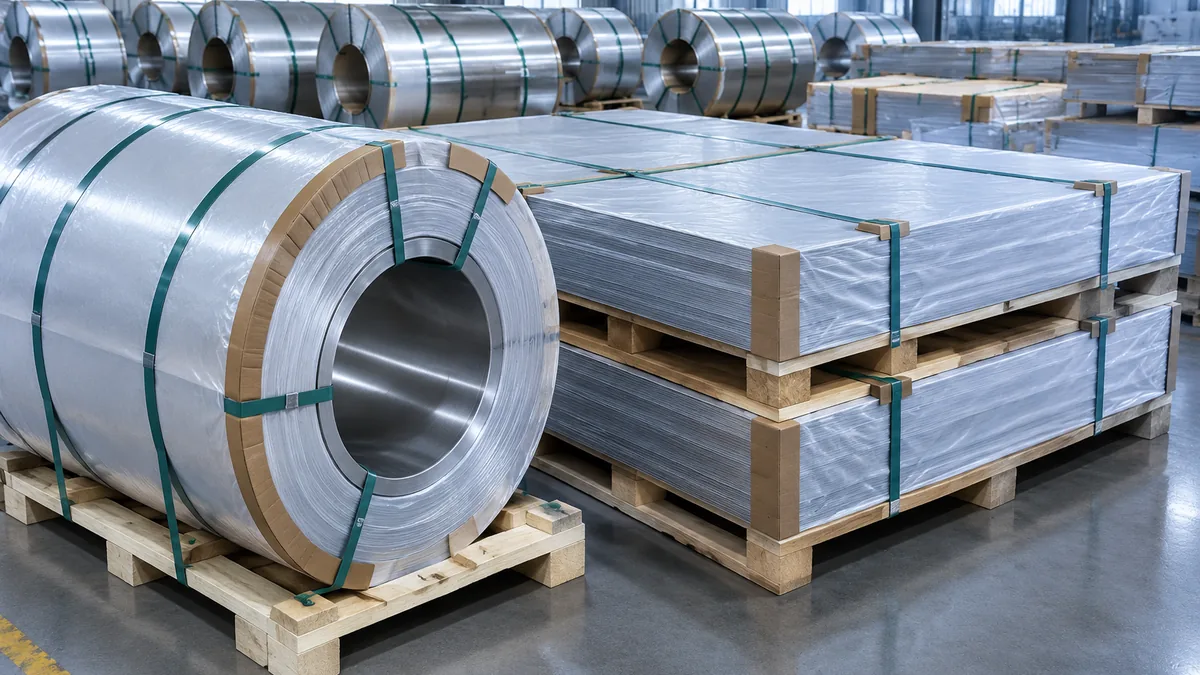
Freeze the PO line before you request production
Copy this control block into your order template:
PO description must include: product form; grade; product standard and edition;
dimensions and tolerance basis; finish or delivery condition; quantity and weight
basis; inspection document type; heat-traceability and marking rule.

No dual-grade, equivalent-grade, finish or document substitution without a revised
PO line. Order confirmation values that differ from this description are not
accepted until the PO is updated.
Send the frozen line through the stainless steel inquiry form or email sales@tsingshansts.com. For urgent commercial follow-up use phone/WhatsApp +86 176 8661 3207. Tsingshan (Shandong) Iron & Steel Co., Ltd. can align grade, standard, finish, size and document wording before rolling or reservation so quotes, MTCs and receiving checks read the same commercial line.
Sources and application limits
This guide supports purchasing decisions. The ordered product standard, project specification and approved inspection plan control the final decision.
- Common stainless product-standard practice for naming grade, product form, finish and dimensions on commercial orders (ASTM/EN families as ordered)
- EN 10204 inspection-document type wording as commonly used on purchase orders for Type 3.1 and Type 3.2
- Export receiving practice linking PO description, packing list, heat tags and mill test certificates
Technical content updated: Sep 9, 2026
Frequently Asked Questions
What belongs on one stainless steel purchase order line?
Freeze product form, grade, product standard and edition, dimensions with tolerance basis, surface finish or delivery condition, quantity and unit, and the document package (for example heat-linked EN 10204 Type 3.1). Missing any of those fields lets suppliers quote different material routes against the same PO.
How is a stainless PO different from an RFQ checklist?
An RFQ gathers options and clarifications. A purchase order freezes the accepted commercial line. Use the RFQ to compare routes, then copy the winning fields into PO wording that receiving and MTC review can match without reinterpretation.
What ambiguous stainless PO phrases should buyers avoid?
Avoid bare grade names without a product standard, "SS plate" without size and finish, "certificate required" without document type, dual-grade language without saying which carbon or chemistry rule wins, and finish names without a critical face, film or sample reference when appearance matters.
Should every stainless PO require PMI?
Not automatically. Put PMI on the PO only when mix-up risk or project QA requires on-product grade screening, and then name method, sampling and acceptance basis. Keep heat-linked mill documents as a separate line requirement.
Send the product form, grade and quantity from this guide. We quote the matching stainless route.
Ready to quote your stainless specification?
Send product, grade and quantity. We quote the confirmed supply route.