
Application specification brief
Stainless Steel for Energy & Power Generation
Separate steam, condensate, hot gas, cooling water, emissions control, process streams, and renewable equipment into material zones. Record chemistry, atmosphere, stress, pressure, transients, cycles, shutdown, and classification. Design authority approval controls code use and operating limits.
Send the service, product form and inspection plan. We quote the matching stainless product forms; the project authority keeps final service approval.
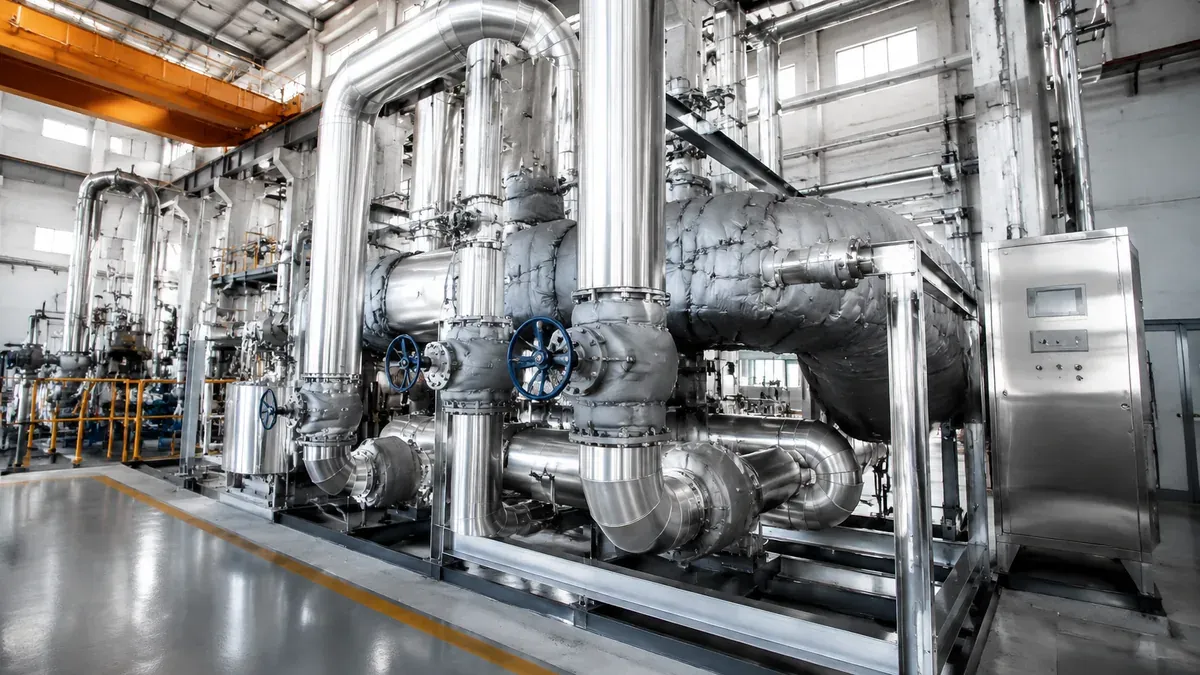
Four-state review
Service Boundary
Review the complete operating cycle, not only nominal process conditions.
Normal operation
Provide duty, chemistry, atmosphere, pressure, temperatures, stress, flow, deposits, heat flux, cycles, and water quality.
Cleaning and maintenance
Describe soot blowing, wash, chemical cleaning, hydrotest, preservation, chemistry, duration, drainage, and restart.
Shutdown and standby
State cool-down, condensation, drainage, lay-up, stagnant water, deposits, oxygen entry, and startup.
Upset and abnormal cases
Provide over-temperature, loss of flow, combustion excursion, wet gas, contamination, dosing failure, cross-leak, and thermal transients.
Inputs before the RFQ
Operating Environment
| Variable | What to review | Procurement impact |
|---|---|---|
| Equipment zone | Separate steam, heat recovery, turbine auxiliary, condenser, cooling water, flue-gas, storage, and renewable equipment. | Assigns each duty its material, product standard, code, fabrication, inspection, and records. |
| Temperature and stress | Provide metal and fluid temperatures, duration, pressure, stress, restraint, heat flux, ramp rates, and cycles. | Supports code review of strength, oxidation, creep, fatigue, expansion, and welding. |
| Gas and deposit chemistry | State composition, oxygen, sulfur, halides, moisture, ash, deposits, dew point, cleaning, and contamination. | Distinguishes dry oxidation from deposit or condensate attack. |
| Cooling-water chemistry | Give source, chloride, pH, oxidants, concentration, temperature, oxygen, solids, biology, velocity, dosing, and shutdown. | Controls screening for condensers, piping, pumps, tanks, and cooling circuits. |
| Code and regulation | Name code, edition, classification, owner standard, jurisdiction, quality class, and supplier qualification. | Defines materials, design values, procedures, NDE, testing, traceability, and records. |
Design and fabrication risks
Failure Modes and Controls
| Failure mode | Drivers to review | Specification control |
|---|---|---|
| High-temperature degradation | Metal temperature, stress, time, atmosphere, deposits, thermal cycles, cold work, welds, and section thickness. | Use code design data and equipment-specific materials analysis, then control product condition, fabrication, heat treatment, and inspection. |
| Condensate or deposit attack | Acid dew point, wet flue gas, sulfur or halides, ash chemistry, cold spots, wash water, crevices, and shutdown condensation. | Define gas and deposit chemistry, temperature profile, drainage, cleaning, alloy basis, surface treatment, and monitoring access. |
| Cooling-water localized corrosion | Chlorides, oxidants, warm surfaces, concentration, deposits, crevices, stagnant shutdown, heat tint, and poor mixing. | Apply system-specific water data, hydraulic and crevice review, fabrication controls, surface restoration, and owner corrosion acceptance. |
| Thermal fatigue or weld damage | Rapid ramps, differential expansion, restraint, geometry, mixed materials, weld profile, heat treatment, vibration, and repairs. | Coordinate stress analysis, detailing, procedures, filler, NDE, inspection intervals, and operating transients through the design authority. |
Screening ladder
Material Selection
Grades are screening routes, not unconditional substitutes. Product standards, fabricated condition, and project approval still govern.
| Grade reference | Where to screen it | Approval boundary |
|---|---|---|
| 304 Stainless Steel | Quote for general equipment and moderate-temperature fabrication where chemistry and code permit. | Do not extend it to pressure parts, hot deposits, acid condensate, or chloride water. |
| 321 Stainless Steel | Quote for selected stabilized piping or fabrications at elevated temperature. | Stabilization does not define stress, oxidation life, fatigue, atmosphere, or acceptance. |
| 347 Stainless Steel | Quote for code-selected stabilized pressure piping or components. | Confirm form, treatment, welding, stabilization, temperature-stress basis, toughness, and code edition. |
| 310S Stainless Steel | Quote for selected oxidation equipment where atmosphere, stress, and fabrication support it. | Grade data cannot set a universal limit or resolve deposits, shock, or pressure design. |
| 2205 Stainless Steel | Quote for cooling-water and emissions-control equipment under duplex controls. | Temperature, code, welding, phase balance, crevices, deposits, and chemistry still control. |
| 2507 Stainless Steel | Quote for more severe chloride cooling or scrubbing sections with a corrosion basis. | Higher alloy content does not approve every brine, seawater, flue-gas, or regulated duty. |
Supply route
Product Forms and Ordering Basis
| Form | Typical scope | Order basis |
|---|---|---|
| Plate and sheet | Ducts, stacks, scrubbers, tanks, casings, liners, heat-recovery surfaces, covers, and fabricated equipment. | State grade, product standard, condition, thickness, dimensions, forming, surface, heat treatment, tests, traceability, and certificates. |
| Pipe and tube | Steam and process piping, heat-recovery tubing, cooling water, condensate, chemical dosing, and emissions-control lines. | Define route, material and dimensional standards, NPS or OD, wall, ends, heat treatment, tests, NDT, cleanliness, marking, and code supplements. |
| Bar and forgings | Shafts, stems, supports, rings, nozzles, valve parts, fastener feedstock, and pressure-boundary components. | Specify product standard, condition, dimensions, tolerance, machining allowance, mechanical or impact tests, NDE, and traceability. |
| Fittings and flanges | Piping-class branches, changes of direction, detachable joints, valve interfaces, vents, drains, and equipment connections. | Name type, schedule, class, facing, bore, standards, condition, heat treatment, examination, marking, and face protection. |
Delivered condition
Fabrication, Welding, Surface, and Cleaning
Hot-service fabrication
Define forming, cold work, stabilization or solution treatment, welding, filler, preheat or interpass rules, repair limits, and treatment records.
Duplex fabrication
Control filler, purge, heat input, interpass, thermal exposure, repairs, cleaning, NDT, and ordered phase or corrosion verification.
Surface restoration
Remove embedded iron, scale, contamination, and unacceptable heat tint; specify pickling, passivation, cleaning, rinse, inspection, and records.
Mixed-material interfaces
Review thermal expansion, weld transition, galvanic coupling, gasket and bolting, coating, insulation, supports, and inspection access.
Hydrotest and preservation
Set test-water chemistry, chloride controls where specified, exposure time, drainage, drying, lay-up, end closure, cleanliness, and restart responsibility.
Release evidence
Inspection and Documents
| Stage | Required evidence |
|---|---|
| Engineering submittal | Submit equipment duty, code and edition, material standards, product routes, deviations, procedures, drawings, and inspection plan. |
| Material verification | Review certificates, heat identity, chemistry, mechanical and heat-treatment results, dimensions, condition, PMI, and ordered impact or corrosion tests. |
| Fabrication control | Record material and weld maps, forming, heat treatment, operators, consumables, essential variables, repairs, NDT, dimensions, and surface treatment. |
| Functional and pressure tests | Apply leak, hydrostatic, tube, dimensional, visual, cleanliness, preservation, and witness requirements under the approved test plan. |
| Turnover dossier | Index approvals, certificates, procedure records, inspection and test reports, concessions, traceability, release note, preservation, and packing documents. |
Continue the specification
Related Standards and Grade Decisions
Product and dimensional standards
Related grade comparisons
Buyer questions
Frequently Asked Questions
Which stainless grade is best for high temperature?
There is no universal choice. Temperature, stress, atmosphere, cycle count, product form and construction code control whether 321, 347, 309S, 310S or another alloy is appropriate.
Can duplex stainless be used in power plants?
It is used in selected cooling-water and emissions-control duties, but temperature limits, welding, code acceptance and the precise environment must be reviewed.
Does this guidance approve material for nuclear service?
No. Nuclear and other regulated applications require project-engineer approval, applicable codes, qualified suppliers and documented regulatory controls.
Published by Tsingshan (Shandong) Iron & Steel Co., Ltd..Sources, update policy and technical limitations.
Quotation package
What to Include in the RFQ
- Plant and equipment tag, duty, code and edition, owner standard, jurisdiction, classification, and authority
- Medium and atmosphere chemistry, contaminants, deposits, water analysis, operation, cleaning, shutdown, and upset
- Operating and design pressure, fluid and metal temperatures, stress, heat flux, velocity, duration, ramps, and cycles
- Grade, form, route, condition, standards, dimensions, tolerance, allowance, quantity, and interfaces
- Forming, treatment, welding, filler, purge, repair, surface restoration, hydrotest water, preservation, and cleanliness
- PMI, mechanical, impact, corrosion, NDT, pressure or leak, dimensions, hold points, witness, and third-party inspection
- Traceability, certificates, material and weld maps, document index, deviations, packing, destination, and delivery
Quote request
Get a Stainless Steel Quote
Send the product, grade and quantity you already have. We will complete the specification and quote the supply route.