
2205 Duplex vs 316L for Chloride Service: When Duplex Wins the RFQ
2205 duplex stainless steel vs 316L for Gulf and Southeast Asian chloride, coastal and brine plants: five gates that decide the RFQ and the PO fields to freeze.
Published Oct 7, 2026 · Technical content updated: Oct 7, 2026 ·Tsingshan (Shandong) Iron & Steel Co., Ltd.
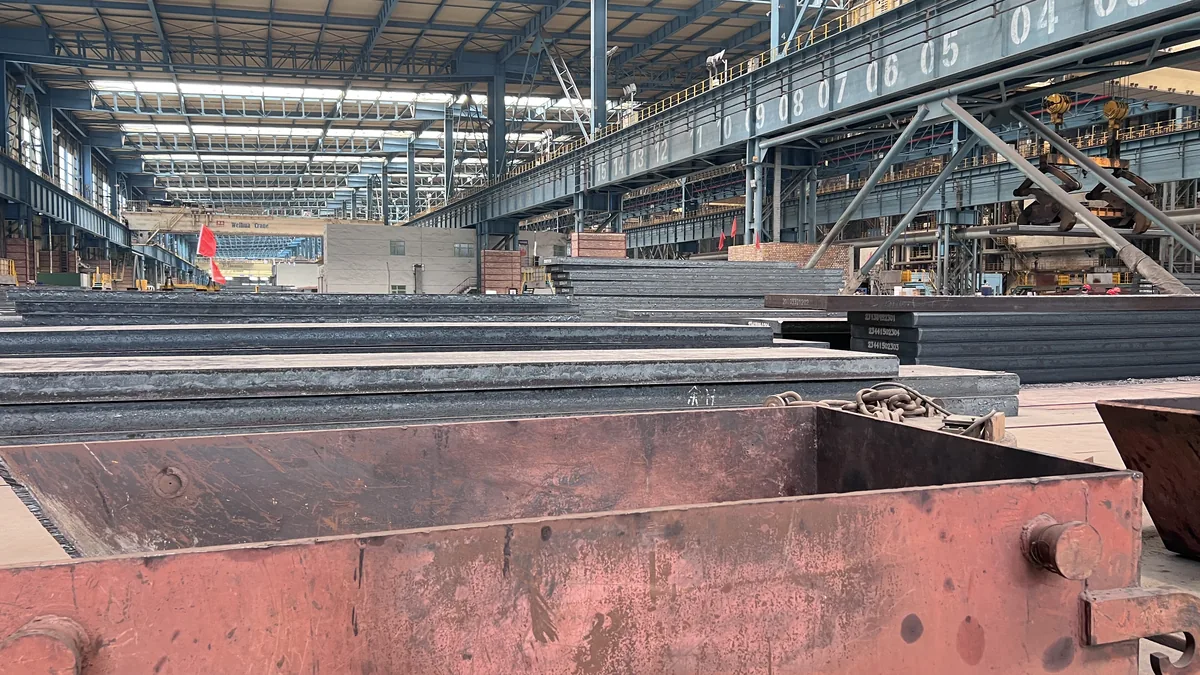
Reference image for this topic; it does not show Tsingshan Steel facilities, inventory or completed orders.
Featured answer
2205 duplex stainless steel wins over 316L when chloride, temperature, crevices or tensile stress exceed the accepted 316L envelope, or when the design uses duplex strength — and the fabricator holds a qualified duplex weld route. Keep 316L for mild coastal or controlled process duty. Either way, freeze UNS basis, product standard and edition, documents and packing before pricing.
| Screen | 316L usually holds the line | 2205 usually wins the RFQ |
|---|---|---|
| Chloride + temperature | Cool, drained, washed, low or moderate chlorides | Warm, concentrated, stagnant or under-deposit chlorides |
| Stress-corrosion risk | Low stress or cool service | Warm chlorides plus weld or operating tensile stress |
| Design strength | Austenitic allowables already accepted | Code calculation uses duplex strength |
| Weld route | Shop holds austenitic routines only | Qualified duplex WPS/PQR, filler and heat-tint control |
| Form coverage | Fittings, flanges or profiles only available in 316L | Plate, pipe, fittings, flanges and bar all quotable in 2205 |
| Forming / finish | Deep drawing, polish, sanitary detail | Not the deciding factor |
Seawater section mapping (including 2507) is covered on the desalination grade and RFQ decision guide; the commodity-versus-duplex cost question stays on 2205 vs 304 stainless steel.
Where 316L stops being the default on Gulf and Southeast Asian chloride lines
Most plant buyers in Saudi Arabia, the UAE, Qatar, Oman, Malaysia, Indonesia and Vietnam already know 316L. It is the house stainless for coastal utilities, process water, tank trim and instrument lines. The question in a chloride RFQ is not “is 2205 better” but “has this tag left the envelope where the owner accepts 316L?”
Split the exposure before you price either grade:
- Coastal atmospheric — walkways, supports, enclosures and external piping near the sea. Rain washing, drainage and crevices decide more than alloy name.
- Splash and wet-dry zones — salt concentrates as water evaporates; under-deposit and crevice attack escalate fast on 316L.
- Process brines and cooling water — chloride level, temperature, oxidants (chlorination) and stagnation govern.
- Desalination pretreatment and brine handling — follow the section map in the desalination guide; this page only settles the 2205-vs-316L line once a section is in play.
- Petrochemical chloride-bearing streams — add tensile stress and temperature, because chloride stress-corrosion cracking (SCC) is the classic 316L failure mode that pushes buyers to duplex.
If the tag is clearly mild and cool, stay with 316L. If nobody can state chloride, temperature and crevice conditions, neither grade can be awarded responsibly.
Decision tree: five gates that decide whether 2205 wins the RFQ
Run the gates in order. A “no” at gates 1–2 usually means 316L stays; a “no” at gates 4–5 means 2205 cannot be awarded yet, even if it is technically preferred.
Gate 1 — Is the chloride duty written down?
Chloride level, maximum metal temperature, pH, oxidants, flow or stagnation, crevices (gaskets, lap joints, deposits) and shutdown chemistry. Missing data → hold the RFQ; do not let a supplier “upgrade” by nickname.
Gate 2 — Has the tag left the accepted 316L envelope?
Warm or concentrated chlorides, crevice-heavy design, wet-dry concentration or a history of 316L pitting on similar service → move to Gate 3. Mild, cool, drained and washed → 316L normally holds.
Gate 3 — Is there SCC stress or a strength reason?
Warm chlorides plus residual weld stress or operating tensile stress favor duplex. So does a design code calculation that uses duplex allowables for wall or plate thickness. Neither reason applies → re-check whether 316L with better detailing (drainage, crevice removal, cleaning) solves the problem.
Gate 4 — Can the fabricator weld duplex properly?
Qualified duplex WPS/PQR on the actual thickness, approved duplex filler, controlled heat input and interpass temperature, purge, and heat-tint removal. No qualified route → 2205 cannot win the award yet.
Gate 5 — Can every form on the line be supplied in 2205?
Plate, pipe, fittings, flanges, bar and any angle or profile items. A 2205 pipe class with 316L fittings “because they were in stock” defeats the upgrade. Gaps → resolve before award, not at receiving.
All five gates pass → 2205 wins the RFQ. Only then compare bids commercially — on the same form, dimensions, tests and documents, never on kg price alone. If warm seawater or concentrated brine is pushing beyond 2205 as well, the conversation moves to super duplex 2507 — use the desalination guide for that step.
2205 vs 316L on commercial and duty screens
Values below are typical or nominal summaries for annealed flat product. The ordered ASTM edition and the heat-specific MTC govern acceptance.
| Screen | 316L (UNS S31603 / EN 1.4404) | 2205 (UNS S32205 / EN 1.4462) |
|---|---|---|
| Family | Austenitic, low carbon, Mo-bearing | Duplex (austenite + ferrite) |
| Yield strength role | A240 annealed minimum typically about 170 MPa | A240 annealed minimum typically about 450 MPa |
| PREN screening (Cr + 3.3Mo + 16N) | Commonly cited in the mid-20s | Commonly cited around 34 or higher for S32205 |
| Chloride SCC screening | Recognized risk in warm chloride service under stress | Markedly better resistance in many duties; not immune |
| Magnetic response | Largely non-magnetic when annealed | Magnetic (ferrite phase) — normal, not a defect |
| Temperature boundary | Wide austenitic range per design code | Embrittlement risk on long high-temperature exposure; design codes commonly cap use around 300 °C |
| Welding | Familiar austenitic routines | Qualified duplex procedure with heat-input and phase-balance control |
| Forming / polishing | Easier deep drawing and sanitary polish | Higher forming load and springback |
| Price driver | Nickel-heavy; kg price tracks nickel and molybdenum | Lower nickel, more chromium and nitrogen; spread versus 316L is not fixed |
| Form availability | Very wide: sheet, plate, pipe, tube, fittings, flanges, bar | Plate, pipe, flanges and bar common; fittings, angle and profiles need confirmation |
PREN is a chemistry ranking aid. It does not approve seawater, brine or a temperature limit. Full chemistry tables live on the 2205 grade page and the 316L grade page; the 2205 vs 316L compare page covers the grade comparison for chloride piping.
Freeze the grade basis: UNS, product form and ASTM edition
Once 2205 wins, the most common bid failure is a line that says “2205 duplex” with no designation or product standard. Freeze identity per form:
| Product form | 2205 line (typical standard) | 316L line (typical standard) |
|---|---|---|
| Plate / sheet / coil | ASTM A240/A240M UNS S32205 (or S31803 if approved) + edition | ASTM A240/A240M UNS S31603 + edition |
| Pipe | ASTM A790/A790M seamless or welded, S32205 / S31803 | ASTM A312/A312M TP316L, seamless or welded |
| Tube | ASTM A789/A789M (general and heat-exchanger service) | ASTM A269, A213 or A249 as the project names |
| Flanges / forgings | ASTM A182/A182M F60 (S32205) or F51 (S31803) | ASTM A182/A182M F316L |
| Butt-weld fittings | ASTM A815 WPS32205 / WPS31803 (fitting class as specified) | ASTM A403 WP316L (fitting class as specified) |
| Bar | ASTM A276 or A479 S32205 as specified | ASTM A276 or A479 316L |
| Angle / profiles | Named dimensional standard + material basis; quoted when stocked or rolled | Same rule |
Practical rules for the PO:
- One UNS basis per line. S32205 is the tighter modern window; S31803 is the older, broader window. Dual-marked material is accepted only when the MTC proves both.
- EN 1.4462 is a cross-reference, not a substitute for the ASTM product standard on an ASTM-based project.
- Name the edition year for every ASTM standard on the PO, not just the letter-number.
- Solution-annealed condition stated for duplex product, with the quench route left to the mill but the condition certified.
- Angle and bar in 2205 are real search and RFQ demand, but they are not universal stock. Ask for the dimensional standard, length and tolerance, and expect a rolled or partner-mill route to be confirmed before price.
Phase checks, welding and PMI: what to write only when needed
Ferrite and intermetallic phase checks. Write them only when the owner specification requires them. If it does, name the method (for example ferrite measurement on weld procedure qualification, or ASTM A923 test methods for detrimental intermetallic phases), the sampling and the acceptance criteria. Undefined “ferrite check required” lines produce bids that price different tests.
Welding procedure note. The material RFQ should not carry WPS numbers, but it should carry a sentence that prevents austenitic habits on duplex: “Fabrication of 2205 to a qualified duplex WPS/PQR with approved duplex filler, controlled heat input and interpass temperature, and heat-tint removal where corrosion service demands it. 316L procedures are not transferable.” Local stress relief is not a generic duplex remedy.
PMI scope. Handheld XRF separates 2205 from 316L clearly on nickel, chromium and molybdenum. It does not read carbon or nitrogen, so the N window that defines S32205 comes from the MTC — or an OES test when the owner requires it. Freeze PMI scope (100% or sampling, per piece or per heat) on the RFQ when 2205 and 316L share a project or a container.
RFQ details that prevent misquoting 2205 vs 316L lines
Copy these fields into the clarification sheet before price comparison:
- Duty card — chloride level, max metal temperature, pH, oxidants, stagnation, crevices, shutdown chemistry
- Grade + UNS basis — 2205 / UNS S32205 (or S31803 only if approved) or 316L / UNS S31603; one route per line
- Product form — plate, sheet, pipe, tube, fitting, flange, bar, angle
- ASTM product standard + edition — A240, A790, A789, A182, A815, A276/A479, A312, A403 as applicable
- Dimensions — thickness × width × length, NPS + schedule or OD × wall, size and tolerance per named standard
- Condition and finish — solution-annealed, pickled, No.1 / 2B or as specified
- Supplementary tests (owner-only) — ferrite, ASTM A923 phase tests, impact, corrosion tests with method and acceptance
- Welding note — qualified duplex WPS/PQR, filler, heat-tint removal; no transfer from 316L procedures
- Documents — EN 10204 3.1 MTC (3.2 only when required), heat identity on marks matching the MTC
- PMI — method (XRF / OES), scope and sampling
- Packing and marks — Gulf or SEA destination, grade color code, separation from carbon steel, desiccant and end caps
- Substitution rule — no 316L against a 2205 line (or the reverse) without written deviation and revised review
MTC, PMI and packing for Gulf and Southeast Asian humidity
Mixed duplex and austenitic orders bound for Jebel Ali, Dammam, Sohar, Port Klang, Tanjung Priok or Hai Phong face long humid transits and hot yard storage. Documents alone do not keep the grades apart.
- Name EN 10204 3.1 on the PO; the MTC should show UNS designation, ordered standard and edition, heat number, chemistry including nitrogen for 2205, tensile results and heat-treatment condition.
- Require heat number and grade on every piece or bundle tag, matching the MTC, plus a grade color stripe so 2205 and 316L are not confused at the laydown yard.
- Separate crates or bundles by grade. Never ship 2205 and 316L loose in the same bundle.
- Keep carbon steel off stainless surfaces — stainless or nylon-faced lifting gear, wooden or plastic separators, no carbon-steel banding in contact with the product. Embedded iron rusts in humid Gulf and Southeast Asian ports and triggers rejection.
- Pipe ends capped, plate faces interleaved where finish matters, desiccant and wrap sized for the transit time.
- Keep destination marks readable after wrapping; unclear marks cause receiving holds on mixed-grade shipments.
Common buyer mistakes on 2205 vs 316L chloride RFQs
Patterns that repeat on Gulf plant and Southeast Asia EPC packages:
- “2205 duplex” with no UNS basis — bids arrive on S31803, S32205 and EN 1.4462 and cannot be compared.
- Magnet test rejects genuine 2205 — site QC treats attraction as “not stainless”; duplex is supposed to be magnetic.
- 316L fittings in a 2205 pipe class — the fittings line was left on the old 316L BOM.
- PREN quoted as approval — “PREN 35, fine for seawater” with no temperature, crevice or chlorination data.
- 316L WPS reused for 2205 — phase balance and toughness then fail on procedure qualification or in service.
- Phase tests added after award — the owner’s ASTM A923 requirement surfaces at inspection and reprices the order.
- XRF accepted as proof of S32205 — nitrogen is never verified because nobody read the MTC.
- Thinner wall assumed from duplex strength — no code recalculation, no approval.
- Carbon-steel contamination in transit — rust staining on duplex plate after a humid yard stay.
Freeze the RFQ line before material award
Award only when the line reads without guesses:
[Plate / pipe / fitting / flange / bar / angle], grade 2205, UNS [S32205 / S31803 as approved] per ASTM [A240 / A790 / A182 F60 / A815 / A276 or A479] [edition], solution-annealed — or grade 316L, UNS S31603 per ASTM [A240 / A312 / A182 F316L / A403] [edition]. Dimensions [thickness × width × length / NPS + Sch / OD × wall]; finish [ ]. Duty: [chloride / temperature / crevice summary]. Supplementary tests only as owner-specified: [ferrite / ASTM A923 / impact / none]. Fabrication to qualified duplex WPS/PQR; 316L procedures not transferable. EN 10204 3.1 MTC with heat identity; PMI [method + scope]. Packing for [destination port] with grade separation, color code and no carbon-steel contact. No substitution between 2205 and 316L without written deviation.
Confirm form coverage for every line, then send the duty card and frozen lines to contact. We quote 2205 and 316L for Middle East and Southeast Asia chloride, coastal and brine projects against named fields — and will tell you when a line still needs your corrosion basis before a quotation makes sense.
Sources and application limits
This guide supports purchasing decisions. The ordered product standard, project specification and approved inspection plan control the final decision.
- ASTM A240/A240M flat-product naming for UNS S32205 / S31803 and S31603 with edition stated on the purchase order
- ASTM A790/A790M duplex pipe, A789/A789M duplex tube and A312/A312M TP316L pipe ordering practice
- ASTM A182/A182M forged flange designations (F51 / F60 duplex; F316L austenitic) and A815 / A403 wrought fitting practice
- ASTM A923 detrimental intermetallic phase test methods for duplex, applied only when the owner specification names them
- Industry practice that PREN (Cr + 3.3Mo + 16N) is a chemistry screening index, not a service-life or seawater approval
- Common Gulf and Southeast Asia procurement pattern that silent 316L-for-2205 swaps and mixed-grade crates create receiving disputes
Technical content updated: Oct 7, 2026
Frequently Asked Questions
When does 2205 duplex win over 316L in a chloride service RFQ?
2205 usually wins when the owner corrosion review shows chloride level, temperature, crevices or deposits beyond the accepted 316L envelope, when warm chlorides combine with tensile stress (stress-corrosion risk), or when the design code calculation uses duplex strength. It only wins the award if the fabricator holds a qualified duplex weld route and every needed form (plate, pipe, fittings, flanges, bar) can be supplied in 2205. Otherwise 316L often stays the practical choice.
Should a 2205 purchase order name UNS S32205 or S31803?
Name the designation the project specification approves. S32205 is the tighter modern chemistry window preferred by many current ASTM product standards; S31803 is the older, broader window still seen on legacy drawings. Dual-marked material is acceptable only when the heat-specific MTC proves every requirement the PO cites. Do not let "2205" or "1.4462" alone stand in for the UNS basis.
Are ferrite or intermetallic phase tests required on every 2205 order?
No. Ferrite measurement or ASTM A923-type intermetallic phase tests apply when the owner or project specification calls for them, typically on corrosion-critical or heavy-wall items and weld qualification. If required, name the method, sampling and acceptance criteria on the RFQ so suppliers price the same test scope. Do not add or drop them silently after award.
Can a magnet or handheld XRF tell 2205 from 316L at receiving?
A magnet cannot reject 2205 — duplex is normally magnetic because of its ferrite phase, while annealed 316L is largely non-magnetic, so attraction is expected on genuine 2205. Handheld XRF PMI separates the two well on nickel, chromium and molybdenum, but it does not measure carbon or nitrogen; confirm those from the EN 10204 3.1 MTC or an OES test when the owner requires it.
Send the product form, grade and quantity from this guide. We quote the matching stainless route.
Ready to quote your stainless specification?
Send product, grade and quantity. We quote the confirmed supply route.