
Application specification brief
Stainless Steel for Pharmaceutical & Biotechnology Systems
Treat the material designation as one part of a validated equipment specification. Send system criticality, product contact, utility quality, cleaning and sterilization cycles, internal surface acceptance, weld condition, traceability, inspection, and document turnover with the RFQ. The project owner must approve the hygienic standard and acceptance plan; this supplier brief does not qualify a system for regulated production.
Send the service, product form and inspection plan. We quote the matching stainless product forms; the project authority keeps final service approval.
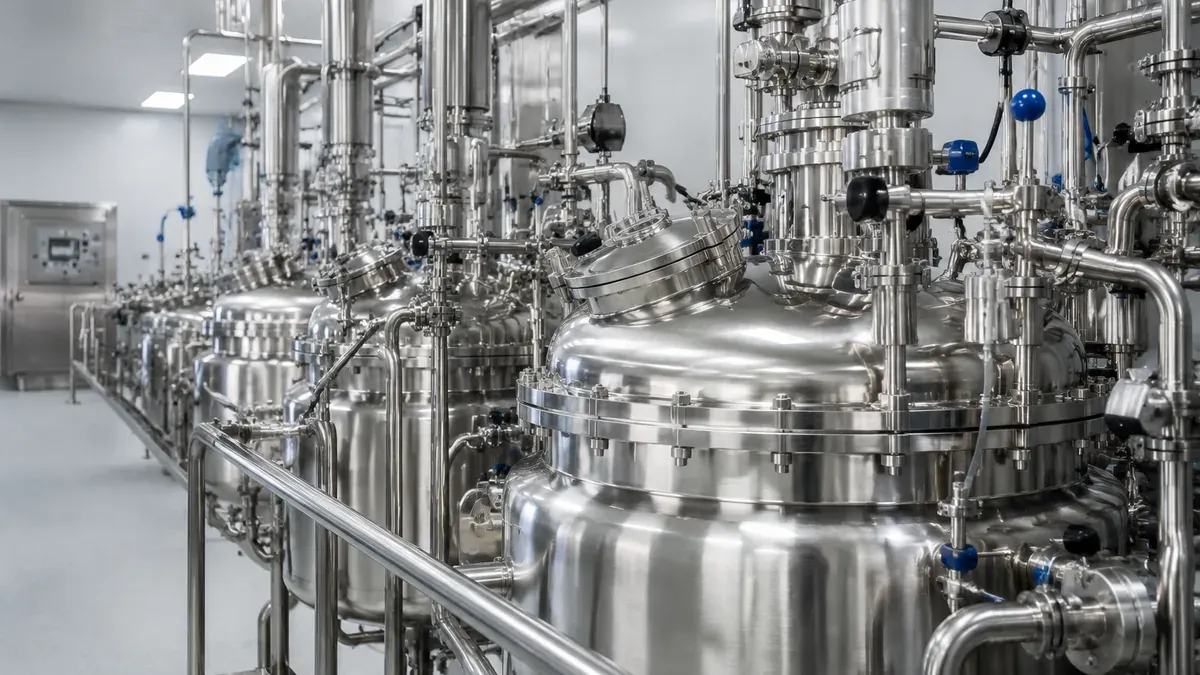
Four-state review
Service Boundary
Review the complete operating cycle, not only nominal process conditions.
Normal operation
Identify product, buffer, media, solvent, purified-water, clean-steam, or non-contact utility duty. Record chemistry, temperature, flow, pressure, residence time, oxygen exposure, and whether the surface is continuously wetted.
Cleaning and maintenance
Provide the complete clean-in-place or manual-cleaning cycle, including chemicals, concentrations, temperatures, duration, sequence, final rinse, sanitization or sterilization step, and expected cycle frequency.
Shutdown and standby
State the drain, dry, preservation, recirculation, or wet-hold practice. Dead legs, low points, elastomer interfaces, and residual cleaning solution need review because idle conditions differ from flowing service.
Upset and abnormal cases
List credible conductivity, concentration, temperature, flow, contamination, or hold-time excursions. The equipment and quality teams decide whether these cases require added alloy margin, monitoring, or a separate recovery procedure.
Inputs before the RFQ
Operating Environment
| Variable | What to review | Procurement impact |
|---|---|---|
| System classification | Separate direct product contact, clean utility, process support, frame, and external cladding service. | Sets the applicable hygienic standard, material controls, surface scope, inspection level, and turnover records. |
| Fluid and water quality | State chemicals, conductivity or purity criteria, chlorides and other contaminants, dissolved gases, and operating temperature. | Supports corrosion screening and prevents the 316L designation from being used as an unconditional approval. |
| Cleaning and sterilization | Describe every chemical and thermal cycle with sequence, concentration, exposure time, frequency, and rinse acceptance. | Controls grade review, seal and weld details, surface treatment, and required process records. |
| Internal surface | Define roughness measurement method, sampling plan, location, weld inclusion, and mechanical or electropolished finish. | Creates an auditable acceptance basis instead of relying on a generic sanitary or electropolished label. |
| Traceability boundary | Map heat identity from sheet, tube, fittings, and weld consumables through fabricated assemblies and turnover dossiers. | Determines marking transfer, material maps, certificate indexing, and controls for cut pieces and replacement items. |
Design and fabrication risks
Failure Modes and Controls
| Failure mode | Drivers to review | Specification control |
|---|---|---|
| Localized corrosion at discontinuities | Heat tint, embedded iron, inclusions, stagnant crevices, poor drainage, or an environment outside the approved material basis. | Control fabrication cleanliness, remove unacceptable discoloration, specify treatment, review geometry, and obtain project corrosion approval. |
| Rouging or surface change | Water chemistry, temperature, operation, surface condition, and system history can interact; the visible result is not explained by grade alone. | Define baseline inspection, water and operating records, investigation responsibility, and remediation acceptance in the project procedure. |
| Residue retention | Rough internal welds, pits, laps, poorly finished repairs, dead legs, or surfaces that do not drain and clean as designed. | Use fabrication hold points, internal visual access, measurable roughness where specified, and system cleanability review. |
| Traceability break | Mixed loose fittings, transferred markings without records, unindexed certificates, or fabrication changes outside document control. | Require heat maps, receiving reconciliation, controlled marking transfer, weld records, and a final document index. |
Screening ladder
Material Selection
Grades are screening routes, not unconditional substitutes. Product standards, fabricated condition, and project approval still govern.
| Grade reference | Where to screen it | Approval boundary |
|---|---|---|
| 316L Stainless Steel | Quote for product-contact vessels, hygienic tubing, fittings, and many clean-utility components where the project acceptance plan names 316L. | Project chemistry limits, ferrite or sulfur controls, surface route, weld procedure, and regulated acceptance remain purchase-order decisions. |
| 304L Stainless Steel | Quote for frames, skids, external panels, dry areas, and less aggressive non-product-contact utility service. | Do not merge these items into a 316L product-contact package without clear segregation, marking, and owner approval. |
| 904L Stainless Steel | Quote for identified chemical duties where the approved corrosion study requires an austenitic alloy beyond 316L. | It is not a general pharmaceutical upgrade; product availability, welding, standards, cleaning, and system qualification need separate review. |
Supply route
Product Forms and Ordering Basis
| Form | Typical scope | Order basis |
|---|---|---|
| Hygienic tube | Product transfer, purified-water distribution, clean utilities, and instrument branches. | Specify OD, wall, manufacturing route, material standard, internal finish, roughness method, end condition, tests, marking, and packaging. |
| Hygienic fittings | Elbows, tees, reducers, ferrules, and other components within the approved connection system. | Define dimensional system, wall match, end preparation, internal finish, heat traceability, inspection, cleaning, and capped packaging. |
| Sheet and plate | Vessel shells, heads, internals, covers, skid parts, and fabricated equipment surfaces. | State product standard, grade controls, thickness, flatness, surface route, roughness scope, film, traceability, and forming requirements. |
| Fabricated assemblies | Spools, manifolds, small vessels, and welded modules supplied against approved drawings. | Attach drawings, weld map, procedure and operator qualifications, borescope plan, treatment procedure, inspection plan, and turnover dossier. |
Delivered condition
Fabrication, Welding, Surface, and Cleaning
Clean fabrication
Define segregated handling, tool control, temporary protection, cleaning agents, and prevention of carbon-steel or shop contamination.
Weld control
Name the welding method, qualification, purge-gas acceptance, internal profile, discoloration limit, examination, repair, and weld-log requirements.
Mechanical finish
Specify abrasive route, final roughness acceptance, measurement method, sampling locations, and treatment of welds, corners, and repairs.
Electropolishing and passivation
State which process is required, precondition, coverage, procedure qualification, post-treatment rinse, inspection, and records; one term does not imply the other.
Final cleaning and closure
Define cleaning verification, drying, end caps, controlled packaging, labels, and protection until installation.
Release evidence
Inspection and Documents
| Stage | Required evidence |
|---|---|
| Document approval | Approve material, finish, welding, inspection, treatment, cleaning, marking, and turnover procedures before manufacture where the project requires it. |
| Material control | Reconcile certificates, heat identities, chemistry controls, dimensions, surfaces, and fittings against the material list and receiving report. |
| Fabrication inspection | Record weld IDs, operator and procedure, purge or discoloration acceptance, dimensional results, internal visual examination, repairs, and NDT. |
| Surface verification | Provide roughness results, finish maps, electropolishing or passivation records, visual acceptance, and cleaning evidence as ordered. |
| Turnover dossier | Index approved drawings, material maps, certificates, weld records, inspection results, deviations, treatment records, packing, and release status. |
Continue the specification
Related Standards and Grade Decisions
Product and dimensional standards
Related grade comparisons
Buyer questions
Frequently Asked Questions
Why is 316L preferred in pharmaceutical equipment?
Molybdenum improves localized-corrosion resistance and low carbon protects welded zones, with a mature sanitary tube and fitting supply chain.
Does electropolishing replace passivation?
They perform different functions and project procedures may require one or both. Electropolishing smooths the surface; passivation removes free iron and supports the oxide film.
Which documents should be ordered?
Common requirements include material certificates, heat traceability, surface-finish records, dimensional reports and cleaning or passivation records.
Published by Tsingshan (Shandong) Iron & Steel Co., Ltd..Sources, update policy and technical limitations.
Quotation package
What to Include in the RFQ
- System name, service classification, product-contact boundary, and applicable hygienic specification
- Process fluid or utility quality, chemistry limits, temperature, flow, pressure, and hold conditions
- Cleaning, sanitization, and sterilization cycles with chemicals, duration, frequency, and rinse criteria
- Grade, chemistry controls if any, product form, dimensions, tolerances, quantity, and contracted standards
- Internal and external finish, roughness value, measurement method, sampling, weld inclusion, and electropolish scope
- Welding, purge, visual, borescope, NDT, repair, passivation, cleaning, and packaging requirements
- Heat traceability, marking transfer, material map, certificates, procedure records, and final dossier index
- Drawing, inspection plan, approval hold points, delivery terms, destination, and required schedule
Quote request
Get a Stainless Steel Quote
Send the product, grade and quantity you already have. We will complete the specification and quote the supply route.