
Surface procurement brief
Etched Stainless Steel Finish
Choose etched stainless when controlled material removal must create custom pattern, texture, or contrast on a selected surface. The delivered result depends on the base grade and finish, artwork, resist, etching route, depth, undercut, cleaning, any later coloring or polishing, panel direction, and lighting. Etched is custom visual work rather than a universal mill finish. The order should freeze artwork revision, scale, datum, panel map, base grain, critical face, etch-depth or visual requirement, protected zones, full-size sample, registration, edge treatment, fabrication sequence, film, and replacement-panel rule.
- Use this guide for
- Custom artwork, base finish, etch route, panel layout, and master-sample approval before production
- Relevant to
- Architectural feature, elevator, signage, hospitality, retail-interior, and custom decorative-panel buyers
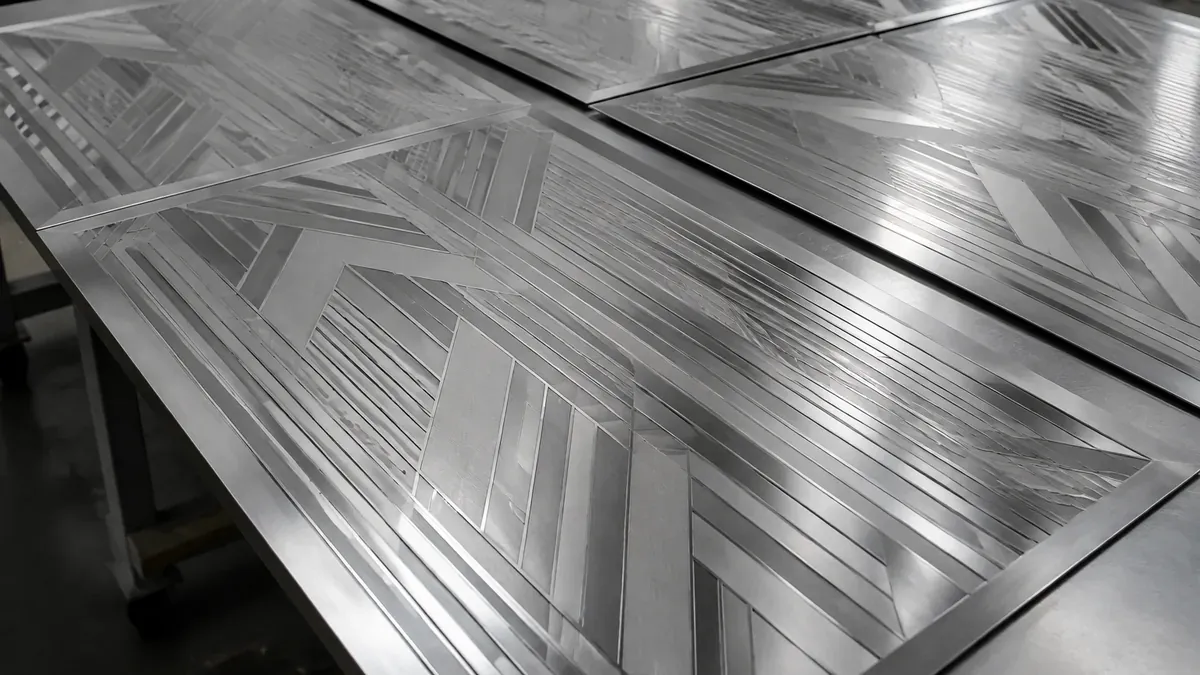
Incoming surface to delivered finish
Finish Class and Process Route
Finish class
Selective chemical or electrochemical material-removal process controlled by artwork, mask or resist, and a qualified treatment route.
Incoming-surface dependency
Base finish, grain direction, reflectivity, scratches, pits, flatness, welds, and cleanliness remain visible within or beside the etched design. Etching removes material selectively; it cannot correct a poor substrate, panel waviness, inaccurate artwork, or unsuitable fabrication detail.
| Stage | Control to state | Risk if omitted |
|---|---|---|
| Artwork and panel engineering | Freeze vector artwork, scale, revision, datum, pattern direction, panel split, joint relationship, bleed, protected zones, and replacement identifiers. | Wrong revision, raster scaling, missing datum, or panel-map error can create irreversible pattern mismatch. |
| Base-finish preparation and resist | Define grade, base finish, grain, cleanliness, mask or resist system, adhesion, edge treatment, and areas that remain unetched. | Dirty surfaces, damaged resist, pinholes, and poor edge adhesion cause leaks, spots, or ragged boundaries. |
| Controlled etching | Qualify chemistry or electrochemical route, exposure, depth, agitation, support, and undercut on production-representative material. | Unequal action can produce depth variation, undercut, staining, rough edges, and loss of fine detail. |
| Resist removal, cleaning, secondary finish, and protection | Define stripping, neutralization, rinse, drying, optional color or polish, visual inspection, film, panel labels, and packing. | Residual chemistry, cleaning marks, post-polish variation, wrong film, or handling can alter the approved contrast. |
Measurable and visual controls
Acceptance Criteria
| Criterion | What to specify | Boundary |
|---|---|---|
| Artwork and registration | Reference the approved vector file and revision, scale, datum, orientation, panel number, feature tolerance, and relationship across joints. | A rendering is not manufacturing artwork and cannot control line width, registration, or panel split. |
| Master sample and viewing | Approve a full-size or representative production sample with base finish, depth, contrast, lighting, distance, and secondary treatments recorded. | Small coupons may not show full-panel tone, repeat, seam alignment, or reflected appearance. |
| Etch geometry | Where functional, state depth, line width, undercut, edge profile, measurement method, locations, and allowed variation. | Visual contrast can vary even when measured depth is within tolerance. |
| Surface defects and cleanliness | Set limits for resist leaks, pinholes, stains, uneven depth, ragged edges, residue, scratches, dents, film marks, and local repair. | The patterned design does not make process defects or substrate damage acceptable. |
| Panel and batch matching | Define grain arrows, panel sequence, batch grouping, joint alignment, color or polish match, and replacement approval. | Later replacement panels may need a new master comparison when substrate or process campaigns differ. |
Preserve the ordered surface
Fabrication, Cleaning, Film, and Packing
| Stage | Effect on finish | Required control |
|---|---|---|
| Cutting and forming sequence | Cut heat, bending, springback, dies, and part rotation can distort artwork or reverse grain and pattern direction. | Choose etch-before or etch-after fabrication through a first-article trial and lock nesting orientation in CAD. |
| Welding, corners, and joints | Heat, grinding, local refinishing, seams, and returns can interrupt the artwork or change contrast. | Engineer joint locations in the panel map and approve full-size corners, doors, cutouts, and returns. |
| Secondary coloring or polishing | Later PVD, paint fill, patina, polish, or clear protection can change tone and expose depth variation. | Qualify the complete sequence on the master sample and identify the responsible process owner. |
| Installation and cleaning | Panel reversal, sealant, adhesive, abrasive cleaning, lighting, and film residue can obscure or damage the design. | Label every panel, define fixing and film removal, use a tested cleaning method, and inspect the installed assembly. |
Finish-specific disputes
Defects, Causes, and Prevention
| Defect | Likely cause | Prevention input |
|---|---|---|
| Artwork registration error | Wrong file revision, scaling, datum, resist placement, cut position, or panel orientation can move the pattern. | Use controlled files, proof and first-article approval, fixed datums, panel labels, and dimensional registration checks. |
| Uneven depth and undercut edges | Chemistry, exposure, agitation, resist adhesion, geometry, or local flow can change material removal. | Qualify the route, monitor representative locations, set feature limits, and reject uncontrolled local re-etching. |
| Pinholes, leaks, and ragged resist boundaries | Dust, scratches, weak resist, trapped air, handling, or edge lift allows unintended attack. | Prepare and inspect the base surface and resist before processing, protect edges, and use an approved repair rule. |
| Panel-to-panel tone mismatch | Different base coils, grain direction, etch batches, cleaning, coloring, or lighting changes apparent contrast. | Batch visible panels, retain the master, mark orientation, dry-lay the set, and inspect under installation lighting. |
Application-led choice
Where This Finish Fits
| Use case | Selection guidance | Approval boundary |
|---|---|---|
| Elevator and architectural feature panels | Use controlled artwork, full panel map, grain and pattern arrows, master sample, joint engineering, batch grouping, and installed-light review. | Etching does not solve panel flatness, seam design, reflection, or replacement matching by itself. |
| Signage and branded interiors | Freeze authorized artwork, minimum feature size, etch or fill sequence, mounting, cleaning, and color acceptance before release. | Do not include logos or proprietary artwork without the buyer authorization and controlled production file. |
| Functional marking or fluid channels | Specify dimensional, depth, edge, cleanliness, and performance requirements through an engineering drawing and validated process. | Decorative etched-sheet terminology is not a substitute for precision machining, code marking, or functional validation. |
Copy structure, replace values
Purchase Description Example
Continue the specification
Products, Grades, Standards, and Applications
Product forms
Product and finish standards
Application briefs
Buyer questions
Frequently Asked Questions
Is etched stainless a standard mill finish?
No. It is custom patterned work controlled by the base finish, approved artwork, resist, etching route, depth or visual sample, panel layout, and any later coloring or polishing.
What artwork should be supplied for etched panels?
Provide an authorized controlled vector file with revision, scale, datum, orientation, panel split, minimum feature details, protected zones, and relationship to cuts, bends, joints, and labels.
Should stainless be etched before or after bending and welding?
The correct sequence depends on geometry, tooling contact, distortion, access, seams, and artwork registration. Approve a production-representative first article that includes the complete fabrication and finishing route.
Published by Tsingshan (Shandong) Iron & Steel Co., Ltd..Sources, update policy and technical limitations.
Quotation package
What to Include in the RFQ
- Material standard, edition, grade, base finish, grain, thickness, dimensions, edge, and flatness
- Authorized vector artwork, revision, scale, datum, orientation, panel map, joint, cutout, and protected zones
- Resist or mask route, etch process, depth, line width, undercut, measurement method, and sample
- Critical face, one-side or two-side work, secondary color or polish, panel and batch matching
- Cutting, forming, bending, welding, joining, mounting, and complete process sequence
- Registration, visual defects, residue, cleanliness, inspection light, witness, record, and replacement rules
- Film, panel and grain labels, separators, rigid packing, destination, and quantity
Quote request
Get a Stainless Steel Quote
Send the product, grade and quantity you already have. We will complete the specification and quote the supply route.