
Grade quotation brief
304 vs 321 Stainless Steel
Quote 304 for general fabricated equipment when its documented corrosion environment and thermal history are accepted by the project. Quote 321 when titanium stabilization is required for a defined weld or service cycle and the ordered product form is supported by appropriate design data. Stabilization does not make 321 a chloride grade, and 304L is not an automatic substitute for either designation.
Quote 304 where the documented wet-corrosion, fabrication and thermal history fit its approved material basis. Quote 321 only when titanium stabilization is part of the project strategy for a defined welding or service cycle. Do not treat 321 as a general chloride upgrade, and do not introduce 304L as an informal substitute without checking the exact drawing, code and thermal duty.
Unsure whether 304 or 321 matches the operating temperature and chemistry? Send the service conditions with the RFQ. We quote the approved designation, product form and test plan.
Request a Quote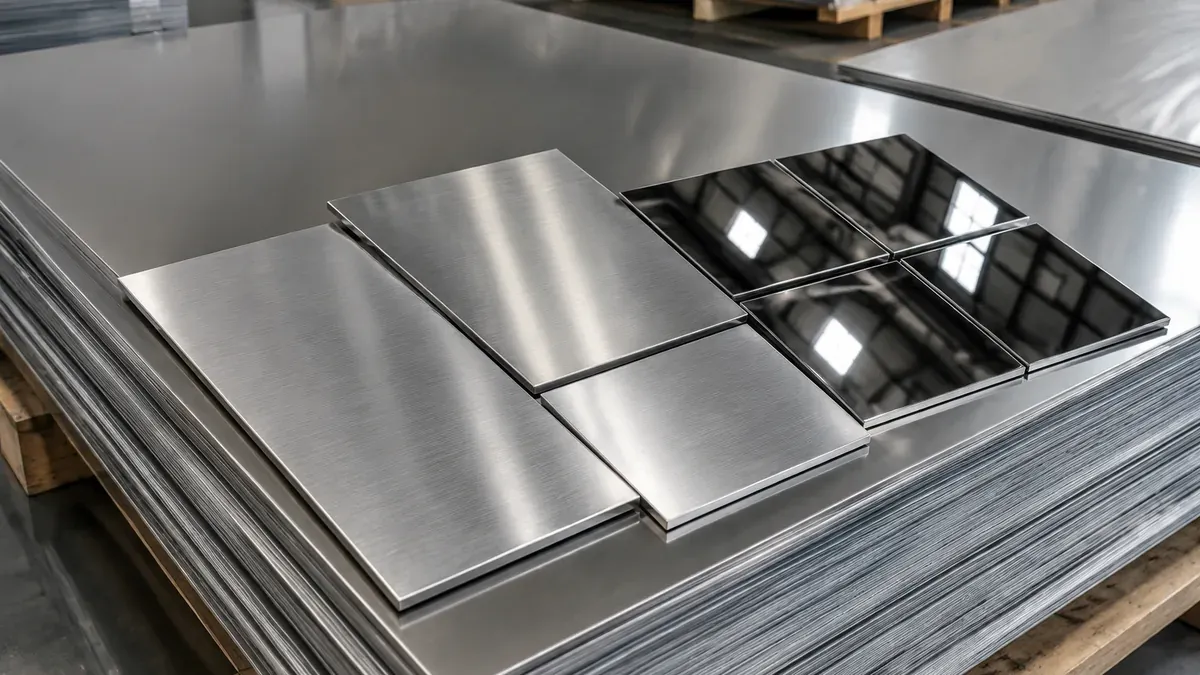
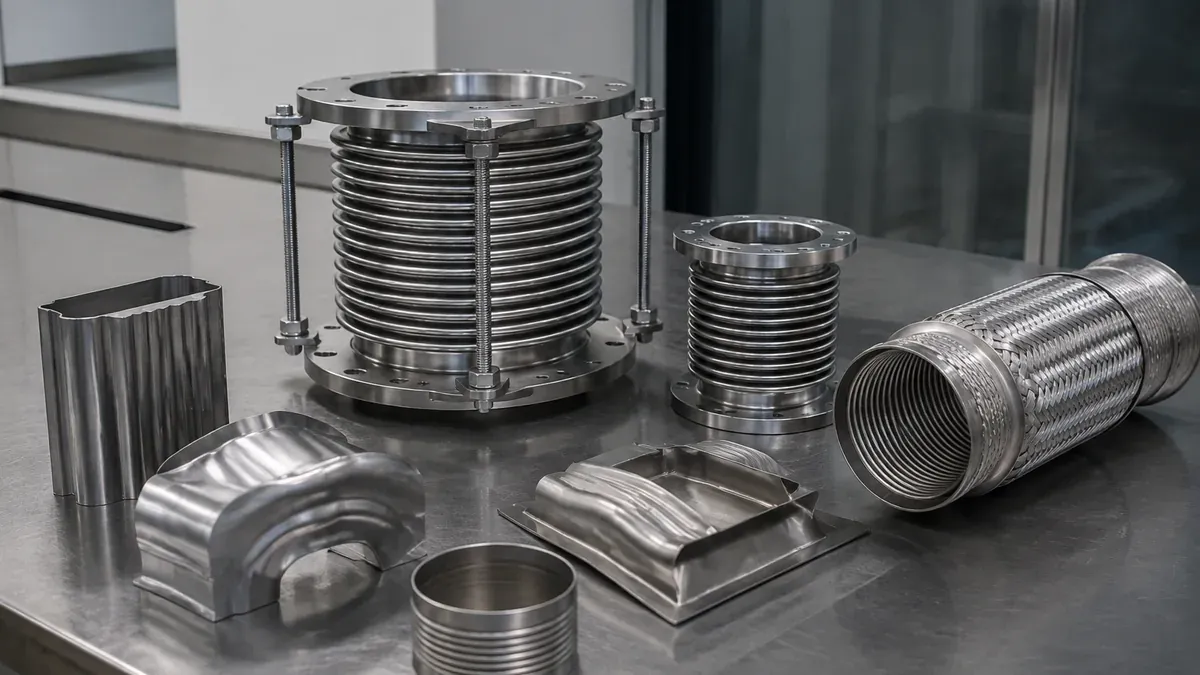
Illustrations identify the compared grade references; they are not photographs of the quoted material or proof of a mill heat.
Decision matrix
Key Differences
Full grade sheets:304 Stainless Steel/321 Stainless Steel
| Factor | 304 | 321 | Procurement decision |
|---|---|---|---|
| Stabilization strategy | 304 has no specified titanium stabilization and relies on its ordered chemistry, condition and fabrication controls. | 321 includes a specified titanium addition intended to address sensitization in defined thermal exposure. | Use the approved thermal and corrosion basis to decide whether stabilization is actually required. |
| Wet-corrosion role | 304 is widely used in controlled food, architectural and general process environments without severe chlorides. | 321 has a related base chemistry and should not be treated as a molybdenum-bearing corrosion upgrade. | Evaluate pitting, crevices, deposits, cleaning and stress separately from sensitization resistance. |
| Thermal design | 304 performance depends on actual metal temperature, exposure duration, load, atmosphere and code allowables. | 321 adds a stabilization route but still requires designation-specific oxidation, creep and code data. | Do not select either grade from furnace-air temperature or a generic high-temperature label. |
| Supply and finish | 304 generally supports a broad range of forms, dimensions and decorative or hygienic finishes. | 321 form and finish availability must be confirmed against the exact order and inspection requirements. | Compare the complete product and fabrication package instead of base-material quotations alone. |
Service and production route
Corrosion and Fabrication Boundaries
304 corrosion screening
- For this 304 vs 321 review, 304 relies on a chromium-rich passive film for general atmospheric, indoor and many process duties, but it is not automatically suitable for warm chloride, coastal salt deposits or persistent crevice-prone service — 316/316L or a higher alloy may be needed.
- For this 304 vs 321 review, Against lower-nickel 201, annealed 304 usually offers more corrosion margin in humidity, outdoor wetting and chemically cleaned food-contact duty; against ferritic 430 it remains the more formable, weldable austenitic default when magnetism and deep drawing matter.
- For this 304 vs 321 review, Review chlorides, temperature, pH, deposits, crevices, drainage, cleaning chemistry, weld heat tint and surface finish for the actual component. A grade designation alone is not a service-life guarantee.
321 corrosion screening
- For this 304 vs 321 review, 321 has an 18/8 chromium-nickel base and no intentional molybdenum range, so it should not be treated as a chloride-resistance upgrade from 304. Pitting, crevice attack and stress-corrosion risk still depend on chloride level, temperature, deposits and tensile stress.
- For this 304 vs 321 review, Titanium stabilization addresses sensitization risk only when the delivered chemistry and thermal history satisfy the specification. Heat tint, embedded iron, crevices and contaminated weld surfaces can still initiate corrosion and must be controlled.
| Operation | 304 | 321 |
|---|---|---|
| Welding | Generally weldable with a qualified austenitic procedure, matching or over-alloyed filler where required, controlled heat input and heat-tint removal when corrosion service demands it. For as-welded heavy sections, prefer 304L or dual-certified material meeting the low-carbon limit rather than assuming standard 304 HAZ behavior. | Use a qualified austenitic welding procedure and specify filler by the joint design and service requirement. Control purge, heat input and interpass practice, then remove heat tint when the corrosion environment requires a clean passive surface. |
| Forming | Annealed 304 sheet and strip draw and bend well, but the alloy work-hardens during forming — tooling load, springback, bend direction, draw ratio and any intermediate anneal must be proven on the actual gauge and reduction route. | Annealed 321 can be formed by practices used for austenitic sheet, while work hardening raises forming load and springback as reduction increases. Tooling, bend radius and any intermediate anneal must suit thickness and grain direction. |
| Machining | Use rigid tooling, positive feeds and controlled cutting heat to avoid a work-hardened surface; qualify the route on the delivered condition. Free-machining sulfur grades (for example 303) require separate corrosion and welding review. | Maintain positive feed with rigid tooling so the cut stays below the work-hardened layer. Avoid dwell and excessive heat, and separate titanium-stabilized material from free-machining grades when corrosion and welding are part of acceptance. |
| Heat treatment | Solution annealing with rapid cooling restores the intended annealed austenitic condition after suitable cold work or fabrication where applicable. Conventional quench-and-temper treatment does not through-harden austenitic 304. | 321 is supplied in a solution-treated condition under the applicable product specification and is not strengthened by conventional quench-and-temper treatment. Any stabilization or re-solution treatment must follow an approved procedure for the product form. |
Reference data
Composition and Mechanical Requirements
Values below come from each grade's displayed reference dataset. Product form, thickness, condition and contracted standard can change the applicable acceptance table.
Chemical composition (wt%)
| Element | 304 | 321 |
|---|---|---|
| C | ≤0.08 | ≤0.08 |
| Mn | ≤2.00 | ≤2.00 |
| Si | ≤0.75 | ≤0.75 |
| Cr | 17.5–19.5 | 17.0–19.0 |
| Ni | 8.0–10.5 | 9.0–12.0 |
| P | ≤0.045 | ≤0.045 |
| S | ≤0.030 | ≤0.030 |
| N | ≤0.10 | - |
| Ti | - | 5×(C+N) min, ≤0.70 |
Mechanical properties
| Property | 304 | 321 |
|---|---|---|
| Tensile strength | ≥515 MPa (75 ksi) | ≥515 MPa (75 ksi) |
| Yield strength (0.2%) | ≥205 MPa (30 ksi) | ≥205 MPa (30 ksi) |
| Elongation (50 mm) | ≥40% | ≥40% |
| Hardness | ≤201 HBW | ≤217 HBW |
Quotation workflow
Application Decisions
- For general tanks and process equipment, document normal, cleaning, shutdown and upset chemistry plus the highest actual metal-temperature cycle.
- For exhausts and expansion joints, provide gas chemistry, condensate, cycling, vibration, restraint, section, weld details and inspection basis.
- For food and hygienic equipment, separate product-contact corrosion and cleanability requirements from any external thermal-exposure concern.
- For pressure equipment, identify the code, design allowables, joint efficiency, corrosion allowance, toughness, NDE and material-deviation process.
Quote 304 when
- General sheet, tank and equipment fabrication with an approved S30400 material basis
- Food, architectural and ambient process duty whose corrosion review accepts 304
- Projects needing broad form, finish and fabricated-component availability
- Welded work whose code and corrosion basis explicitly accept 304 or specify a low-carbon alternative
Quote 321 when
- Exhaust, expansion-joint or hot-process components whose specification names S32100
- Equipment with a defined sensitizing thermal cycle and an approved titanium-stabilized route
- Fabrications supported by designation-specific welding, heat-treatment and inspection requirements
- Orders that can document 321 availability for the exact form, dimensions and condition
Hold point
Do Not Substitute Without Review
- Do not replace 304 with 321, or 321 with 304, without authorized review of thermal design, corrosion, welding and product-form requirements.
- Do not substitute 304L for 321 solely because both can address some sensitization concerns in welded fabrication.
- Do not use titanium stabilization as evidence of improved chloride pitting, crevice-corrosion or stress-corrosion performance.
- Do not apply ASTM A240 flat-product values to pipe, tube, fittings or completed pressure components without the governing standard.
Specification boundary
Standards, Temperature and Approval
Product and project approval
ASTM A240/A240M can govern flat product, while ASTM A312, A269 or A403 can apply to specified pipe, tube or fittings. The current edition, exact UNS designation, product form, equipment and welding codes, project corrosion basis, drawing and authorized material reviewer control acceptance.
Temperature boundary
This page sets no universal operating-temperature range for 304 or 321. Actual metal temperature, atmosphere, load, oxidation, thermal cycling, dwell time, sensitization history, creep duration, section thickness, weld condition and the governing design code determine the accepted envelope.
Commercial comparison
Cost and Availability Factors
Quote 304 and 321 on one RFQ with the same product form, dimensions, tests and documents. This page does not represent current stock, price or lead time.
Cost factors
- Current availability for the exact grade, product form, dimensions, finish and delivery condition.
- Material yield, forming, finish protection, weld consumables, heat treatment and fabrication hours.
- PMI, NDE, supplementary corrosion or thermal tests, inspection documents and witness scope.
- Quantity, matching components, packing, freight, Incoterm, delivery window and material-change approval.
Inputs for a like-for-like quotation
- UNS S30400 or S32100, product form, material and dimensional standards, design code and substitution policy.
- Dimensions, thickness or schedule, quantity, delivery condition, finish, roughness, tolerance and end preparation.
- Operating, cleaning, shutdown and upset chemistry plus actual metal-temperature, load and cycling profile.
- Welding code, filler, WPS/PQR, joint design, heat treatment, surface restoration and NDE requirements.
- MTC, heat traceability, PMI, supplementary tests, inspection, destination, Incoterm and required delivery date.
Continue the specification
Related Grades, Standards and Applications
Grade references
304 Stainless Steel Sheet
304/304L ASTM A240 sheet in 2B, BA, No.4 and mirror. Common inquiry range 0.3–6.0 mm, 1000/1219/1500 mm widths, cut to size with quoted documents.
View details →
304 Stainless Steel Welded Pipe
304 welded stainless steel pipe and tube to ASTM A312, A249 and A554 — industrial, sanitary and polished decorative, round, square and rectangular sections.
View details →
304 Stainless Steel Round Bar
304/304L round bar in bright, peeled or hot-finished routes. Common inquiry range 3–300 mm diameter, 3 m / 6 m or cut-to-length, for pins, shafts and fittings.
View details →
Buyer questions
Frequently Asked Questions
Is 321 more corrosion resistant than 304?
321 is selected for stabilization against sensitization in defined thermal histories, not as a universal wet-corrosion upgrade. Neither displayed chemistry includes a specified molybdenum range, so chlorides, crevices, temperature and stress still need review.
Can 304L replace 321?
Not automatically. 304L and 321 are separate designations with different chemistry and elevated-temperature considerations. The equipment code, design data, thermal cycle, weld procedure and authorized material reviewer must approve any change.
Can 321 be polished like 304?
Specified finishes can be produced on suitable 321 flat product, but availability, inclusions, surface route and appearance acceptance may differ from a common 304 supply chain. State the finish and approve a representative sample for visible work.
Published by Tsingshan (Shandong) Iron & Steel Co., Ltd..Sources, update policy and technical limitations.
Quote request
Get a Stainless Steel Quote
Send the product, grade and quantity you already have. We will complete the specification and quote the supply route.