
304 Stainless Steel Round Bar
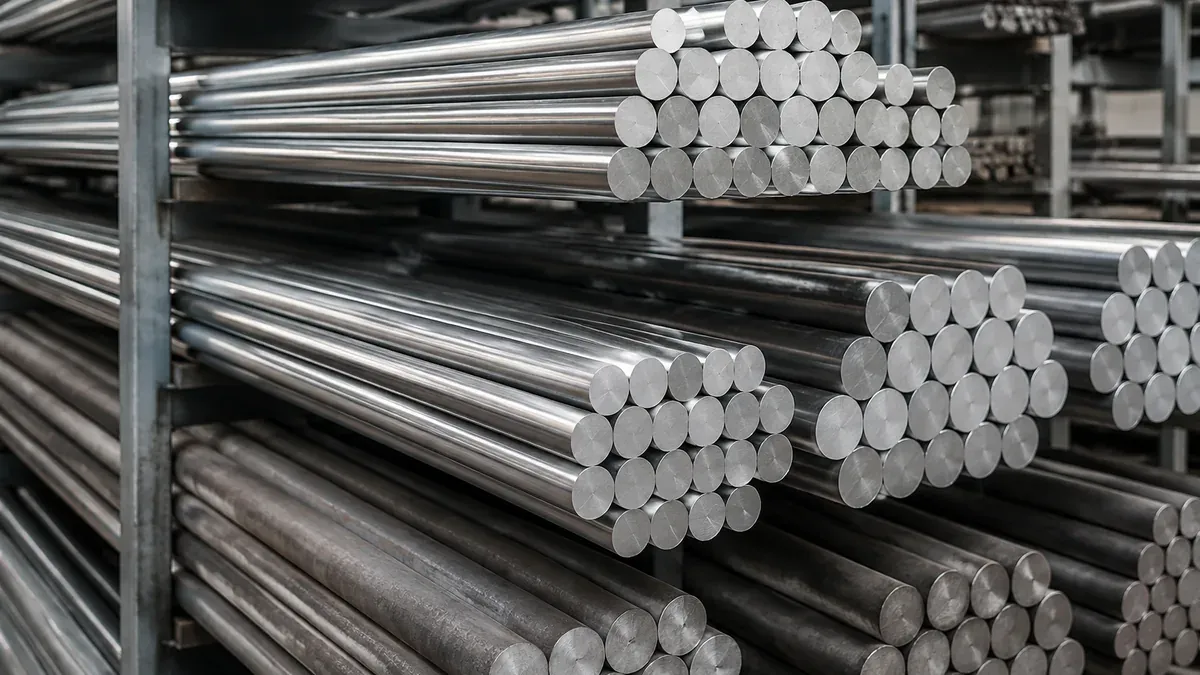
304 stainless steel round bar is quoted by 304 or 304L, product standard, diameter, surface route and length. Common inquiry range: 3–300 mm, 3 m / 6 m or cut-to-length, bright, peeled or hot-finished. Send the designation and inspection document with the RFQ.
Supply routes
- In-house production or processing
- Qualified partner-mill sourcing
- Stock coordination
Grade datasheets:304
Where this product solves the job
- General machined pins, shafts, spacers and fittings where the approved service environment accepts Type 304 or 304L.
- Bar-feeder and centerless-machining routes when diameter tolerance, straightness, length and end condition are specified together.
- Welded downstream parts when the design has selected 304L or another approved chemistry and controls the fabrication procedure.
When we recommend another route
- High-chloride or severe corrosion service assumed acceptable from the 304 name without a materials and design review.
- Maximum machining productivity where a free-machining grade is proposed but has not been evaluated for corrosion and welding limits.
- Orders that request h9 or h11 as a universal promise without naming the dimensional system, diameter range and measurement basis.
Standards we quote against
Send the product standard, edition and any dimensional or finish standard with the RFQ. We quote the ordered combination, not a generic grade name.
Ordered product standards: ASTM A276/A276M · EN 10088
What to send so we can quote the right route
- Name 304, 304L or an approved dual-marking requirement, plus the governing bar standard and edition.
- State finished diameter, tolerance class or explicit limits, measurement temperature if critical and quantity by diameter.
- Define straightness over a gauge length, total bow where needed, bar length, cut allowance, end chamfer and feeder constraints.
- Select bright drawn, ground, peeled, turned or hot-finished surface and state machining allowance or surface-defect criteria.
- List ordered tests, inspection document, heat and piece traceability, marking transfer, bundle limits and export protection.
Specifications
| Grade | 304 / 304L |
|---|---|
| Standard | ASTM A276, EN 10088-3 |
| Diameter | Common inquiry range: 3–300 mm. |
| Tolerance | h9 / h11 bright drawn; peeled +0.1/−0 options |
| Length | Common inquiry range: 3 m / 6 m, or cut to length. |
| Surface | Bright drawn, peeled, or black |
| Condition | Annealed |
| Commercial basis | Quantity, MOQ, production route and delivery schedule are quoted for the ordered specification. |
Dimensions and Tolerances
| Length | Common inquiry range: 3 m / 6 m, or cut to length. |
|---|---|
| Outer Diameter | Common inquiry range: 3–300 mm. |
| Order basis | Governing product and dimensional standard, delivery condition and any drawing-specific limits. |
| Special tolerances | Send special tolerances in the RFQ; we quote the accepted production route. |
Published ranges are technical references, not a live-stock or production-capability promise. We confirm the ordered size range, MOQ and delivery schedule in the quotation.
Edge or end condition
- Edge, end or facing condition as ordered from the product form, standard and fabrication need.
Testing and inspection
- Tests required by the purchased product standard.
- PMI, NDE, corrosion, roughness or other supplementary inspection quoted when the RFQ names method, lot scope and acceptance.
Order documents
- Heat identity with EN 10204 3.1, or the inspection document named in the RFQ, against mill, stock or partner-mill route.
- Supplementary reports linked to the ordered test plan.
Export packaging
- Bars bundled with end protection and moisture wrap for sea freight.
- Bundle identity kept with the heat mark; packing method stated in the quotation.
Quote the machining input
Send whether the useful input is bright, ground, peeled or hot-finished bar, plus diameter tolerance, straightness, measurement standard, bar length and end condition. We quote the matching machining route.
Quote 304 or 303 as separate routes
Free-machining 303 can be quoted for production turning when the corrosion, welding and application boundaries fit. Send the engineering decision with the RFQ. Use the 304 grade page and 303 comparison.
Quote identity after cutting
Send the inspection document, heat marking and transfer method for cut blanks. If piece traceability is required, we quote it with sawing, bundle support, separator material and moisture protection for the ordered surface.
Common ordering mistakes
- Treating bright, ground and peeled as cosmetic synonyms even though they imply different size, surface and machining behavior.
- Stating only a tolerance symbol without the applicable dimensional standard, nominal diameter and acceptance method.
- Ignoring straightness and end preparation until bars jam a feeder or require unexpected setup and facing work.
- Ordering 304/304L as an automatic dual certification without defining what the drawing and purchased standard require.
Handling and transport risks
- Long small-diameter bars can bend when lifted from one point or stored between supports that are too far apart.
- Bright and ground surfaces can pick up dents, fretting marks and embedded iron from hard bands or carbon-steel racks.
- Cut pieces can lose heat identity when transfer marking and batch segregation are not defined before sawing.
- Wet wrapping may stain close-finish bar and conceal abrasion until the bundle reaches the machining operation.
Technical content updated: 2026-07-31
Published by Tsingshan (Shandong) Iron & Steel Co., Ltd..Sources, update policy and technical limitations.
Typical Applications
Related technical resources
Grades
Published standards
Applicable standards
ASTM A276/A276M · EN 10088
Finishes and processing
What to Include in Your RFQ
Send the known values first. We use them to quote the ordered option, inspection plan and delivery route.
- Grade and governing standard
- 304; ASTM A276/A276M, EN 10088. State the exact ordered combination.
- Dimensions and tolerances
- Provide length, outer diameter and identify which order basis, special tolerances requirements govern acceptance.
- Finish, processing and edge or end condition
- ; Stainless Steel Cut-to-Length and Leveling; Edge, end or facing condition as ordered from the product form, standard and fabrication need..
- Inspection, documents and packing
- Testing: Tests required by the purchased product standard.; PMI, NDE, corrosion, roughness or other supplementary inspection quoted when the RFQ names method, lot scope and acceptance. Documents: Heat identity with EN 10204 3.1, or the inspection document named in the RFQ, against mill, stock or partner-mill route.; Supplementary reports linked to the ordered test plan. Packing: Bars bundled with end protection and moisture wrap for sea freight.; Bundle identity kept with the heat mark; packing method stated in the quotation.
- Quantity, destination and requested delivery window
- Send quantity per size, unit, destination city or port, trade term and requested delivery window so we can quote the supply and freight route.
Product RFQ Example
RFQ example: ASTM A276/A276M Type 304L bright round bar, 20 mm diameter to the stated tolerance class and edition, straightness over the specified gauge length, fixed feeder lengths with chamfered ends and facing allowance, ordered inspection document with heat traceability, controlled bundle weight and separator contact, moisture-protected export packing and destination; quote the confirmed surface route and delivery separately.
Frequently Asked Questions
What does an h9 or h11 request need to include?
Name the dimensional standard and edition, nominal diameter, tolerance class and measurement basis. Send that class with diameter, surface route and supply source so we can quote the matching bar.
How do bright, ground and peeled round bars differ for purchasing?
They can differ in dimensional capability, surface condition, defect removal, residual stress and machining preparation. Choose the route from the finished-part needs and state measurable diameter, straightness and surface requirements.
Should a buyer order 304 or 304L for a welded machined part?
Follow the approved drawing, purchased standard and welding procedure. Low-carbon chemistry can be relevant to fabrication, but the bar supplier should not change the specified grade or claim dual certification unless the order and records support it.
How should straightness be written on a round-bar RFQ?
Give the maximum deviation over a defined gauge length and add total-length bow where the machining process requires it. Also state support or measurement conditions if they affect acceptance.
Is ultrasonic testing standard for every 304 round bar order?
No. If the component requires supplementary examination, specify the bar-appropriate method, calibration, examined volume, sampling and acceptance class. The quotation must identify whether that inspection is included.
Quote request
Get a Stainless Steel Quote
Send the product, grade and quantity you already have. We will complete the specification and quote the supply route.