
Procurement standard brief
ASTM A276/A276M: Stainless Steel Bars and Shapes
Use ASTM A276/A276M for general stainless bar and shape material, then define the exact section, size, finish route, condition, length, dimensional requirements, surface allowance, testing, and documents. Do not use the title as a substitute for ASTM A479/A479M when a pressure-equipment material specification is required, and do not assume that a nominal bar size provides enough stock for machining. The drawing, machining allowance, and final component acceptance remain separate purchasing inputs.
- Use this guide for
- Bar and shape specification before machining or fabrication
- Relevant to
- Machined-part, shaft, fastener-stock, profile, and fabrication buyers
Contract responsibility
Scope and Explicit Exclusions
What this material standard controls
Covered product forms
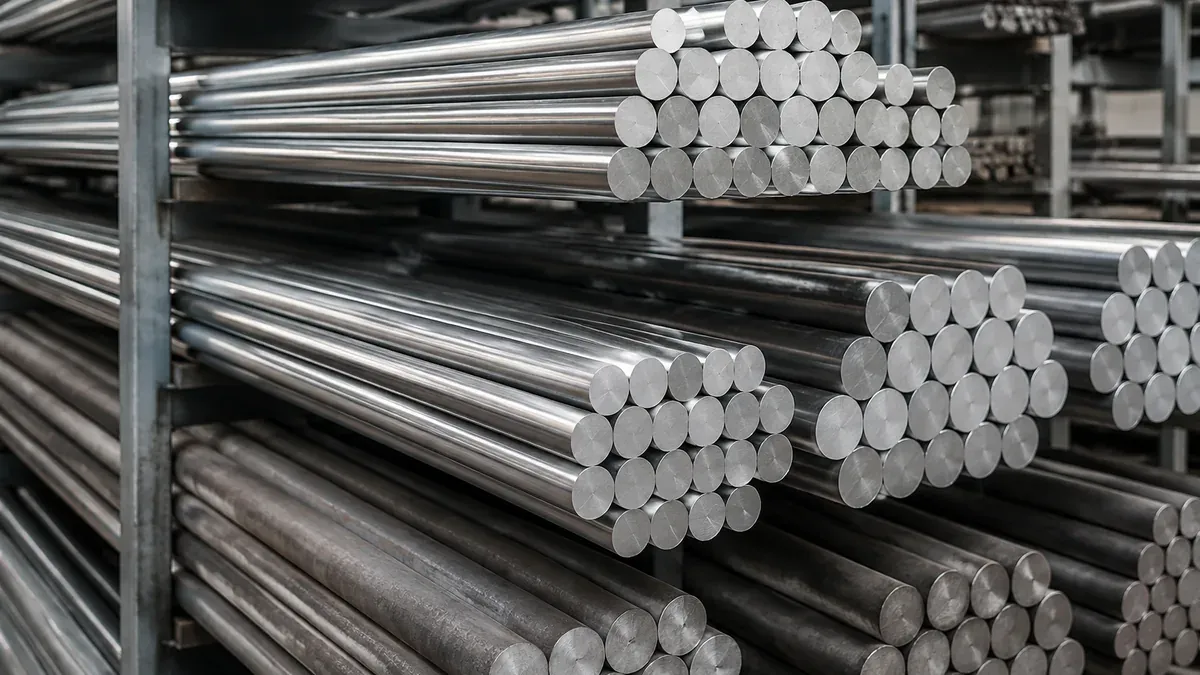
A276/A276M addresses hot-finished or cold-finished stainless bars and shapes in covered alloy families. The inquiry must identify round, square, hexagon, flat, angle, channel, or another ordered section rather than relying on the word bar.
Material condition
The specification coordinates grade chemistry, mechanical requirements, and heat treatment with the ordered product. Buyers must state grade, finish route, ordered condition, and any requirement that depends on size or section.
Testing and identification
The contract edition provides the base test, inspection, and marking framework. Additional PMI, hardness, ultrasonic examination, straightness reporting, or traceability controls must be invoked by the order where needed.
What it does not control alone
- A276/A276M does not define a finished shaft, valve stem, fastener, key, or machined component drawing; final geometry, machining, heat treatment, and acceptance remain separate.
- It does not automatically supply every dimensional and tolerance requirement for bar products, which are commonly coordinated with ASTM A484/A484M and buyer drawings.
- General bar conformity is not a substitute for the pressure-equipment material responsibilities associated with ASTM A479/A479M or a governing construction code.
Specification stack
Related Standards and Responsibility Chain
| Document | Procurement role | Boundary |
|---|---|---|
| ASTM A276/A276M | Defines the general stainless bar and shape material basis, covered grades, condition, mechanical requirements, tests, and identification framework. | The order must still select the product form, grade, finish route, and options from the contract edition. |
| ASTM A484/A484M | Commonly coordinates general requirements for stainless bars, billets, and forgings, including dimensional and delivery provisions. | Special straightness, out-of-round, length, chamfer, surface, or machining-stock requirements need explicit values or drawing references. |
| ASTM A479/A479M | Provides a separate bar and shape material route used for boilers and pressure-vessel construction when invoked. | A276 and A479 share some grades but serve different procurement responsibilities; substitution requires contract and engineering review. |
| Part drawing and machining plan | Defines finished geometry, datum, stock allowance, grain-flow concern, straightness, surface defects, heat treatment after machining, and inspection. | Bar certification does not certify the finished component or guarantee that nominal stock cleans up to drawing. |
Line-item completeness
How to Order to This Standard
| Field | What to state | Why it matters |
|---|---|---|
| Standard and edition | Name ASTM A276/A276M and the adopted revision, with ASTM A484/A484M or other general requirements where invoked. | Keeps material, dimensional, and delivery expectations on the same contract basis. |
| Grade and condition | State grade or UNS, heat-treatment condition, and any project chemistry, ferrite, hardness, or mechanical controls. | Grade name alone may not settle delivery condition or final part properties. |
| Section and size | Identify round, square, hex, flat, angle, channel, or drawing shape with nominal dimensions and units. | Different sections follow different availability, tolerances, straightness, and test considerations. |
| Finish route | State hot finished, cold finished, centerless ground, peeled, turned, polished, or another agreed surface route. | Surface route affects dimensional capability, decarburized or conditioned layers, inspection visibility, and machining allowance. |
| Length and tolerance | Give random or fixed length, permitted variation, straightness, diameter or section tolerance, corner condition, and end preparation. | A nominal bar description cannot resolve saw-cut loss, bend, or part nesting. |
| Surface acceptance | Define permitted conditioning, defect depth, removal allowance, roughness, protected surface, and whether representative samples apply. | Commercial bright bar and black bar descriptions are not complete acceptance criteria. |
| Inspection and records | List material certificate, heat identity, PMI, hardness, tensile, UT, dimensional report, marking transfer, and witness scope as required. | Cut lengths and remnant handling can break traceability unless the order defines control. |
| Quantity and packing | State pieces, total mass, part-cut plan, bundle size, separator or wrap, rust-prevention constraints, labels, and destination. | Handling method affects straightness, surface, identity, and efficient machining release. |
Copy structure, replace values
Purchase Description Example
Pre-award review
Ordering Mistakes and Corrections
| Mistake | Likely consequence | Correction |
|---|---|---|
| Using A276 and A479 as interchangeable labels. | A quotation may follow the wrong material route for a pressure-equipment project even when the alloy designation appears similar. | Ask the responsible engineer which material specification and construction-code link applies, then keep that requirement on the inquiry, certificate, and component records. |
| Ordering nominal diameter equal to the finished part maximum diameter. | Mill tolerance, surface conditioning, straightness, decarburized or damaged layer, and chucking allowance can leave insufficient clean-up stock. | Let machining engineering set raw diameter, straightness, surface route, and end allowance against the actual part drawing. |
| Writing only "bright bar" or "black bar". | Suppliers can price different hot-finished, cold-finished, peeled, turned, ground, or polished routes with different dimensional and surface results. | Name the production route, tolerance, straightness, roughness or defect acceptance, and any conditioning restriction. |
| Requesting heat traceability but allowing unmarked saw cuts. | Individual blanks can become detached from the certificate and material identity during nesting or subcontract machining. | Define marking transfer, cut map, bundle identity, remnant control, and the point where component serialization begins. |
Continue the specification
Products, Grades, Applications, and Adjacent Standards
Grade datasheets
Adjacent standards
Application briefs
Surface guidance
Buyer questions
Frequently Asked Questions
What product forms are ordered to ASTM A276?
The specification covers stainless bars and shapes within its scope. A purchase order should still name the exact section, such as round, square, hexagon, flat, angle, or channel, together with size, condition, finish route, tolerances, length, testing, and documents.
What is the difference between ASTM A276 and ASTM A479?
A276/A276M is a general stainless bar and shape material specification. A479/A479M is used for bars and shapes in boiler and pressure-vessel construction when invoked. Similar grades do not remove the need to follow the project-specified material route and governing code.
Does cold-finished bar mean centerless ground?
Not necessarily. Cold finishing describes a broad production condition, while centerless grinding is a specific sizing and surface operation. State the required route, diameter tolerance, straightness, roughness, defect acceptance, and machining allowance.
Published by Tsingshan (Shandong) Iron & Steel Co., Ltd..Sources, update policy and technical limitations.
Quotation package
What to Include in the RFQ
- ASTM A276/A276M and general-requirements contract editions
- Grade, UNS, heat treatment, and project chemistry or hardness controls
- Round, square, hex, flat, shape, or drawing section
- Nominal stock size, tolerance, straightness, and machining allowance
- Hot-finished, cold-finished, peeled, turned, ground, or polished route
- Fixed or random length, end condition, cut plan, and piece quantity
- PMI, UT, tests, certificate, traceability, marking, and dimensional report
- Packing, bundle weight, labels, destination, drawing revision, and requested schedule
Quote request
Get a Stainless Steel Quote
Send the product, grade and quantity you already have. We will complete the specification and quote the supply route.