
Grade quotation brief
17-4 PH vs 316L Stainless Steel
Quote 17-4 PH when a condition-specific calculation and qualified heat-treatment route require precipitation-hardened strength for a loaded component. Quote 316L when the approved equipment depends on austenitic forming, welding, toughness, finish or process-corrosion experience. They are not grade-for-grade substitutes, and neither room-temperature property tables nor a family-level strength ratio can authorize redesign.
Quote 17-4 PH when a condition-specific design calculation requires precipitation-hardened strength and the full heat-treatment, toughness, corrosion and inspection route is qualified. Quote 316L when the approved design depends on austenitic forming, welding, low-temperature behavior or process-corrosion experience. Recalculate and reapprove the component before changing either designation or product form.
Unsure whether 17-4 PH or 316L matches the operating temperature and chemistry? Send the service conditions with the RFQ. We quote the approved designation, product form and test plan.
Request a Quote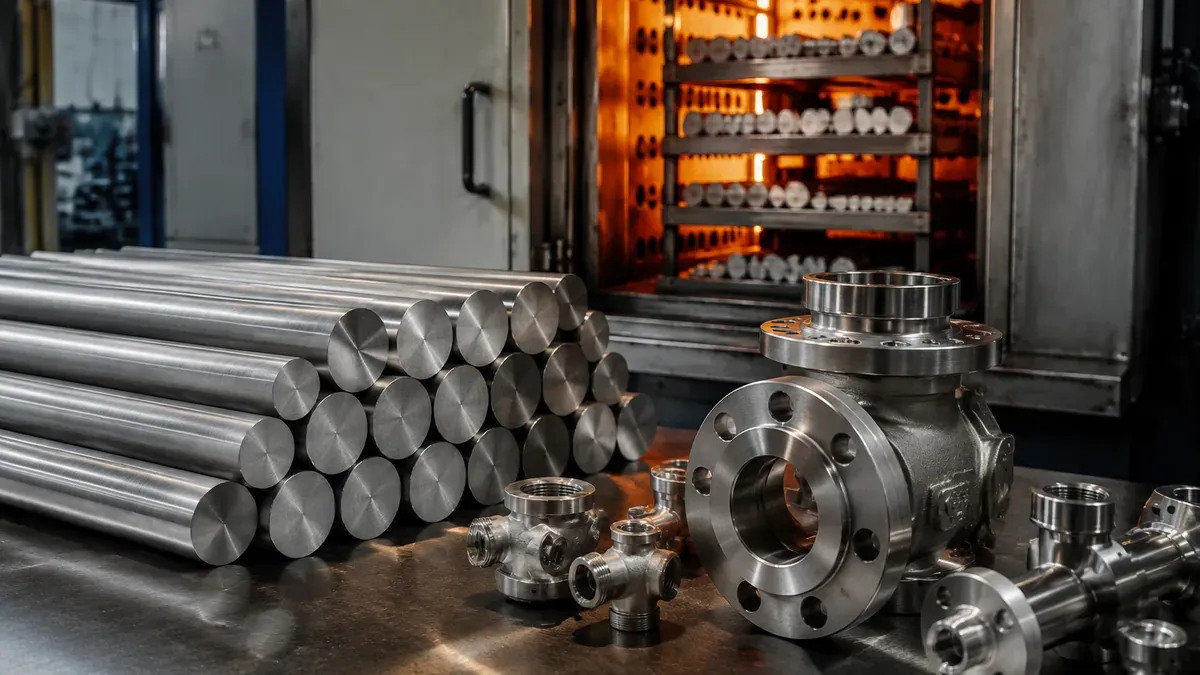
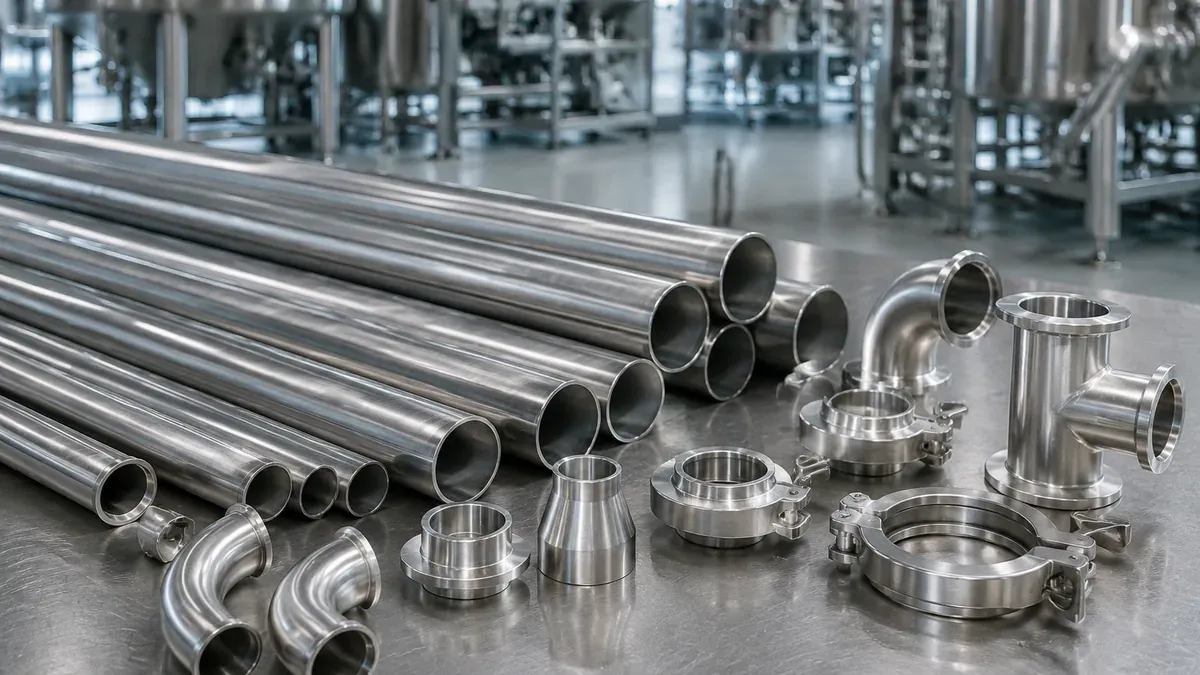
Illustrations identify the compared grade references; they are not photographs of the quoted material or proof of a mill heat.
Decision matrix
Key Differences
Full grade sheets:17-4 PH Stainless Steel/316L Stainless Steel
| Factor | 17-4 PH | 316L | Procurement decision |
|---|---|---|---|
| Strengthening system | 17-4 PH develops final properties through solution condition and a specified precipitation-aging route. | 316L is supplied as a low-carbon austenitic grade and is not strengthened by the same aging mechanism. | State the exact final condition and design allowables instead of comparing generic grade strengths. |
| Toughness and load | 17-4 PH strength, toughness and environmental-cracking behavior change with aging condition and section. | 316L supports a different ductility and low-temperature route that still depends on form, thickness and cold work. | Use code data and required impact or fracture qualification for the actual component and temperature. |
| Corrosion basis | 17-4 PH corrosion performance depends on condition, stress, surface, deposits and the specific process environment. | 316L has a molybdenum-bearing austenitic chemistry but still needs chloride, crevice and stress review. | Approve from service evidence or corrosion testing rather than stainless family or PREN alone. |
| Fabrication route | 17-4 PH machining, welding, solution treatment, aging and dimensional control form one qualified route. | 316L supports broader sheet, pipe, fitting and formed fabrication with its own weld and finish controls. | Compare complete component bills and procedures, not only bar or plate purchase prices. |
Service and production route
Corrosion and Fabrication Boundaries
17-4 PH corrosion screening
- For this 17-4 PH vs 316L review, 17-4 PH can approach 304-type atmospheric behavior in selected conditions, but copper precipitation, ageing condition, stress and surface state make the comparison component-specific.
- For this 17-4 PH vs 316L review, Chlorides, crevices, sustained stress and peak-aged conditions require particular review; the grade is not an automatic replacement for 316 in marine or process exposure.
316L corrosion screening
- For this 17-4 PH vs 316L review, Molybdenum-bearing 316L improves localized-corrosion resistance versus the 304/304L chromium-nickel family in many chloride, chemical-cleaning and coastal exposures; lower carbon reduces sensitization risk in suitable as-welded construction but does not raise pitting resistance beyond the 316 alloy family.
- For this 17-4 PH vs 316L review, Permanent seawater immersion, hot concentrated brine, tight crevices, deposits and poorly drained wet-dry cycling can still pit 316L — screen duplex 2205 or higher alloys after engineering review rather than relying on a marine-grade label.
- For this 17-4 PH vs 316L review, Review chlorides, temperature, pH, deposits, crevices, drainage, cleaning chemistry, weld heat tint and surface finish for the actual as-welded component. A grade designation alone is not a service-life guarantee.
| Operation | 17-4 PH | 316L |
|---|---|---|
| Welding | Weld from an approved starting condition with a qualified procedure, then apply the specified solution or ageing route when the joint requires restored strength, toughness and corrosion behavior. | Generally weldable with a qualified austenitic procedure, matching or over-alloyed filler where required, controlled heat input, purge on tubular joints and heat-tint removal when corrosion service demands it. The ≤0.030% carbon limit reduces sensitization (IGC) risk in the HAZ for as-welded tanks, pipe and structural weldments, but it does not qualify the WPS, filler or surface restoration — and Mo alloying is still not a substitute for duplex or higher alloys in severe chloride envelopes. |
| Forming | Forming is normally planned in condition A and must allow for high springback, limited reduction, anisotropy and dimensional movement during the final ageing treatment. | Annealed 316L sheet and strip draw and bend well, but the alloy work-hardens during forming — tooling load, springback, bend direction, draw ratio and any intermediate anneal must be proven on the actual gauge and reduction route. |
| Machining | Choose condition A or an over-aged machining condition according to tool life and dimensional plan, leaving allowance for the final ageing and finishing sequence. | Use rigid tooling, positive feeds and controlled cutting heat to avoid a work-hardened surface; qualify the route on the delivered condition. Free-machining sulfur grades require separate corrosion and welding review. |
| Heat treatment | Condition A followed by the exact H900, H1025, H1075, H1150 or other approved ageing treatment controls the strength-toughness balance and must be traceable. | Solution annealing with rapid cooling restores the intended annealed austenitic condition after suitable cold work or fabrication where applicable. Conventional quench-and-temper treatment does not through-harden austenitic 316L; do not rely on post-weld anneal unless the project actually schedules it. |
Reference data
Composition and Mechanical Requirements
Values below come from each grade's displayed reference dataset. Product form, thickness, condition and contracted standard can change the applicable acceptance table.
Chemical composition (wt%)
| Element | 17-4 PH | 316L |
|---|---|---|
| C | ≤0.07 | ≤0.030 |
| Mn | ≤1.00 | ≤2.00 |
| Si | ≤1.00 | ≤0.75 |
| Cr | 15.0–17.5 | 16.0–18.0 |
| Ni | 3.0–5.0 | 10.0–14.0 |
| Cu | 3.0–5.0 | - |
| Nb | 0.15–0.45 | - |
| P | ≤0.040 | ≤0.045 |
| S | ≤0.030 | ≤0.030 |
| Mo | - | 2.00–3.00 |
| N | - | ≤0.10 |
Mechanical properties
| Property | 17-4 PH | 316L |
|---|---|---|
| Tensile strength (H900) | ≥1310 MPa (190 ksi) | - |
| Yield strength (H900) | ≥1170 MPa (170 ksi) | - |
| Elongation (H900) | ≥10% | - |
| Tensile strength (H1150) | ≥930 MPa (135 ksi) | - |
| Hardness (Condition A) | ≤363 HBW | - |
| Tensile strength | - | ≥485 MPa (70 ksi) |
| Yield strength (0.2%) | - | ≥170 MPa (25 ksi) |
| Elongation (50 mm) | - | ≥40% |
| Hardness | - | ≤217 HBW |
Quotation workflow
Application Decisions
- For valve stems and pump shafts, provide torque, thrust, pressure, fatigue, wear pair, sealing geometry, fluid chemistry, temperature and corrosion allowance.
- For offshore or sour duty, identify chlorides, H2S, hardness limits, applied and residual stress, cathodic protection, toughness and project material rules.
- For pressure or low-temperature equipment, apply the governing code, allowable stresses, impact requirements, weld qualification and authorized material-deviation process.
- For hygienic or chemical equipment, include product contact, finish, cleaning, crevices, passivation and matching component availability before leaving 316L.
Quote 17-4 PH when
- Shafts, stems and valve parts whose calculation and drawing name S17400
- Machined components with an approved solution and aging condition
- Loaded parts whose strength, toughness and stress-corrosion basis is condition-specific
- Orders supported by the required 17-4 PH form, heat treatment, testing and traceability
Quote 316L when
- Welded tanks, piping and sheet equipment qualified around S31603
- Formed, polished or hygienic assemblies whose project basis names 316L
- Low-temperature or impact-sensitive duty supported by the exact product-form data
- Corrosive process components where the approved 316L route is adequate and age hardening is not required
Hold point
Do Not Substitute Without Review
- Do not replace 316L with 17-4 PH, or 17-4 PH with 316L, without revised design, corrosion, toughness, welding and product-form approval.
- Do not use a generic strength ratio to reduce section, change pressure class or remove fatigue and stiffness checks.
- Do not order 17-4 PH without the required final condition, heat-treatment responsibility and acceptance properties.
- Do not reuse a 316L welding, corrosion or low-temperature qualification for 17-4 PH.
Specification boundary
Standards, Temperature and Approval
Product and project approval
ASTM A564 can govern specified 17-4 PH bars and shapes, with other standards applying to plate, forgings and castings; ASTM A240/A240M, A312 or A182 can govern specified 316L forms. The current edition, exact form, final condition, design and welding codes, project specification and authorized reviewer control acceptance.
Temperature boundary
This page sets no universal operating-temperature range for 17-4 PH or 316L. Aging condition, actual metal temperature, exposure time, load, relaxation, toughness, corrosion, weld condition and product form can set different limits. Use the governing design code and condition-specific controlled data.
Commercial comparison
Cost and Availability Factors
Quote 17-4 PH and 316L on one RFQ with the same product form, dimensions, tests and documents. This page does not represent current stock, price or lead time.
Cost factors
- Current availability for the exact grade, form, dimensions, 17-4 condition and delivery window.
- Design section, machining allowance, forming, welding, solution treatment, aging and distortion control.
- Tensile, hardness, impact, corrosion, PMI, NDE, heat-treatment charts and inspection documents.
- Matching components, quantity, packing, freight, Incoterm, schedule and material-change qualification.
Inputs for a like-for-like quotation
- UNS S17400 or S31603, product form, material and dimensional standards, design code and substitution policy.
- Dimensions, section, quantity, delivery and final condition, machining allowance, tolerance and finish.
- Design load, pressure, fatigue, actual temperature, impact requirement, fluid chemistry, chlorides and cleaning.
- Welding code, filler, WPS/PQR, solution or aging responsibility, heat-treatment charts, surface restoration and NDE.
- MTC, heat traceability, PMI, mechanical and corrosion tests, inspection, destination, Incoterm and schedule.
Continue the specification
Related Grades, Standards and Applications
Grade references
17-4 PH Stainless Steel Round Bar
17-4 PH precipitation-hardening stainless steel round bar supplied in solution-treated or aged condition for high-strength shafts, valve parts and precision components.
View details →
316L Stainless Steel Sheet
316/316L stainless sheet for chloride and chemical service in 2B, BA and brushed finishes. Common inquiry range 0.3–6.0 mm, 1000/1219/1500 mm, cut to size.
View details →
316L Stainless Steel Seamless Pipe
Seamless 316L ASTM A312 pipe, pickled and annealed. Common inquiry range NPS 1/8–24, Sch 5S–XXS, 6 m or cut-to-length, with quoted tests and heat identity.
View details →
Buyer questions
Frequently Asked Questions
Is 17-4 PH more corrosion resistant than 316L?
No universal ranking covers every environment or 17-4 condition. 316L contains a specified molybdenum range, while 17-4 PH behavior changes with heat treatment, stress, surface and exposure. Provide the complete chemistry and stress state for review.
What condition should 17-4 PH be ordered in?
The drawing and design basis must name the required solution-treated or aged condition and its acceptance properties. Different aging routes change strength, toughness, hardness, dimensional response and environmental-cracking considerations.
Can 17-4 PH be welded like 316L?
Do not transfer a 316L procedure. 17-4 PH welding requires base-condition, filler, heat-input and post-weld heat-treatment decisions tied to restored final properties, while 316L follows a separate austenitic qualification route.
Published by Tsingshan (Shandong) Iron & Steel Co., Ltd..Sources, update policy and technical limitations.
Quote request
Get a Stainless Steel Quote
Send the product, grade and quantity you already have. We will complete the specification and quote the supply route.