
Grade quotation brief
321 vs 347 Stainless Steel
Quote 321 or 347 from the approved material specification, product form, thermal design basis and qualified welding route. Titanium-stabilized 321 and niobium-stabilized 347 are separate ordered grades; use of a 347-family filler in an approved 321 weld does not authorize base-metal substitution. Distinguish 347 from 347H and verify current code data before any elevated-temperature decision.
Quote the designation named by the approved equipment and welding basis. A 321 base material may be paired with a 347-family filler under a qualified procedure, but that practice does not make the base grades interchangeable. Send product form, thermal design data, weld qualification and inspection with the RFQ before authorizing a change.
Unsure whether 321 or 347 matches the operating temperature and chemistry? Send the service conditions with the RFQ. We quote the approved designation, product form and test plan.
Request a Quote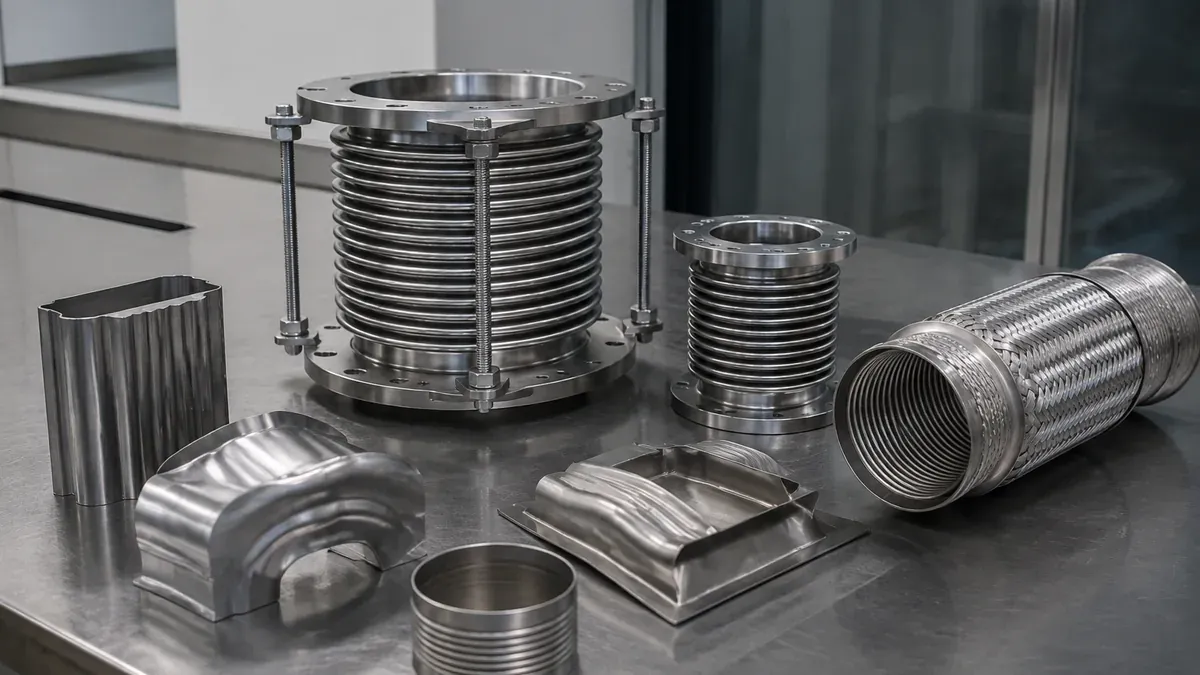
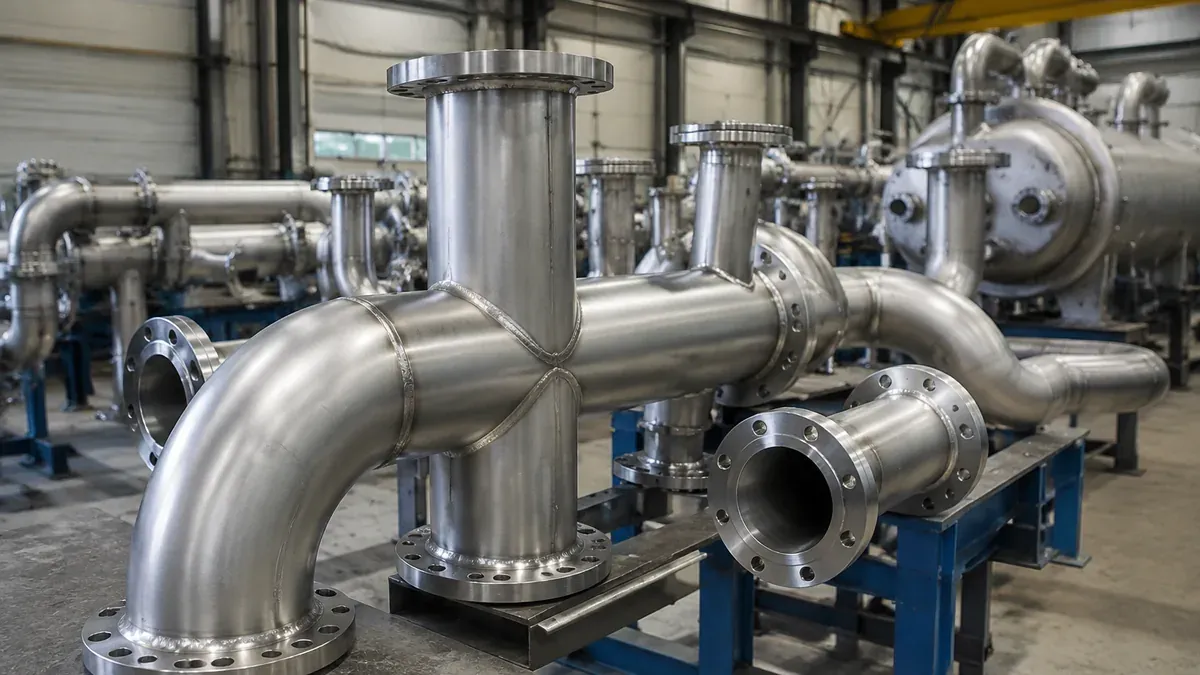
Illustrations identify the compared grade references; they are not photographs of the quoted material or proof of a mill heat.
Decision matrix
Key Differences
Full grade sheets:321 Stainless Steel/347 Stainless Steel
| Factor | 321 | 347 | Procurement decision |
|---|---|---|---|
| Stabilizing addition | 321 uses a specified titanium addition to control carbon-related sensitization in defined thermal exposure. | 347 uses a specified niobium plus tantalum addition for its stabilization route. | Order the exact UNS designation and verify heat chemistry instead of using a generic stabilized 18/8 description. |
| Weld system | 321 base material requires a qualified procedure whose filler and deposited-weld properties fit the service basis. | 347 base material also requires its own approved consumable, procedure and acceptance route. | A shared filler family does not establish that the base materials or procedures can be exchanged. |
| Elevated-temperature design | 321 selection depends on code allowables, oxidation, thermal cycling, load, section and exposure duration. | 347 selection uses designation-specific code data and must remain distinct from 347H requirements. | Use the governing equipment code and controlled material data, not a page-level temperature or creep claim. |
| Supply package | 321 availability must be confirmed for the required sheet, plate, tube, pipe or fabricated form. | 347 availability and supporting fittings, forgings, filler and test documents can follow a different route. | Compare complete traceable bills of material and inspection scope before approving a designation change. |
Service and production route
Corrosion and Fabrication Boundaries
321 corrosion screening
- For this 321 vs 347 review, 321 has an 18/8 chromium-nickel base and no intentional molybdenum range, so it should not be treated as a chloride-resistance upgrade from 304. Pitting, crevice attack and stress-corrosion risk still depend on chloride level, temperature, deposits and tensile stress.
- For this 321 vs 347 review, Titanium stabilization addresses sensitization risk only when the delivered chemistry and thermal history satisfy the specification. Heat tint, embedded iron, crevices and contaminated weld surfaces can still initiate corrosion and must be controlled.
347 corrosion screening
- For this 321 vs 347 review, 347 has an 18/8 chromium-nickel base without an intentional molybdenum range, so wet-corrosion behavior is closer to stabilized 304-family material than to 316. Chlorides, crevices, deposits and shutdown condensate still require separate assessment.
- For this 321 vs 347 review, Niobium stabilization reduces sensitization risk only within a compliant chemistry and heat-treatment condition. Weld heat tint, filler selection, surface contamination and long thermal exposure can still affect local corrosion and must be included in the inspection plan.
| Operation | 321 | 347 |
|---|---|---|
| Welding | Use a qualified austenitic welding procedure and specify filler by the joint design and service requirement. Control purge, heat input and interpass practice, then remove heat tint when the corrosion environment requires a clean passive surface. | The welding specification must define filler, purge, heat input and any code-required treatment for the joint. Stabilized base metal does not automatically qualify weld metal or eliminate the need to remove heat tint in corrosive shutdown service. |
| Forming | Annealed 321 can be formed by practices used for austenitic sheet, while work hardening raises forming load and springback as reduction increases. Tooling, bend radius and any intermediate anneal must suit thickness and grain direction. | 347 can be formed in the annealed condition, with work hardening and springback increasing as reduction rises. Heavy forming, weld-joint placement and any intermediate anneal need review because the final thermal history matters to stabilization. |
| Machining | Maintain positive feed with rigid tooling so the cut stays below the work-hardened layer. Avoid dwell and excessive heat, and separate titanium-stabilized material from free-machining grades when corrosion and welding are part of acceptance. | Use rigid tooling and positive feed to cut beneath the work-hardened surface, with coolant and chip control suited to niobium-stabilized austenitic material. Avoid dwell that raises tool wear and distorts thin-wall parts. |
| Heat treatment | 321 is supplied in a solution-treated condition under the applicable product specification and is not strengthened by conventional quench-and-temper treatment. Any stabilization or re-solution treatment must follow an approved procedure for the product form. | Solution treatment and any stabilization treatment must follow the governing product and fabrication procedure. 347 is not hardened by conventional quench-and-temper practice, and an unqualified thermal cycle can alter grain size and dimensional stability. |
Reference data
Composition and Mechanical Requirements
Values below come from each grade's displayed reference dataset. Product form, thickness, condition and contracted standard can change the applicable acceptance table.
Chemical composition (wt%)
| Element | 321 | 347 |
|---|---|---|
| C | ≤0.08 | ≤0.08 |
| Mn | ≤2.00 | ≤2.00 |
| Si | ≤0.75 | ≤0.75 |
| Cr | 17.0–19.0 | 17.0–19.0 |
| Ni | 9.0–12.0 | 9.0–13.0 |
| Ti | 5×(C+N) min, ≤0.70 | - |
| P | ≤0.045 | ≤0.045 |
| S | ≤0.030 | ≤0.030 |
| Nb | - | 10×C–1.00 |
Mechanical properties
| Property | 321 | 347 |
|---|---|---|
| Tensile strength | ≥515 MPa (75 ksi) | ≥515 MPa (75 ksi) |
| Yield strength (0.2%) | ≥205 MPa (30 ksi) | ≥205 MPa (30 ksi) |
| Elongation (50 mm) | ≥40% | ≥40% |
| Hardness | ≤217 HBW | ≤201 HBW |
Quotation workflow
Application Decisions
- For exhaust and expansion components, provide measured metal-temperature history, cycle frequency, atmosphere, condensate, vibration, geometry and weld locations.
- For refinery, boiler and power equipment, identify the design code, allowable-stress basis, pressure, design life method, joint efficiency, creep assessment and inspection plan.
- For aerospace or controlled-specification work, preserve the exact designation, approved material source, heat treatment, filler, NDE and deviation process.
- For wet shutdown or condensate exposure, assess pitting, crevice and intergranular corrosion separately from dry high-temperature oxidation.
Quote 321 when
- Exhaust, bellows or heat-shield parts whose approved specification names S32100
- Formed sheet or tube assemblies supported by a qualified 321 welding and thermal-exposure route
- Orders where the required 321 form, thickness, condition and inspection package are available
- Equipment whose corrosion and sensitization review accepts titanium stabilization
Quote 347 when
- Pressure, refinery or power components whose material specification explicitly names S34700
- Welded assemblies whose qualified procedure and filler strategy are built around 347
- Projects with code calculations and elevated-temperature data approved for the ordered 347 form
- Traceable supply packages that distinguish 347 from 347H and other stabilized designations
Hold point
Do Not Substitute Without Review
- Do not replace 321 with 347, or 347 with 321, without an authorized material deviation and revised design, welding and corrosion review.
- Do not treat 347 and 347H as one designation or apply elevated-temperature values across them without the governing code basis.
- Do not infer base-metal interchangeability from use of a 347-family filler in a qualified 321 welding procedure.
- Do not use flat-product chemistry or room-temperature properties as acceptance data for pipe, tube, fittings or forgings.
Specification boundary
Standards, Temperature and Approval
Product and project approval
ASTM A240/A240M can govern flat product, ASTM A312 can apply to specified austenitic pipe, and ASTM A269, A403 or A182 can govern other tubular, fitting or forged forms. The current contract edition, exact UNS designation, equipment code, welding code, project specification and authorized reviewer control acceptance.
Temperature boundary
This page publishes no universal operating-temperature range for 321 or 347. Actual metal temperature, atmosphere, oxygen potential, sulfur or carbon activity, load, thermal cycling, creep duration, section thickness, weld condition and the governing equipment code determine the accepted envelope.
Commercial comparison
Cost and Availability Factors
Quote 321 and 347 on one RFQ with the same product form, dimensions, tests and documents. This page does not represent current stock, price or lead time.
Cost factors
- Current mill availability for the exact grade, product form, dimensions, condition and delivery window.
- Material yield, forming route, machining, weld consumables and qualified fabrication hours.
- Heat treatment, PMI, NDE, elevated-temperature testing, inspection documents and witness scope.
- Matching fittings and forgings, quantity, packing, freight, Incoterm and material-deviation risk.
Inputs for a like-for-like quotation
- UNS S32100 or S34700, product form, material and dimensional standards, equipment code and substitution policy.
- Dimensions, thickness or schedule, quantity, delivery condition, finish, tolerances and end preparation.
- Design and actual metal-temperature profile, pressure, load, atmosphere, cycling, condensate and exposure duration.
- Welding code, joint design, filler classification, WPS/PQR, heat treatment, cleaning and NDE requirements.
- MTC type, heat traceability, chemistry verification, supplementary tests, destination, Incoterm and required delivery date.
Continue the specification
Related Grades, Standards and Applications
Buyer questions
Frequently Asked Questions
Can 347 filler be used when welding 321?
347-family filler is used in some qualified 321 procedures because its stabilizing addition can be retained in deposited weld metal. The applicable welding code, service duty, consumable classification, WPS/PQR and project approval still control filler selection.
Does stabilization make 321 or 347 suitable for chloride service?
No. Stabilization addresses sensitization and intergranular-corrosion concerns in defined thermal histories; it does not add a molybdenum range or approve pitting, crevice corrosion or stress-corrosion performance in a chloride environment.
Is 347 the same material as 347H?
No automatic equivalence should be assumed. 347 and 347H have different ordering and chemistry considerations, and elevated-temperature design data belongs to the exact designation, product form, thickness, heat treatment and governing code.
Published by Tsingshan (Shandong) Iron & Steel Co., Ltd..Sources, update policy and technical limitations.
Quote request
Get a Stainless Steel Quote
Send the product, grade and quantity you already have. We will complete the specification and quote the supply route.