
Surface procurement brief
2D Stainless Steel Finish
Choose 2D when a cold-rolled, heat-treated, descaled matte surface is required without the smoothing and brightness associated with a 2B skin pass. It is useful as a forming substrate or an intermediate surface, but the designation does not set one fixed roughness, color, lubrication response, or cosmetic standard. The purchase order should state the downstream forming or finishing purpose, critical face, defect limits, dimensions, shape, protection, inspection, and final treatment.
- Use this guide for
- Matte cold-rolled substrate selection before deep drawing or later finishing
- Relevant to
- Deep-draw component, industrial enclosure, heat-resistant part, and downstream-polishing buyers
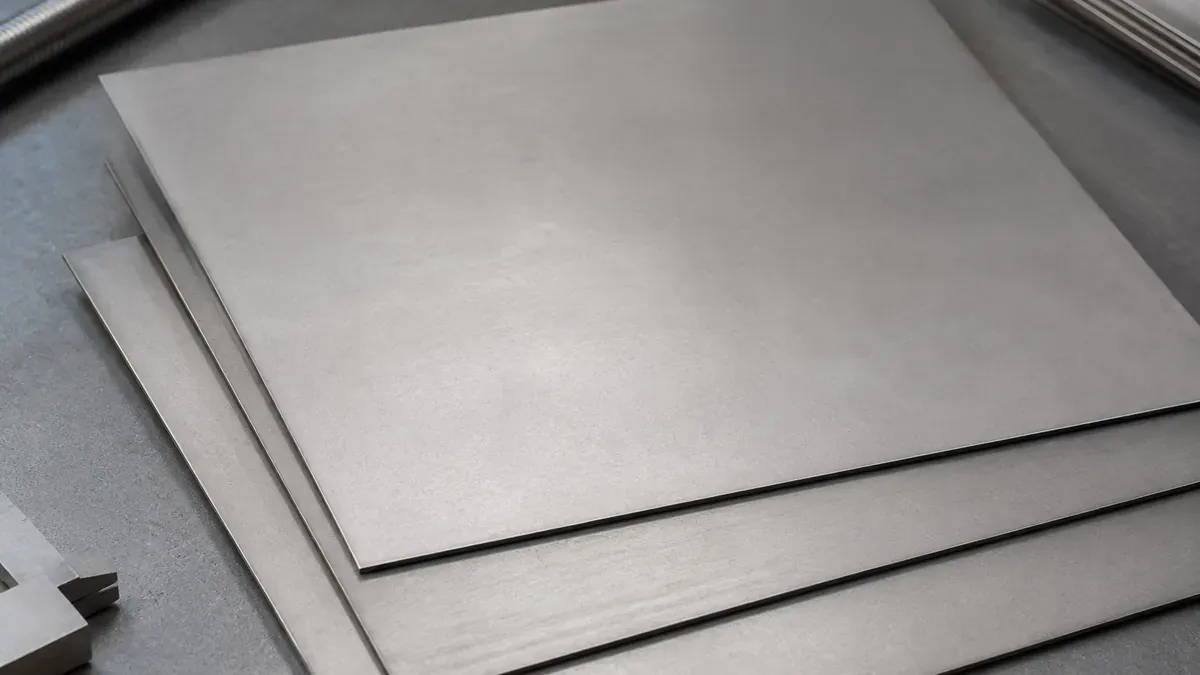
Incoming surface to delivered finish
Finish Class and Process Route
Finish class
Cold-rolled, heat-treated, and descaled matte mill finish without the final bright skin pass associated with 2B.
Incoming-surface dependency
Cold-rolling reduction, annealing scale, descaling route, strip condition, and coil handling define the base matte appearance. Without a final smoothing pass, surface texture and tone may be more visibly influenced by annealing and pickling history.
| Stage | Control to state | Risk if omitted |
|---|---|---|
| Cold rolling | Define grade, thickness, width, product condition, forming direction, and dimensional requirements. | Strip shape and rolling marks can affect blanking, forming, and the visible surface of the final component. |
| Annealing | Order the required heat-treated condition under the governing product standard. | Thermal history determines material condition and oxide that must be removed; the finish name does not replace material-property requirements. |
| Descaling and pickling | State the acceptable clean matte condition and restrictions on stains, pits, roll marks, or local repair. | Uneven treatment can leave shade variation or localized roughness that later forming may emphasize. |
| Release without bright skin pass | Confirm 2D rather than 2B and identify whether the surface remains visible or receives later polishing, coating, or treatment. | A supplier assumption that 2B is acceptable can change reflectivity, texture, and forming behavior. |
Measurable and visual controls
Acceptance Criteria
| Criterion | What to specify | Boundary |
|---|---|---|
| Finish route | Name 2D with material standard, grade, cold-rolled condition, and the contract definition. | Do not accept a generic matte description without confirming the mill route. |
| Functional surface | Describe the downstream forming, polishing, coating, or heat-service purpose and identify the critical face. | Suitability for one process must be proven on the actual material and tooling. |
| Texture and appearance | Use an approved sample or measured roughness method when variation affects forming or the final part. | 2D does not establish one universal Ra, gloss, or grey tone. |
| Surface defects | Set acceptance for pickling stains, roll marks, scratches, pits, dents, and handling contamination. | Defects tolerated on an intermediate face may be unacceptable if the surface remains exposed. |
| Shape and dimensions | State thickness tolerance, flatness, coil set, camber, width, length, edge, and blank orientation. | Surface designation does not control dimensional response during forming. |
Preserve the ordered surface
Fabrication, Cleaning, Film, and Packing
| Stage | Effect on finish | Required control |
|---|---|---|
| Deep drawing and stamping | Surface texture, lubricant retention, grain orientation, and tool cleanliness influence draw marks and galling. | Run a production-representative forming trial and specify lubricant, film, blank direction, and tool condition. |
| Later abrasive finishing | The matte substrate affects polishing time and the visibility of pits, scratches, or local shade. | Set incoming defect allowance and removal depth against the intended final finish. |
| Welding and heat treatment | Heat tint, oxide, distortion, and cleaning replace the local 2D condition. | Define final weld treatment, pickling, passivation, grinding, or other cleaning separately. |
| Handling and packing | Bare matte surfaces can retain dirt, moisture, or contact marks before forming. | Use clean separators, dry wrap, protected edges, traceable labels, and storage limits suited to the next process. |
Finish-specific disputes
Defects, Causes, and Prevention
| Defect | Likely cause | Prevention input |
|---|---|---|
| Uneven pickling shade | Scale variation, bath condition, exposure, drainage, or rinse differences can produce non-uniform matte tone. | Define whether tone is functional or visible, inspect after drying, and approve a sample if the final part retains the finish. |
| Roll and handling marks | Incoming strip, coil pressure, dirty tables, or sliding sheets can leave lines and scratches. | Set critical-face rules, keep contact surfaces clean, restrict sliding, and inspect before blanking. |
| Unexpected 2B substitution | 2D may be less commonly stocked, leading a quotation to substitute a brighter skin-passed surface. | State no substitution without written approval and compare route, forming behavior, appearance, and product-standard condition before acceptance. |
Application-led choice
Where This Finish Fits
| Use case | Selection guidance | Approval boundary |
|---|---|---|
| Deep-drawn industrial components | Use 2D when the validated forming route benefits from its matte descaled surface and no bright final pass is wanted. | Grade, temper, thickness, lubrication, tooling, and part geometry govern formability. |
| Parts receiving later polishing or coating | Specify incoming defect limits and confirm that the 2D substrate supports the intended removal and adhesion route. | Later processing cannot economically correct every pit, dent, or shape defect. |
| Decorative exposed panels | Use a sample-controlled decorative or abrasive finish if matching and final appearance are primary requirements. | 2D is a mill route and normal shade or texture variation may remain visible. |
Copy structure, replace values
Purchase Description Example
Continue the specification
Products, Grades, Standards, and Applications
Product forms
Grade datasheets
Product and finish standards
Application briefs
Buyer questions
Frequently Asked Questions
What is the main difference between 2D and 2B stainless finishes?
Both are cold-rolled, heat-treated, and descaled routes, but 2B includes a final light skin pass that produces a smoother and generally brighter surface. Confirm the contract standard because finish definitions and delivery conditions govern the order.
Is 2D always better for deep drawing?
No. Formability depends on grade, thickness, mechanical condition, texture, blank direction, lubricant, tooling, and part geometry. Qualify the selected 2D supply route through a representative forming trial.
Can 2D be replaced with 2B when material is unavailable?
Only after written technical and commercial review. The routes differ in surface texture, reflectivity, shape response, and possible forming behavior. The buyer should test the substitute against the actual downstream process and final appearance.
Published by Tsingshan (Shandong) Iron & Steel Co., Ltd..Sources, update policy and technical limitations.
Quotation package
What to Include in the RFQ
- Material standard, edition, grade, and cold-rolled condition
- Explicit 2D route and substitution rule
- Sheet or coil dimensions, tolerance, shape, edge, and quantity
- Downstream forming, polishing, coating, or heat-service purpose
- Critical face, sample, roughness, and defect limits
- Lubricant, film, blank direction, trial, and inspection requirements
- Certificate, traceability, separators, packing, destination, and schedule request
Quote request
Get a Stainless Steel Quote
Send the product, grade and quantity you already have. We will complete the specification and quote the supply route.