
Grade quotation brief
420 vs 440C Stainless Steel
Quote an exact 420 designation when the component needs a qualified edge, wear, toughness and fabrication balance. Quote 440C when a controlled bearing or wear design explicitly requires S44004 chemistry, cleanliness and a higher-hardness route, and can tolerate its tighter heat-treatment and grinding controls. Final properties belong to the processed part, not the grade label or an isolated handbook value.
Quote the exact 420 designation when the approved part needs its balance of edge, wear, toughness and manufacturing latitude. Quote 440C only when the drawing and qualification require its higher-carbon wear route and can manage impact, carbide distribution, heat-treatment distortion and grinding integrity. Neither grade name guarantees wear life, hardness, corrosion or bearing quality without final-part testing.
Unsure whether 420 or 440C matches the operating temperature and chemistry? Send the service conditions with the RFQ. We quote the approved designation, product form and test plan.
Request a Quote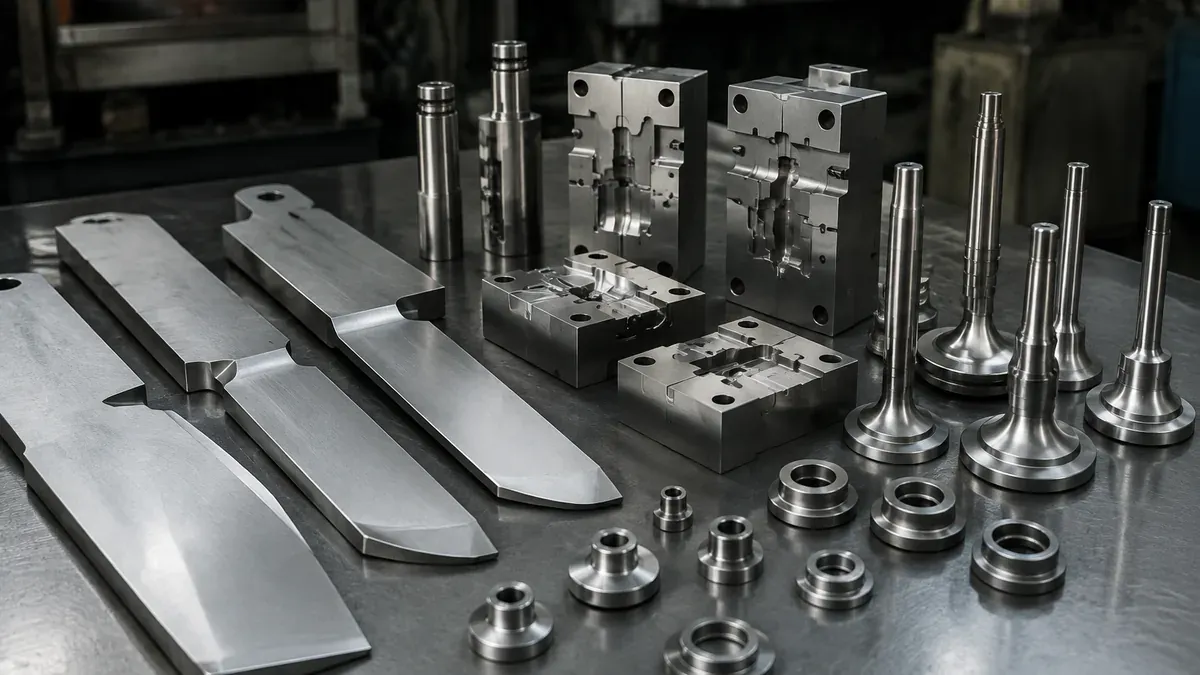
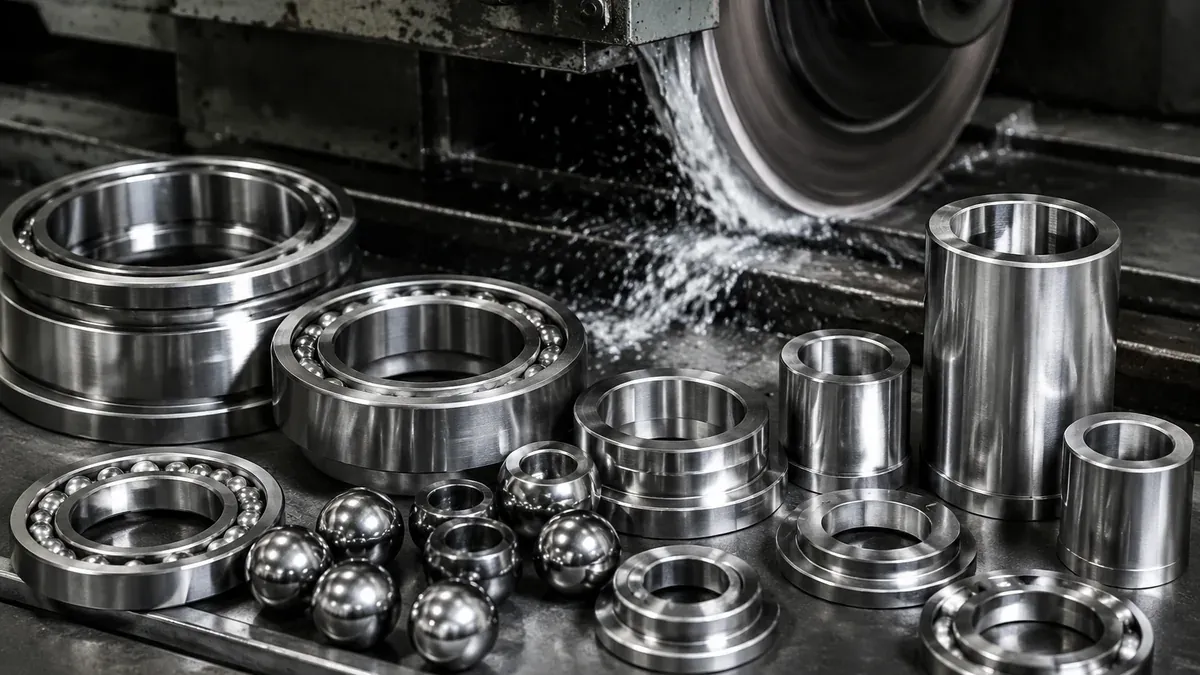
Illustrations identify the compared grade references; they are not photographs of the quoted material or proof of a mill heat.
Decision matrix
Key Differences
Full grade sheets:420 Stainless Steel/440C Stainless Steel
| Factor | 420 | 440C | Procurement decision |
|---|---|---|---|
| Chemistry range | 420-family designations use martensitic chromium-carbon ranges that vary with the exact purchased standard. | 440C has higher displayed carbon and chromium ranges and a different carbide-forming balance. | State the exact UNS or standard designation and do not purchase generic 420 or 440 steel. |
| Hardening route | 420 final properties depend on the selected chemistry, section, furnace, quench and temper procedure. | 440C needs tightly controlled hardening, retained-phase, carbide, distortion and tempering management. | Qualify the complete thermal process and test locations for the actual geometry and lot size. |
| Toughness and wear | 420 is assessed where edge retention or wear must remain balanced with impact and manufacturing needs. | 440C is assessed where bearing or sliding wear dominates and impact loading is controlled. | Use application-specific wear, impact and fracture criteria instead of a hardness-only comparison. |
| Surface integrity | 420 grinding and polishing must protect edge geometry, residual stress and corrosion condition. | 440C bearing surfaces require controlled grinding, burn inspection, roughness and dimensional stability. | Put final finish, grinding-damage and dimensional acceptance on the purchase and inspection plan. |
Service and production route
Corrosion and Fabrication Boundaries
420 corrosion screening
- For this 420 vs 440C review, 420 corrosion behavior changes with carbon variant, hardening response and surface preparation; dissolved chromium, carbide distribution and final polish all matter to the finished part.
- For this 420 vs 440C review, Clinical, food-adjacent or wet service requires explicit cleaning, sterilization, chloride, crevice and passivation criteria rather than a general claim based on blade hardness.
440C corrosion screening
- For this 420 vs 440C review, 440C's high carbon and chromium-carbide population can reduce the chromium available to the passive film; corrosion response therefore depends strongly on heat treatment, polish, cleaning and contamination control.
- For this 420 vs 440C review, Bearings, valve seats and cutting tools see different wetting, contact, crevice and lubricant conditions, so salt, chloride, food or sterilization claims require a component-specific acceptance plan.
| Operation | 420 | 440C |
|---|---|---|
| Welding | Welding is difficult because the joint can form hard martensite; any approved repair or fabrication weld needs controlled preheat, filler, restraint and post-weld tempering. | Welding is generally avoided for finished 440C components; any repair requires a specialist procedure that controls preheat, filler, cracking, post-weld heat treatment and final requalification. |
| Forming | Perform cutting and substantial forming in the annealed condition, allow for limited ductility, and account for distortion during subsequent austenitizing and quenching. | Substantial forming belongs in the annealed condition and must allow for high carbon, limited ductility, springback and distortion during hardening. |
| Machining | Rough-machine annealed stock with allowance for heat-treatment movement and finish grinding; tooling and feeds must match the delivered carbon variant and hardness. | Machine annealed or softened stock with stable tooling and generous allowance for heat-treatment movement; final hardness normally requires grinding or other controlled finishing. |
| Heat treatment | Carbon variant, austenitizing temperature, hold, quench, cryogenic step if specified and temper determine hardness, retained austenite, toughness and corrosion response. | Austenitizing, quench, temper, retained austenite and dimensional stabilization must be qualified together because hardness, toughness, wear and corrosion are linked to the thermal route. |
Reference data
Composition and Mechanical Requirements
Values below come from each grade's displayed reference dataset. Product form, thickness, condition and contracted standard can change the applicable acceptance table.
Chemical composition (wt%)
| Element | 420 | 440C |
|---|---|---|
| C | ≥0.15 | 0.95–1.20 |
| Mn | ≤1.00 | ≤1.00 |
| Si | ≤1.00 | ≤1.00 |
| Cr | 12.0–14.0 | 16.0–18.0 |
| P | ≤0.040 | ≤0.040 |
| S | ≤0.030 | ≤0.030 |
| Mo | - | ≤0.75 |
Mechanical properties
| Property | 420 | 440C |
|---|---|---|
| Condition (as supplied) | Annealed | - |
| Hardness (annealed) | ≤223 HBW | ≤269 HBW |
| Hardness (hardened + tempered) | 48–52 HRC (typ.) | - |
| Tensile (hardened, typ.) | ≈1600–1800 MPa | - |
| Hardness (hardened & tempered) | - | 58–60 HRC |
| Tensile strength (hardened, typical) | - | ≈1970 MPa |
| Tensile strength (annealed, typical) | - | ≈760 MPa |
Quotation workflow
Application Decisions
- For bearings and races, define contact stress, speed, lubrication, contamination, shock load, cleanliness, retained-phase, noise and dimensional-stability requirements.
- For blades and instruments, provide edge geometry, cutting medium, impact, sharpening, cleaning, finish, corrosion and product-contact rules.
- For valve seats and wear parts, identify pressure, fluid, particles, galling pair, leakage, temperature cycle, surface treatment and repair policy.
- For molds and precision tooling, document section changes, polishing class, distortion allowance, residual stress, cooling channels and inspection locations.
Quote 420 when
- Blades, instruments or mold parts whose drawing names a specific 420 designation
- Components needing a qualified hardness-toughness balance below the approved 440C route
- Parts supported by 420 machining, hardening, tempering, grinding and finish controls
- Orders whose exact 420 chemistry, product form and final testing are fully specified
Quote 440C when
- Bearing elements, seats and precision wear parts whose drawing explicitly names S44004
- Components with approved hardness, carbide, cleanliness, retained-phase and dimensional criteria
- Low-impact wear systems supported by a specialist 440C heat-treatment and grinding route
- Orders with traceable material, furnace records, final tests and surface-integrity inspection
Hold point
Do Not Substitute Without Review
- Do not replace an exact 420 designation with 440C, or 440C with 420, without revised heat-treatment, wear, toughness and design approval.
- Do not guarantee final hardness, wear life or bearing performance from chemistry or an unspecified heat-treatment condition.
- Do not transfer furnace parameters or test results across section sizes, loads, geometries or different 420 designations.
- Do not accept critical ground parts without the drawing's surface-integrity, dimensional and final-property inspections.
Specification boundary
Standards, Temperature and Approval
Product and project approval
ASTM A240/A240M can govern specified flat product and ASTM A276 can govern bar, while bearing-quality, tool or component drawings may add cleanliness, heat-treatment, hardness and surface requirements. The current edition, exact designation, form, section, final condition and authorized design reviewer control acceptance.
Temperature boundary
This page publishes no universal operating or heat-treatment temperature for 420 or 440C. Section, furnace uniformity, atmosphere, austenitizing, quench, optional subzero processing, tempering and service heat affect hardness, retained phases, carbides, toughness, distortion and corrosion. Only the qualified route supplies values.
Commercial comparison
Cost and Availability Factors
Quote 420 and 440C on one RFQ with the same product form, dimensions, tests and documents. This page does not represent current stock, price or lead time.
Cost factors
- Current material availability, exact designation, cleanliness, form, section, stock allowance and quantity.
- Rough machining, furnace atmosphere, quench, optional subzero route, tempering and straightening.
- Finish grinding, polishing, burn inspection, hardness mapping, metallography, NDE and dimensional reports.
- Heat-treatment lot size, rejection risk, packing, freight, Incoterm, schedule and qualification scope.
Inputs for a like-for-like quotation
- Exact UNS or standard designation, product form, material standard, drawing revision and substitution policy.
- Part geometry, section transitions, quantity, initial condition, stock allowance, tolerance and final roughness.
- Hardness scale and test locations, toughness, wear, cleanliness, carbide, retained-phase and corrosion criteria.
- Furnace atmosphere, austenitizing, quench, subzero treatment if specified, temper, straightening and grinding controls.
- MTC, heat-treatment charts, test and metallography reports, NDE, dimensions, packing, destination and Incoterm.
Continue the specification
Related Grades, Standards and Applications
Grade references
Standards
Applications
Buyer questions
Frequently Asked Questions
Which grade gets harder?
440C is generally evaluated for a higher hardness route, but no value is guaranteed by designation alone. Exact chemistry, section, austenitizing, quench, subzero treatment where specified, tempering and test method determine the result.
Which is more corrosion resistant?
The answer depends on heat treatment, carbide distribution, retained phases, finish, passivation and exposure. Higher bulk chromium in 440C does not translate directly into universal wet-corrosion performance because carbon and thermal processing change the matrix.
Can 420 and 440C be welded?
Both are crack-sensitive martensitic systems, and 440C is especially demanding. Critical welding or repair requires a specialist procedure covering base condition, preheat, consumable, hydrogen control, post-weld treatment and restored final properties.
Published by Tsingshan (Shandong) Iron & Steel Co., Ltd..Sources, update policy and technical limitations.
Quote request
Get a Stainless Steel Quote
Send the product, grade and quantity you already have. We will complete the specification and quote the supply route.