
304 vs 304L for Welding: Buyer Selection Guide
Choose 304 or 304L for welded stainless assemblies with a buyer guide covering carbon limits, sensitization risk, dual certification, documents and RFQ wording.
Published Sep 3, 2026 · Technical content updated: Sep 3, 2026 ·Tsingshan (Shandong) Iron & Steel Co., Ltd.
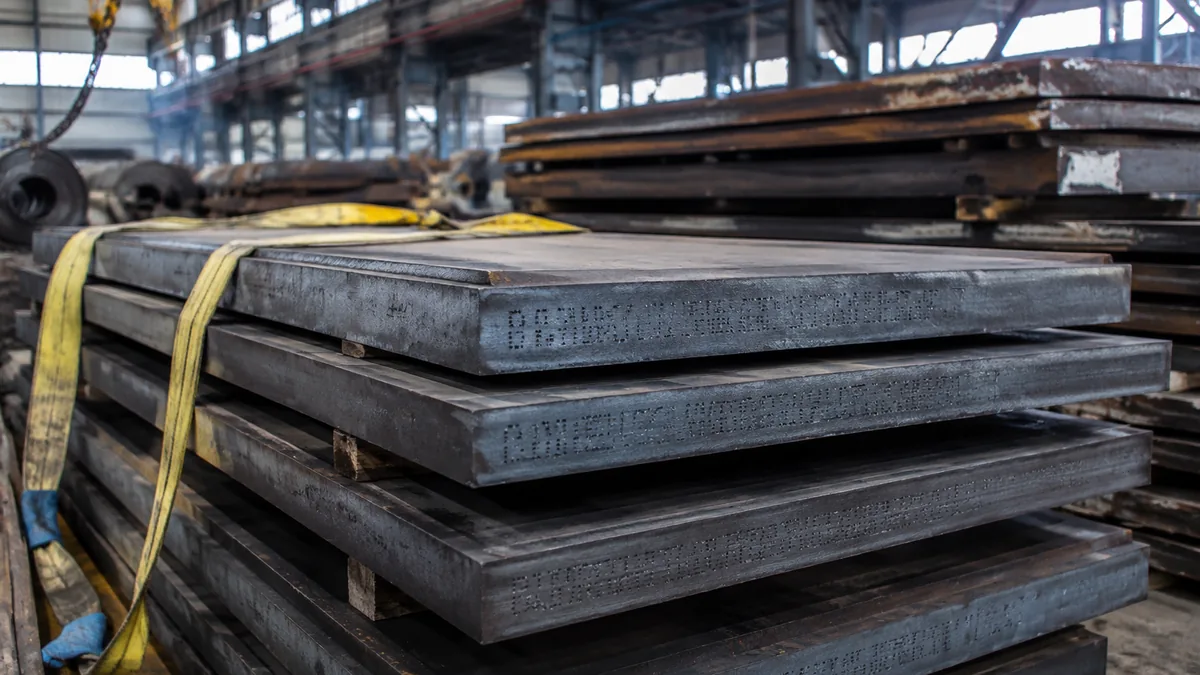
Reference image for this topic; it does not show Tsingshan Steel facilities, inventory or completed orders.
Introduction
Featured answer: For welded stainless assemblies that stay in the as-welded condition, prefer 304L when carbon control matters for heat-affected-zone corrosion resistance. Prefer 304 only when higher as-supplied strength is required, welding is light, post-weld solution anneal is planned, or the purchaser accepts a documented thin-section exception. Dual-certified 304/304L stock is useful only when the certificate carbon stays at or below the 304L maximum and the RFQ still states the welding rules.
Buyers often write “304 stainless, welded frame” and discover later that the fabricator, inspector and end user disagree about sensitization risk. The dispute is rarely about chromium or nickel. It is about carbon, thickness, heat input and whether anyone will solution-anneal the finished weldment.
This guide is a commercial welding selection note, not a general grade encyclopedia. Use the stainless steel product range to lock the product form first, then decide whether the purchase line should say 304, 304L or dual-certified 304/304L for the welded route.
Direct answer: when 304L wins for welded work
Specify 304L when any of the following is true:
- The finished part will enter service as-welded, without a full solution anneal after fabrication.
- The weldment uses medium or heavy section plate, pipe or multi-pass joints that stay longer in the roughly 450 to 850 C sensitization window.
- The service medium can attack chromium-depleted grain boundaries after welding, including many chemical, food-contact washdown or outdoor wet environments.
- The buyer cannot control every shop heat-input practice across subcontractors.
Keep 304 on the table when:
- the design needs the higher minimum mechanical properties associated with standard 304 under the ordered standard edition;
- welding is limited to thin sheet or light attachments and the purchaser records that exception;
- post-weld solution annealing is already in the approved procedure;
- high-temperature creep strength is the driver, which usually points to 304H rather than either commodity 304 or 304L.
If the team only needs a broad grade orientation before welding details, the earlier overview of 201 vs 304 vs 316 remains useful. For welded RFQs, carbon and as-welded condition belong on the same line as grade.
Carbon content and sensitization risk
The practical difference buyers care about is carbon. Under widely used ASTM flat-product practice, 304 allows a higher maximum carbon than 304L, while 304L is limited to 0.030% max carbon. Confirm the edition on the purchase order. Some product standards historically list 0.08% max for 304; harmonized flat-product tables may show a lower 304 maximum. The contract edition governs.
During welding, metal in the heat-affected zone can spend time in the temperature band where carbon and chromium form grain-boundary carbides. Chromium depletion along those boundaries raises the risk of intergranular corrosion in service. Lower carbon in 304L reduces the driving force for that precipitation, which is why 304L is the default for many as-welded assemblies.
| Buyer question | 304 | 304L | RFQ action |
|---|---|---|---|
| Maximum carbon to check on the MTC | Higher max than 304L; confirm edition | 0.030% max | Reject heats above the ordered limit |
| As-welded corrosion preference | Acceptable only with controlled thickness, procedure or later anneal | Preferred for most as-welded work | State “as-welded service” explicitly |
| Mechanical properties | Often higher minimums under the same family of specs | May be lower unless dual-certified or nitrogen-adjusted | Decide which property table applies |
| Typical buyer mistake | Ordering 304, then forbidding anneal | Ordering 304L but accepting any dual label without reading carbon | Make carbon and PWHT rules measurable |
Atlas Steels notes that sensitization depends on time at temperature, so even higher-carbon 304 or 316 can be welded with low risk in thin sections under normal processes when cooling is fast. That is an engineering exception, not a reason to leave the purchase order silent.
Thickness, heat input and when 304 can still work
Thickness changes the risk more than the grade name on a stock list. A thin 304 sheet with a short TIG pass may leave the heat-affected zone quickly. A thick 304 plate with multi-pass submerged-arc welding can remain in the critical range long enough for damaging carbide precipitation.
Use this buyer filter before approving a 304 substitution:
- Thin gauge, single-pass, low heat input: 304 may be acceptable if the approved welding procedure, cleaning method and corrosion expectation are written down.
- Medium plate, pipe branches, repeated passes: default to 304L unless post-weld anneal is real, scheduled and paid for.
- Heavy section, repair welding or field welding with uncertain heat control: specify 304L and require procedure qualification evidence.
- Any design that bans post-weld heat treatment for distortion or size reasons: treat 304L as the base metal default.
Do not rely on verbal shop habit. If the drawing says 304 and the weld map shows thick joints with no anneal, revise the material callout before cutting.
Dual-certified 304/304L stock and what the MTC must show
Mills often supply dual-certified 304/304L when one heat meets both chemistry windows and the stricter mechanical requirements needed to carry both designations. For welding buyers, the useful part of dual certification is usually the 304L carbon maximum plus acceptable strength.
Dual certification does not automatically answer these questions:
- Will the assembly remain as-welded?
- Which filler metal family is approved (commonly 308/308L class for this grade family, subject to the WPS)?
- Is intergranular corrosion testing required after welding?
- Which heat numbers are allowed in which weldments?
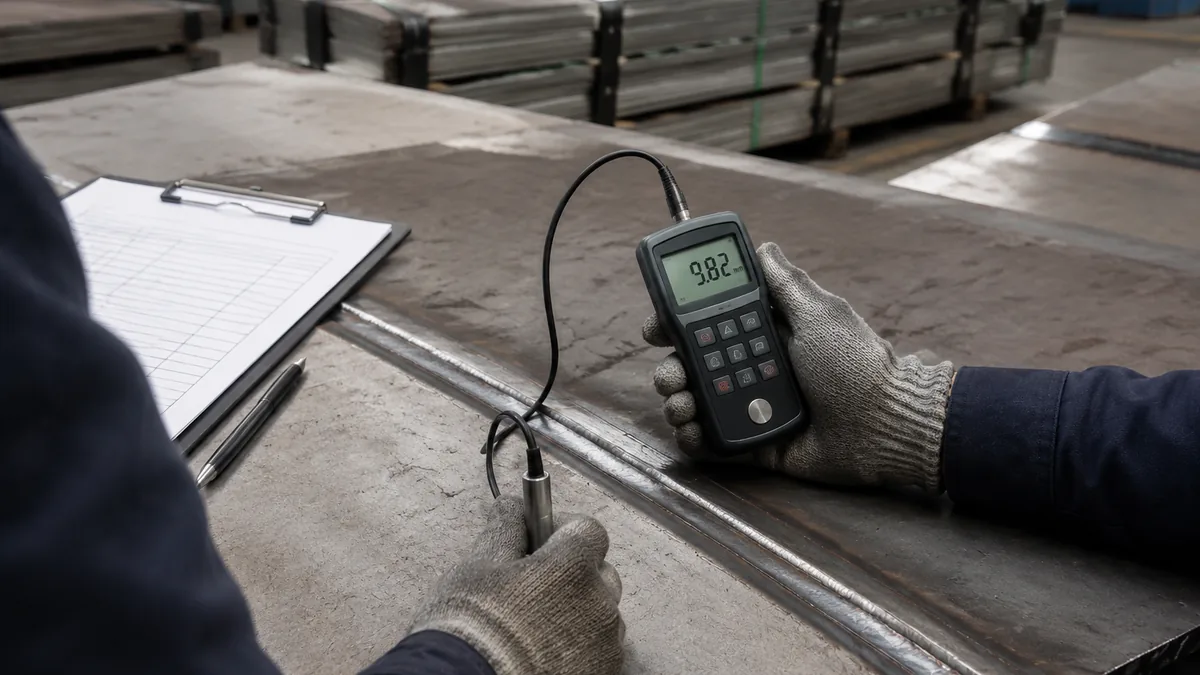
Read the mill test certificate guide before releasing material to the shop. On every certificate, confirm grade designation, heat number, carbon result, standard edition and the mechanical values used for dual marking. Cross-check labels on sheet, plate or pipe against the same heat identity.
For grade family mapping across regional designations, use the stainless steel grade equivalents tool. Keep the welding article focused on carbon and as-welded risk rather than turning into another general compare page.
Documents, filler metal and post-weld decisions buyers forget
A clean grade callout still fails when documents and weld procedure are incomplete. Before production, align the following:
- Base metal callout: 304, 304L or dual-certified 304/304L, with the product standard and edition.
- Product form and thickness range: sheet, plate, pipe, tube or fittings that will actually be welded.
- Welding condition: as-welded service versus mandatory solution anneal after fabrication.
- Filler metal and procedure: approved WPS/PQR references, not only a base-metal grade.
- Surface and cleaning: pickling, passivation or mechanical cleaning rules that affect weld-zone corrosion.
- Inspection documents: EN 10204 Type 3.1 or the ordered inspection document, plus any weld NDT or corrosion test.
- Traceability: heat number retained through cutting, forming and weld maps.
The stainless steel standards hub helps buyers name the product standard family. The quality-control workflow is the place to attach hold points for certificate review, weld inspection and packing identity.
Common Buyer Mistakes
These are the repeating handover failures that turn a 304 vs 304L choice into a claim file:
- Ordering “304 welded tank” with no PWHT line. The mill ships valid 304. The fabricator welds thick joints. The end user expected as-welded corrosion performance closer to 304L practice.
- Accepting dual-certified labels without reading carbon. A dual stamp is not a substitute for the reported carbon value on that heat.
- Mixing 304 and 304L heats in one weldment without a map. Later corrosion findings cannot be traced to a single carbon result.
- Specifying 304L base metal, then allowing unmatched filler or undocumented repair welds. The weak link moves from plate carbon to the weld deposit or HAZ from uncontrolled repairs.
- Using a general compare page as the purchase specification. A short grade comparison explains chemistry families. A welded assembly still needs thickness, procedure, document and acceptance wording.
- Checking only mechanical properties on the MTC. Yield and tensile can look fine while carbon sits at the top of the 304 window on a job that forbids anneal.
Put the welding choice into the RFQ
Copy and adapt this block for the inquiry:
- Grade: 304 / 304L / dual-certified 304/304L
- Product form and standard edition: for example ASTM A240 sheet or plate, or the pipe/tube standard actually used
- Thickness or schedule range and joint types
- Service condition: as-welded / post-weld solution annealed
- Maximum acceptable carbon if dual-certified stock is offered
- Filler metal family and whether a qualified WPS is required before production
- Required inspection document: EN 10204 Type 3.1 or named alternative
- Any intergranular corrosion, pickling/passivation or NDT requirement
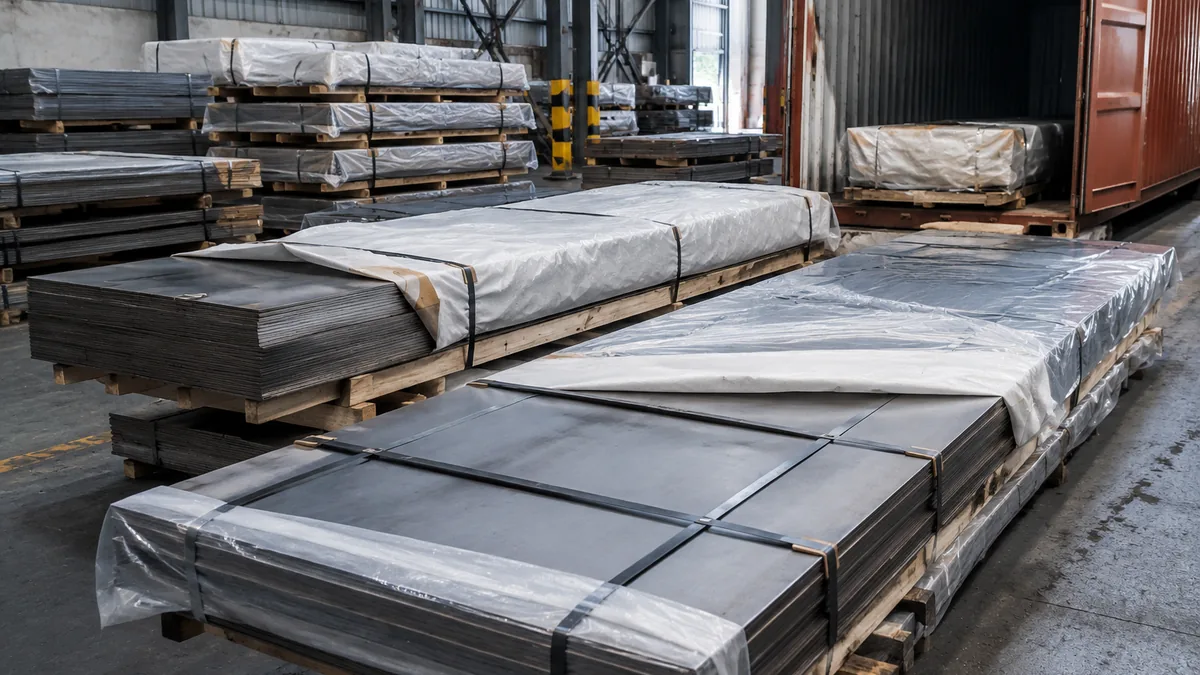
- Destination, quantity, packing and marking so heat identity survives export handling
Send the completed line through the stainless steel inquiry form, or use the WhatsApp option there to confirm whether dual-certified stock is acceptable for your weld map. Email sales@tsingshansts.com with the drawing thickness, service medium and whether post-weld anneal is possible. A clear welding RFQ prevents the cheapest compliant 304 heat from being treated as an automatic substitute for 304L.
Sources and application limits
This guide supports purchasing decisions. The ordered product standard, project specification and approved inspection plan control the final decision.
- ASTM A240/A240M austenitic stainless plate, sheet and strip chemistry and mechanical requirements
- Atlas Steels Tech Note on L, H and standard grades (sensitization and section thickness guidance)
- Cleveland-Cliffs 304/304L product data on as-welded intergranular corrosion preference
- EN 10204 Type 3.1 inspection document practice for heat identity and carbon reporting
Technical content updated: Sep 3, 2026
Frequently Asked Questions
Should buyers specify 304L for every welded stainless steel job?
Not automatically. Specify 304L when the assembly will remain as-welded, when section thickness or multi-pass welding keeps the heat-affected zone in the sensitization range longer, or when the service environment can attack chromium-depleted grain boundaries. Thin, lightly welded parts with controlled heat input may still use 304 if the purchase order accepts that route and defines inspection.
What is the carbon difference between 304 and 304L for welding decisions?
Under common ASTM stainless flat-product practice, 304 allows a higher maximum carbon than 304L. 304L is capped at 0.030% carbon. That lower carbon limit is the main reason 304L resists chromium carbide precipitation during welding. Always confirm the ordered standard edition on the mill test certificate rather than assuming a catalog summary.
Is dual-certified 304/304L enough for welded assemblies?
Dual certification can help when one heat meets both chemistry and mechanical limits, including the 304L carbon maximum. It is not a substitute for stating the welding condition, filler metal family, post-weld heat treatment rule and corrosion acceptance method in the RFQ. Check the reported carbon on the certificate for every heat.
Does an EN 10204 Type 3.1 MTC prove the weld zone will resist intergranular corrosion?
No. A Type 3.1 document supports heat identity, chemistry and mechanical results. Weld integrity and as-welded corrosion performance still depend on joint design, procedure, filler metal, thickness, cleaning and any required corrosion test. Keep the certificate tied to the same heat used in fabrication.
Send the product form, grade and quantity from this guide. We quote the matching stainless route.
Ready to quote your stainless specification?
Send product, grade and quantity. We quote the confirmed supply route.