
201 vs 304 vs 316 vs 430 Stainless: How to Choose
201 vs 304 vs 316 vs 430 stainless steel compared by alloying, corrosion position, L-grade welding and cost, then frozen into a comparable RFQ for Gulf and Southeast Asian buyers.
Published Oct 21, 2026 · Technical content updated: Nov 3, 2026 ·Tsingshan (Shandong) Iron & Steel Co., Ltd.
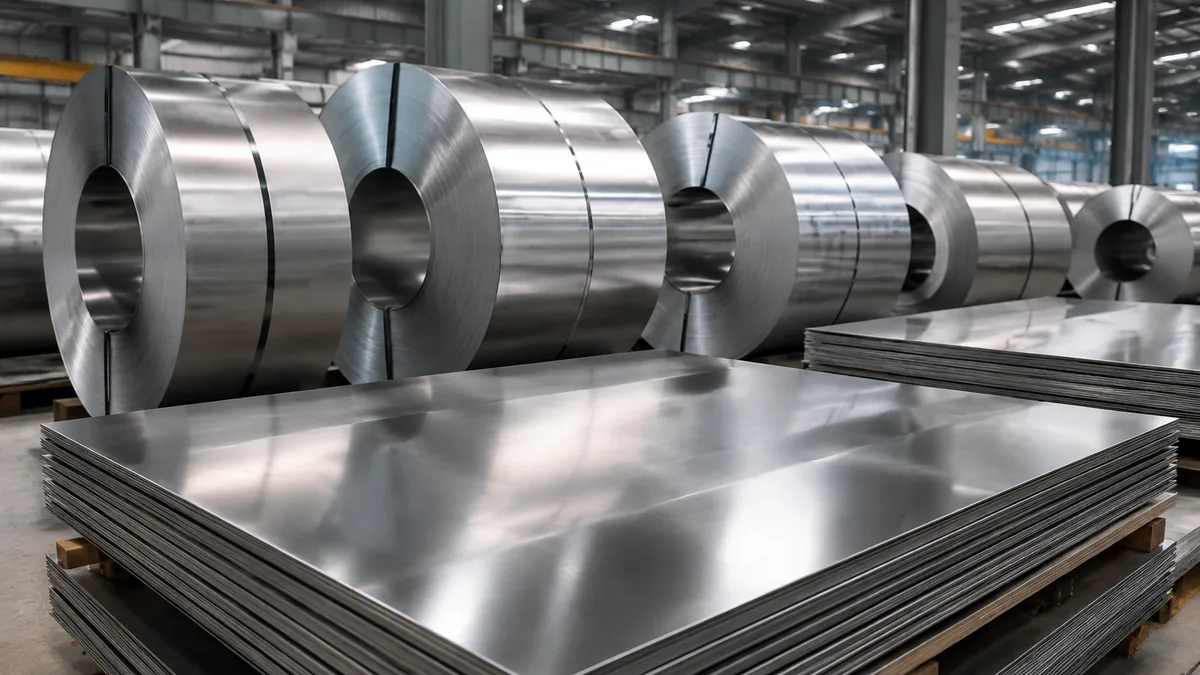
Reference image for this topic; it does not show Tsingshan Steel facilities, inventory or completed orders.
Featured answer
Commodity stainless RFQs for MENA and Southeast Asia buyers should freeze duty first, then screen 201 · 304 / 304L · 316 / 316L · 430—not a single plant-wide nickname. Use 430 only on mild decorative or lightly wet non-pressure tags the owner already maps to ferritic chromium grades. Keep 201 as a separate option when the basis accepts its Mn-Ni envelope. Default general-purpose austenitic tags to 304 / 304L; move to 316 / 316L when chlorides, chemical cleaning or coastal exposure compress that envelope. Force L grades wherever welding or as-welded corrosion risk drives the owner preference. Then lock form, finish and documents so quotes stay comparable.
This guide compares the four commodity grades and turns the choice into a comparable RFQ. For a two-grade decision, use the dedicated comparisons: 201 vs 304 for indoor and decorative products, and 304 vs 316 for chloride service. Weld carbon notes stay on 304 vs 304L; chemistry depth on the stainless steel grades index.
201 vs 304 vs 316 vs 430 side by side
| Decision point | 201 | 304 | 316 | 430 |
|---|---|---|---|---|
| Family and alloying | Austenitic Cr-Mn-Ni | Austenitic Cr-Ni | Austenitic Cr-Ni-Mo | Ferritic Cr, no nickel |
| Corrosion-selection position | Mild, controlled exposure after review | Broad general-purpose starting point | Stronger starting point for many chloride services | Mild decorative or lightly wet duty |
| Magnetic response | Low annealed; rises with cold work | Low annealed; rises with cold work | Low annealed; rises with cold work | Magnetic |
| Commercial position | Often lower alloy cost | Common reference grade | Higher, market-dependent Mo/Ni surcharge | Often lowest alloy cost |
| Buyer must still define | Environment, cleaning, finish, standard | Form, condition, fabrication, tests | Chloride level, temperature, crevices, approval | Weld permission, forming limits, finish |
Review the full grade pages for 201, 304, 316, 316L and 430. Chemistry and mechanical values must be checked against the ordered product standard and condition.
| Screen | Typical keep | Escalate when |
|---|---|---|
| Duty sheet | Environment, cleaning, weld, life | No grade nickname yet |
| 430 | Mild decorative / dry–light wet, non-pressure | Chloride, sanitary contact, structural weld |
| 201 | Owner-accepted mild austenitic economy route | Basis requires 304-family corrosion margin |
| 304 / 304L | General-purpose Cr-Ni tags | Chloride / chemical / coastal compress envelope |
| 316 / 316L | Mo-bearing austenitic screen | Owner basis needs duplex/specialty (out of scope here) |
| Bid freeze | Form, L-rule, finish, EN 10204, PMI | Comparable multi-grade quotes |
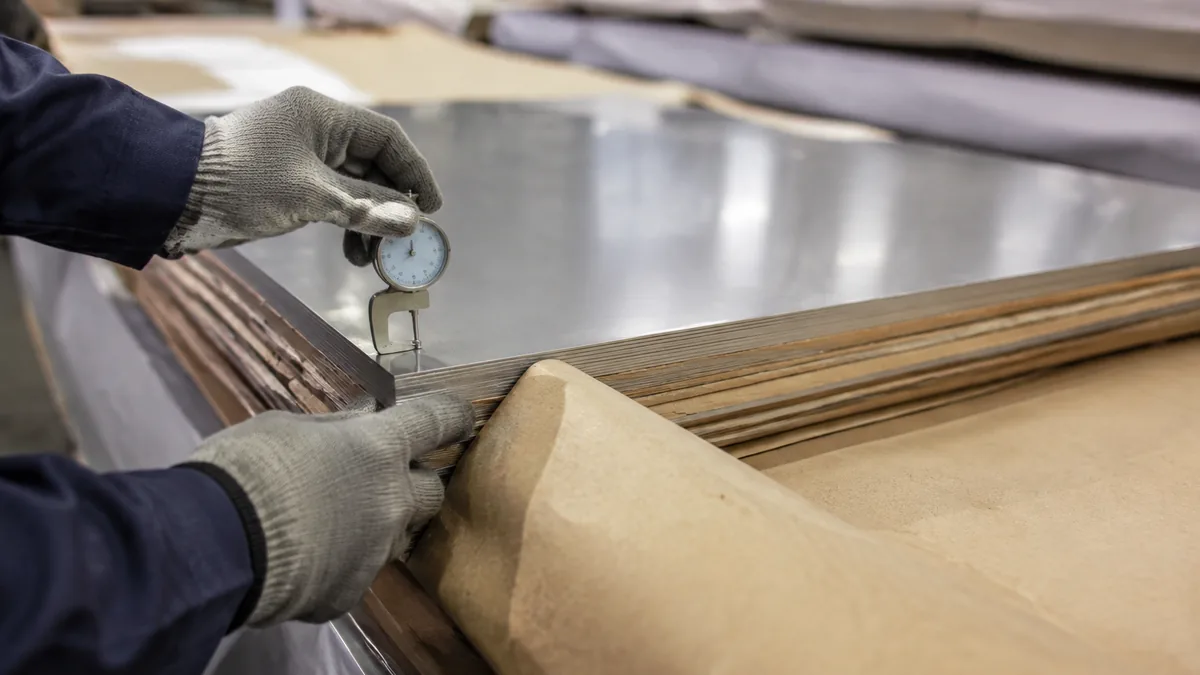
Write the duty before the grade string
List what each tag will see: wet/dry cycles, chlorides, cleaning chemicals, temperature, crevices, abrasion, whether the surface is product-contact, and whether the part will be welded or only formed. Indoor dry cladding and coastal process skins are not the same RFQ line. A decorative 430 panel and a welded 316L tank wall must not share an open “stainless” description.
Also freeze the product form on the same line: sheet, plate, coil, strip, tube or fitting each carry different standards and acceptance tests. Ask suppliers to price the same form and dimensional basis for every grade option you leave open. Form buying context after the freeze is on the sheet & plate page.
Commodity grade map (buyer language)
430 (UNS S43000) — ferritic chromium grade often used for mild decorative or appliance-type duty when the owner basis allows it. Typical strengths: lower alloy cost on approved mild tags; magnetic response is normal for this family. Typical limits: not a default for chloride service, sanitary product-contact, or heavily welded structural duty without an approved procedure. Values on MTCs are heat-specific—do not treat brochure numbers as purchase guarantees.
201 (UNS S20100) — chromium-manganese-nickel austenitic option. Keep it as a named alternate, not a silent substitute for 304. Confirm corrosion, forming and weld expectations against the project basis before award.
304 / 304L (UNS S30400 / S30403) — the common general-purpose chromium-nickel pair. Use 304L when welding or as-welded corrosion risk makes low carbon the preferred route; keep non-L only where the basis explicitly allows it.
316 / 316L (UNS S31600 / S31603) — molybdenum-bearing austenitic screen when chlorides, many chemical cleaners or coastal exposure compress the 304/304L envelope under owner review. Prefer 316L on welded hygienic or process tags when the basis calls for low carbon.
Treat all density, hardness and strength figures as typical / heat-dependent until the MTC for the ordered heat is checked. This page does not invent stock, mill locations or exact heat chemistry.
L vs non-L and 430 weld notes buyers forget
Open wording such as “304 or 316” invites mixed carbon and mixed bids. Freeze L vs non-L per tag. If the fabricator will weld heavily, default the RFQ language to the L grade unless the owner states otherwise. For 430, state whether welding is allowed, which procedure applies, and whether impact or forming limits exist—ferritic grades are not interchangeable with austenitic weld practice.
When comparing options, require the same surface finish, flatness or OD/wall basis, and the same document set. Otherwise a cheaper grade quote may hide a thinner commercial finish or weaker inspection scope. Pipe-specific 304L vs 316L chloride gates are covered on the dedicated 304L vs 316L process piping RFQ guide.
RFQ checklist
- Tag / duty — indoor dry, coastal, chloride, cleaning chemical, product-contact or structural.
- Candidate grades — list only the options the basis allows (subset of 201 / 304 / 304L / 316 / 316L / 430).
- Form + standard + edition — e.g. ASTM A240 / EN 10088-2 sheet-plate (edition on the PO).
- Dimensions + finish — thickness/width, 2B/BA/No.4, flatness or cut-blank notes.
- Weld / L-grade rule — L required or not; 430 weld allowed or not.
- Documents — EN 10204 type, PMI scope, packing, destination port.
Send the frozen RFQ via /contact/.
Common Buyer Mistakes
On Gulf and Southeast Asian commodity RFQs we repeatedly see open “304/316” wording without an L rule, 201 quoted as if it were 304, and decorative 430 mixed onto the same line as welded process shells. Two more: treating 316 as an automatic upgrade when the root cause is drainage, weld contamination or cleaning chemistry, and accepting a handheld magnet test as grade verification for austenitic material. Another frequent miss is awarding on unit price before finish, flatness and EN 10204 scope match—so the cheaper grade arrives with a weaker inspection pack. Freeze duty, candidate grades, form and documents on one line before material award.
How this page divides work with live STS pages
| Need | Use |
|---|---|
| Four-grade choice and RFQ checklist (201/304/L/316/L/430) | This article |
| Two-grade decision 201 vs 304 | 201 vs 304 comparison |
| Two-grade decision 304 vs 316 | 304 vs 316 comparison |
| Weld carbon 304 vs 304L | 304 vs 304L welding guide (linked above) |
| Process pipe 304L vs 316L | 304L vs 316L piping RFQ (linked above) |
| Grade chemistry / FAQ depth | Grades hub (linked above) |
| Form / finish buying | Sheet & plate page (linked above) |
Sources and application limits
This guide supports purchasing decisions. The ordered product standard, project specification and approved inspection plan control the final decision.
- ASTM A240/A240M flat-product naming practice for commodity stainless sheet and plate with edition on the purchase order
- EN 10088 designation practice commonly paired on dual-certified flat product (edition on the PO)
- Industry materials practice that molybdenum-bearing 316/316L is screened when chlorides or chemical duty compress the 304/304L envelope under owner review
- Common MENA and Southeast Asia procurement pattern that mixing 201 decorative 430 and weld-sensitive L grades on one open line produces non-comparable bids
Technical content updated: Nov 3, 2026
Frequently Asked Questions
When is 430 stainless steel acceptable instead of 304?
When the duty is mild, mostly dry or lightly wet decorative and non-pressure service the owner materials basis already accepts for ferritic 430, and welding/impact needs stay within that envelope. Freeze form, finish and documents on that tag. Do not substitute 430 into chloride, sanitary product-contact or structural weld duties that the basis maps to austenitic grades.
When should an RFQ force 304L or 316L instead of 304 or 316?
When welding, heavy fabrication or as-welded corrosion risk makes low-carbon (L) the owner-preferred route for that tag. Keep non-L only where the basis explicitly allows it and heat input/sensitization controls are defined. State L vs non-L on each line—do not leave “304/316” open.
Is 201 a drop-in replacement for 304 on export RFQs?
No. 201 is a different Mn-Ni austenitic route. Use it only when the owner accepts its corrosion and fabrication envelope for that duty. Quote 201 and 304 as separate options with the same form, finish and document fields so bids stay comparable.
Is 316 stainless steel always a better choice than 304?
No. 316 adds molybdenum and is screened when chlorides, chemical cleaning or coastal exposure compress the 304 envelope, but it does not correct poor detailing, weld contamination, an unsuitable finish or an aggressive cleaning regime. Select against the actual environment, product standard and project approval.
Can a magnet distinguish 201, 304, 316 and 430?
Only 430 is reliably magnetic as a ferritic grade. Austenitic 201, 304 and 316 can show magnetic response after cold work, so a magnet cannot separate them. Use heat traceability on the MTC and, where agreed, a qualified PMI method.
What fields freeze a multi-grade stainless RFQ for Gulf and Southeast Asian buyers?
Freeze duty by tag, candidate grades (201 / 304 / 304L / 316 / 316L / 430), product form and standard with edition, dimensions and finish, weld/L-grade rule, EN 10204 type, PMI scope, packing and destination port. Missing duty or L-grade notes produce mixed bids.
Send the product form, grade and quantity from this guide. We quote the matching stainless route.
Ready to quote your stainless specification?
Send product, grade and quantity. We quote the confirmed supply route.