
304 Stainless Steel Wire
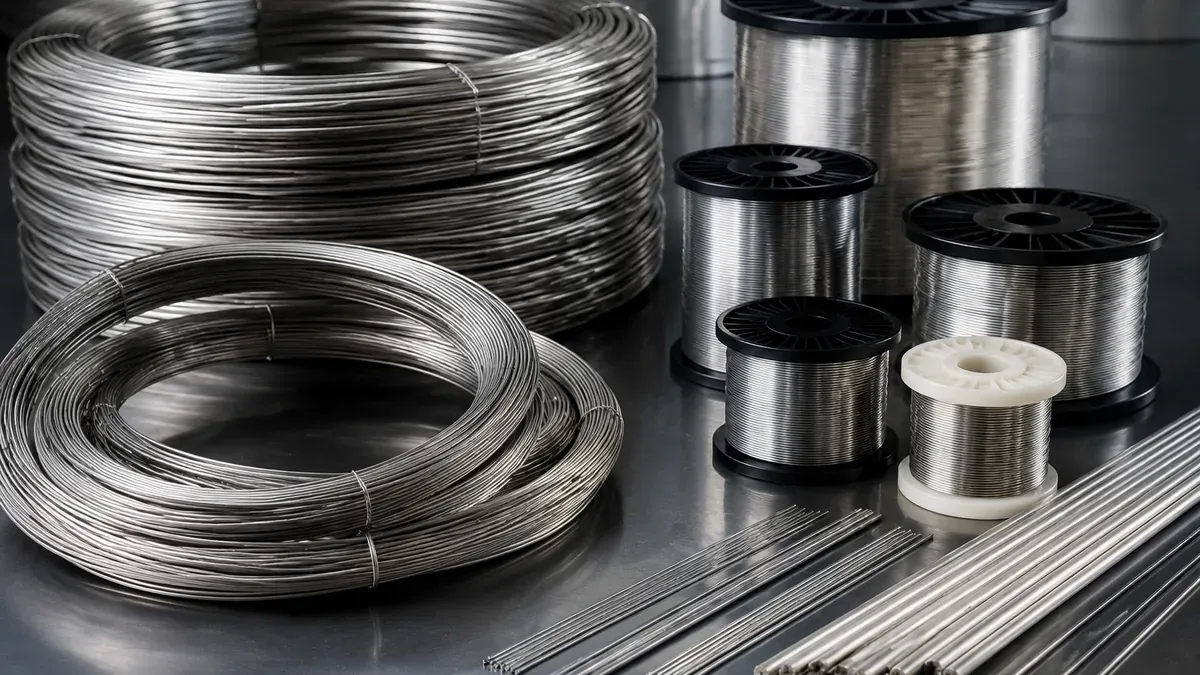
Stainless wire is quoted by grade, diameter, temper, tensile or spring property, surface and spool format. Common inquiry range: 0.05–12 mm by temper. Send the ordered condition and pay-off package with the RFQ.
Supply routes
- Qualified partner-mill sourcing
- Stock coordination
Where this product solves the job
- General corrosion-resistant forming, weaving, spring and component work where 304 or 304L is compatible with the environment.
- Wire purchased to ASTM A313, ASTM A580 or a controlled drawing with diameter and temper requirements.
- Cut-to-length, spool or coil supply where pay-off, straightness, end condition and packaging are specified.
When we recommend another route
- A spring or high-strength application that omits temper, tensile range, bend requirement and fatigue design review.
- Chloride-heavy or aggressive chemical service where 316L or a different alloy may be required.
- A wire order that quotes diameter only and leaves coil weight, winding, surface and end handling unresolved.
Standards we quote against
Send the product standard, edition and any dimensional or finish standard with the RFQ. We quote the ordered combination, not a generic grade name.
Ordered product standards: ASTM A313/A313M · ASTM A580/A580M
What to send so we can quote the right route
- Name 304, 304L or 301, the governing wire standard and the required annealed, cold-drawn, spring or forming condition.
- State nominal diameter, tolerance, ovality, tensile or hardness range, bend or spring test and any straightness requirement.
- Define bright or other surface route, oil-free or clean handling, coil, spool or cut-length format and pay-off direction.
- Specify end preparation, weld joints if permitted, lot traceability, testing, inspection document and marking.
- Give weight or length by item, quantity, core size, protective wrapping, destination and requested delivery window.
Specifications
| Material | 304, 304L or 301 as ordered |
|---|---|
| Standards | ASTM A313 or A580 as applicable |
| Typical diameter | Common inquiry range: 0.05-12 mm by temper. |
| Condition | Annealed, cold-drawn, spring or forming condition as ordered |
| Surface | Bright or project-specified surface route |
| Delivery | Coil, spool or cut length with pay-off defined |
| Testing | Tests required by the purchased standard plus PMI, NDE or other checks named in the RFQ |
| Commercial basis | Quantity, MOQ, production route and delivery schedule are quoted for the ordered specification. |
Dimensions and Tolerances
| Outer Diameter | Common inquiry range: 0.05-12 mm by temper. |
|---|---|
| Order basis | Governing product and dimensional standard, delivery condition and any drawing-specific limits. |
| Special tolerances | Send special tolerances in the RFQ; we quote the accepted production route. |
Published ranges are technical references, not a live-stock or production-capability promise. We confirm the ordered size range, MOQ and delivery schedule in the quotation.
Edge or end condition
- Edge, end or facing condition as ordered from the product form, standard and fabrication need.
Testing and inspection
- Tests required by the purchased product standard.
- PMI, NDE, corrosion, roughness or other supplementary inspection quoted when the RFQ names method, lot scope and acceptance.
Order documents
- Heat identity with EN 10204 3.1, or the inspection document named in the RFQ, against mill, stock or partner-mill route.
- Supplementary reports linked to the ordered test plan.
Export packaging
- Bars bundled with end protection and moisture wrap for sea freight.
- Bundle identity kept with the heat mark; packing method stated in the quotation.
Quote temper with the diameter
304 wire is quoted by annealing or cold work. Send the ordered condition, tensile or hardness basis, diameter tolerance and ovality with ASTM A313 or ASTM A580 as the governing standard.
Quote the pay-off path
Send coil, spool or cut-to-length format with core, winding, traverse, pay-off direction, coil weight and end treatment. We quote the feeder route against those inputs.
Quote fine-wire cleanliness and traceability
Send surface, oil-free handling, wrapping and spool protection. We keep heat, lot, condition and test records attached to each package.
Common ordering mistakes
- Treating 304 wire as a single property class while ignoring temper and the cold-work history.
- Ordering a diameter without the tolerance, ovality or pay-off requirement needed by a feeder or weaving machine.
- Mixing annealed and spring wire under one spool label because the surface appearance is similar.
- Requesting oil-free or bright wire without defining the cleaning, surface acceptance and packing basis.
Handling and transport risks
- Uncontrolled pay-off can create kinks, crossovers or coil set that affect high-speed forming and weaving.
- Small wire is vulnerable to scratches, rust staining and contact contamination during unprotected handling.
- Spool core mismatch or loose winding can damage the wire or stop a downstream feeder.
- Cut ends can be sharp and tags can separate from pieces unless item identity follows each package.
Technical content updated: 2026-07-31
Published by Tsingshan (Shandong) Iron & Steel Co., Ltd..Sources, update policy and technical limitations.
Typical Applications
Related technical resources
Published standards
Applicable standards
ASTM A313/A313M · ASTM A580/A580M
Finishes and processing
What to Include in Your RFQ
Send the known values first. We use them to quote the ordered option, inspection plan and delivery route.
- Grade and governing standard
- 304, 304L, 301; ASTM A313/A313M, ASTM A580/A580M. State the exact ordered combination.
- Dimensions and tolerances
- Provide outer diameter and identify which order basis, special tolerances requirements govern acceptance.
- Finish, processing and edge or end condition
- ; Stainless Steel Cut-to-Length and Leveling; Edge, end or facing condition as ordered from the product form, standard and fabrication need..
- Inspection, documents and packing
- Testing: Tests required by the purchased product standard.; PMI, NDE, corrosion, roughness or other supplementary inspection quoted when the RFQ names method, lot scope and acceptance. Documents: Heat identity with EN 10204 3.1, or the inspection document named in the RFQ, against mill, stock or partner-mill route.; Supplementary reports linked to the ordered test plan. Packing: Bars bundled with end protection and moisture wrap for sea freight.; Bundle identity kept with the heat mark; packing method stated in the quotation.
- Quantity, destination and requested delivery window
- Send quantity per size, unit, destination city or port, trade term and requested delivery window so we can quote the supply and freight route.
Product RFQ Example
RFQ example: ASTM A313 Type 304 spring wire, 1.20 mm diameter with the specified tolerance and tensile range, bright surface, spool format with core and pay-off direction defined, no unapproved weld joints, coil weight by spool, ordered test results and inspection document, protected export cartons and destination port; we quote the matching route and delivery window.
Frequently Asked Questions
Which 304 wire condition should be named for a spring?
State the wire standard, grade, diameter tolerance, tensile or hardness basis, spring or cold-drawn condition, bend or fatigue requirement and forming route. A request for "304 spring wire" alone leaves the property range unresolved.
What is the difference between coil and spool wire supply?
Coil or spool describes the delivery format and pay-off behavior, not the material condition. Name core size, winding, traverse, coil weight, pay-off direction and downstream feeder limits together with diameter and temper.
Can 304 wire be used in chloride service?
Suitability depends on chloride concentration, temperature, stress, surface and cleaning conditions. 316L or another alloy may be reviewed for additional margin, but any substitution needs the component owner's corrosion assessment.
How should wire diameter tolerance be specified?
Give nominal diameter, standard tolerance, ovality limit and measurement method when the feeder or weave requires them. Include straightness or coil-set limits for cut-to-length work rather than relying on a nominal diameter alone.
What should export packing protect on fine wire?
Protect the surface from moisture, dirt and hard contact, keep spool or coil identity attached, prevent winding damage and state carton, pallet or case requirements. The final format depends on weight, pay-off and transport route.
Quote request
Get a Stainless Steel Quote
Send the product, grade and quantity you already have. We will complete the specification and quote the supply route.