
Stainless Steel for Desalination Plants: Grade & RFQ Decision
Choose stainless steel for desalination plants by chloride and temperature duty: disqualify 304, compare 316L vs 2205 vs 2507, then freeze MENA and SEA RFQ fields.
Published Sep 12, 2026 · Technical content updated: Sep 12, 2026 ·Tsingshan (Shandong) Iron & Steel Co., Ltd.
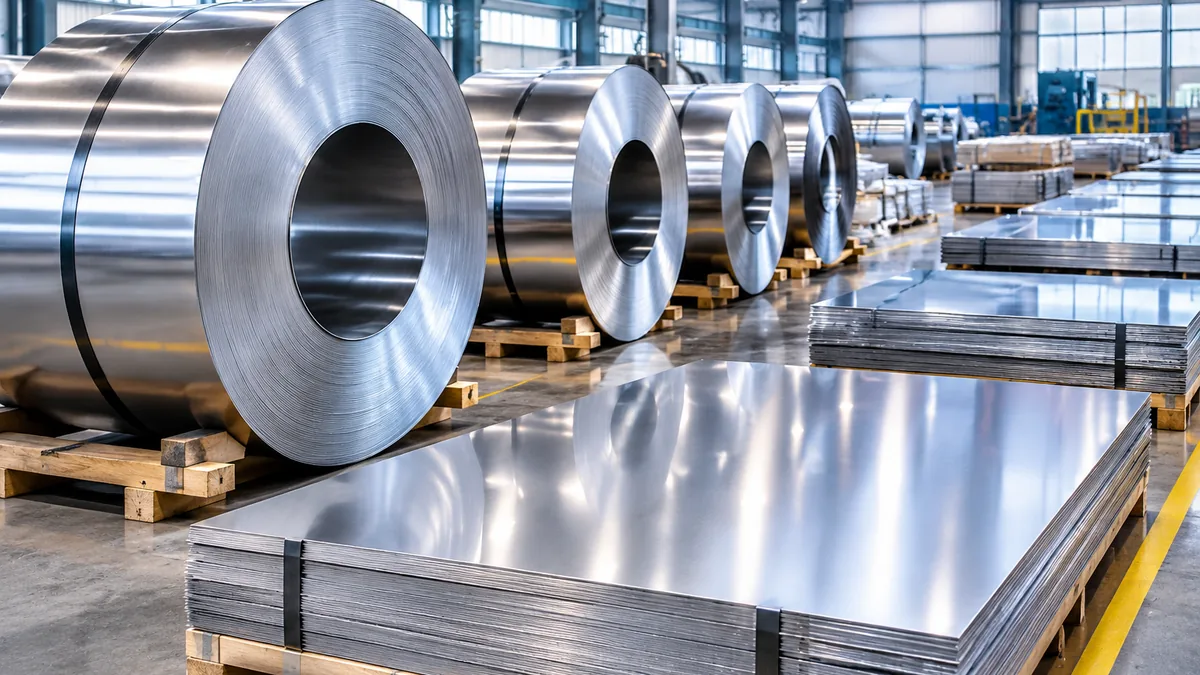
Reference image for this topic; it does not show Tsingshan Steel facilities, inventory or completed orders.
Featured answer
Stainless steel for desalination plants is a section decision, not a single plant-wide grade. Map chloride, temperature, oxidants, crevices and shutdown risk for each tag first. Disqualify 304 / 304L for seawater and brine. Keep 316L only for moderate-chloride or treated-water envelopes the owner already accepts. Compare 2205 and 2507 (and other project-approved alloys) for brackish, seawater and concentrate duties. Then freeze weld, document and PMI fields so Gulf and Southeast Asia RFQs quote one material route.
This article owns grade and RFQ freeze for desalination and water-treatment stainless. The industry landing for water chemistry, dosing and commissioning context sits on the water treatment and desalination applications hub. Use the stainless steel grades hub when you need grade-page depth after the duty tree below.
Chloride and temperature duty before you name a grade
Buyers in the Gulf and SEA lose weeks when the RFQ says “desalination stainless” without a duty envelope. One line item can cover intake, pretreatment, high-pressure SWRO feed, brine reject, product water, CIP dosing and intermittent drains. Those tags do not share one corrosion window.
Capture at least:
- Source water class: drinking, wastewater, brackish, open seawater or concentrate/brine
- Chloride as normal and maximum (or conductivity / salinity with the analysis method named)
- Temperature as seasonal, process, cleaning and credible upset
- Oxidant or disinfectant residual, dosing points and mixing length
- Flow vs stagnation, dead legs, gasketed crevices and under-deposit risk
- Pressure class and whether the line is high-pressure SWRO feed or brine reject
- Cleaning / CIP chemicals, hold times and drainability after shutdown
PREN and marketing nicknames are screening aids only. They do not replace the owner corrosion engineer’s section approval, and they do not invent a chemistry table on your PO. Keep exact PREN cut-offs and licensed standard text out of the commercial line unless the project specification already quotes an edition you can attach.
Decision tree: disqualify 304, then choose 316L, 2205 or 2507
Format the duty review as numbered steps. Do not skip Step 1 to “save time” on a Gulf seawater RFQ.
1. Split the plant by tag or piping class Name intake, pretreatment, membrane feed, high-pressure SWRO, brine reject, product water, CIP/dosing and utilities as separate duties. One grade for the whole desalination plant is a bid-failure pattern.
2. Freeze chloride, temperature and oxidant inputs Require normal and maximum values, dosing residual and shutdown/stagnation notes. Warm Gulf seawater and chlorinated circuits are not interchangeable with cool, aerated brackish service.
3. Disqualify 304 / 304L for seawater and brine Keep 304L only for controlled low-chloride drinking-water or utility sections with drainage and commissioning already defined. Do not use 304 language on continuous seawater, brine or chlorinated marine headers.
4. Test whether 316L still has an accepted envelope Allow 316L only where the owner corrosion basis accepts moderate chloride / treated-water duty, limited crevice severity and temperature. Fail 316L for continuous seawater, warm chlorinated seawater, high-pressure SWRO feed and brine reject unless the project explicitly re-approves another alloy family for that tag.
5. Compare 2205 against the remaining chloride-temperature-crevice window Quote 2205 (UNS S32205 / S31803 family as ordered) for brackish or higher-chloride sections where strength, wall economy and an approved fabrication route matter — and where the project still accepts duplex 2205 localized-corrosion margins. Warm seawater, tight gaskets, deposits and stagnation often push the decision past 2205.
6. Escalate to 2507 (or another project-approved higher alloy) when margins compress Use super duplex 2507 (UNS S32750 family as ordered) for severe chloride-bearing sections the owner maps to seawater, concentrate or high-pressure SWRO duty. If the project basis points to 6Mo superaustenitic or titanium for heat-transfer or extreme brine, follow that basis — do not force a stainless nickname into the wrong equipment class.
7. Freeze fabrication, documents and PMI before price comparison Duplex and super duplex quotes are not comparable without weld procedure, filler, heat-input or phase-balance controls where specified, pickling/passivation, EN 10204 type and PMI sampling. See the checklist below.
Industry field history is consistent on one point: early SWRO plants that defaulted to 316L (and sometimes 2205 or 904L) on high-pressure seawater and brine lines saw crevice and pitting failures; many later builds moved high-pressure seawater and brine piping toward super duplex or 6Mo routes. Treat that as procurement risk context, not as a universal substitute table for every tag on your MTO.
Duty → grade decision card for Gulf and SEA water projects
Use this card during RFQ clarification. It is a commercial screening aid, not a corrosion guarantee or PREN calculator.
| Plant section / duty cue | Typical Gulf / SEA risk cue | First screening grade to quote | Usually disqualify or escalate when… |
|---|---|---|---|
| Product water / low-chloride treated water | Cool, controlled chemistry, drained utilities | 304L or 316L per owner basis | Chloride or oxidant peaks, warm stagnation, dosing quills |
| Wastewater / moderate chloride process water | Variable solids, intermittent flow | 316L when basis allows | Crevice-heavy joints, deposits, disinfectant spikes |
| Brackish feed / pretreatment headers | Elevated chloride, filters, possible CIP | 2205 under approved weld/surface controls | Continuous open seawater temperature + chlorination + crevices |
| Open seawater intake / transfer (non-HP) | Warm Gulf or tropical SEA seawater | 2205 only if project accepts; else 2507 / higher | Stagnation, biofilm, gasket crevices, chlorinated seawater |
| High-pressure SWRO feed / brine reject | High pressure + seawater or concentrate | 2507 or other owner-approved seawater alloy | Using 316L “because Mo is present” or 2205 without corrosion review |
| CIP / dosing local peaks | High local oxidant or chemical concentration | Section-specific approval (may exceed bulk-line grade) | Averaging bulk water analysis across the injection point |
| Thermal desalination hot brine / HX tubes | High temp + concentrate | Often outside commodity stainless — follow owner alloy basis | Forcing 316L/2205 into hot brine tube duty without review |
Cross-check form availability on the stainless product range and grade identity on the grades hub after the section is chosen. For side-by-side commercial compare pages (for example 2205 vs 316L), start from the compare hub — deep compare slugs are not assumed interchangeable with this RFQ freeze.
MENA / SEA RFQ field checklist (chloride, temp, weld, EN 10204, PMI)
Copy these fields into the inquiry before you ask for price. Gulf desalination EPCs and SEA water-project buyers usually reject “SS316 pipe for RO plant” as incomplete.
| RFQ field | What to freeze | Weak line | Stronger MENA / SEA line |
|---|---|---|---|
| Plant section / tag | Piping class or equipment tag | Desalination stainless | SWRO HP feed header, tag XXX; brine reject separate line |
| Chloride duty | Normal + max + analysis basis | Seawater service | Open seawater; chloride normal/max per attached analysis; Gulf intake summer max stated |
| Temperature | Process + cleaning + upset | Ambient | Design metal temp normal/max; CIP temp/duration if applicable |
| Oxidants / dosing | Residual and injection notes | Chlorinated if needed | Continuous or intermittent chlorination residual named; dosing spool called out |
| Grade | UNS / common name + dual-cert rule | 316 or duplex | ASTM A312 TP316L or A790 S31803/S32205 / S32750 as ordered — no silent substitute |
| Product standard + edition | Form standard on the PO | ASTM pipe | ASTM A312 / A790 / A240 edition YYYY as attached; EN cross-ref only if ordered |
| Manufacturing route | Seamless vs welded; heat treatment | Welded OK | Seamless or welded route named; duplex heat treatment / quench rules as specified |
| Weld procedure | WPS/PQR, filler, duplex controls | Welded to code | Approved WPS; filler family; heat input/interpass; purge; ferrite or phase balance if specified |
| Surface restoration | Pickling / passivation / iron control | Cleaned | Pickling and passivation procedure; heat-tint acceptance; no free-iron contamination |
| Documents | EN 10204 type | MTC required | Heat-linked EN 10204 Type 3.1 (or Type 3.2 if project QA names the inspection party) |
| PMI | Method + sampling | PMI maybe | PMI method, lot sampling, acceptance vs PO grade; hold rule on mismatch |
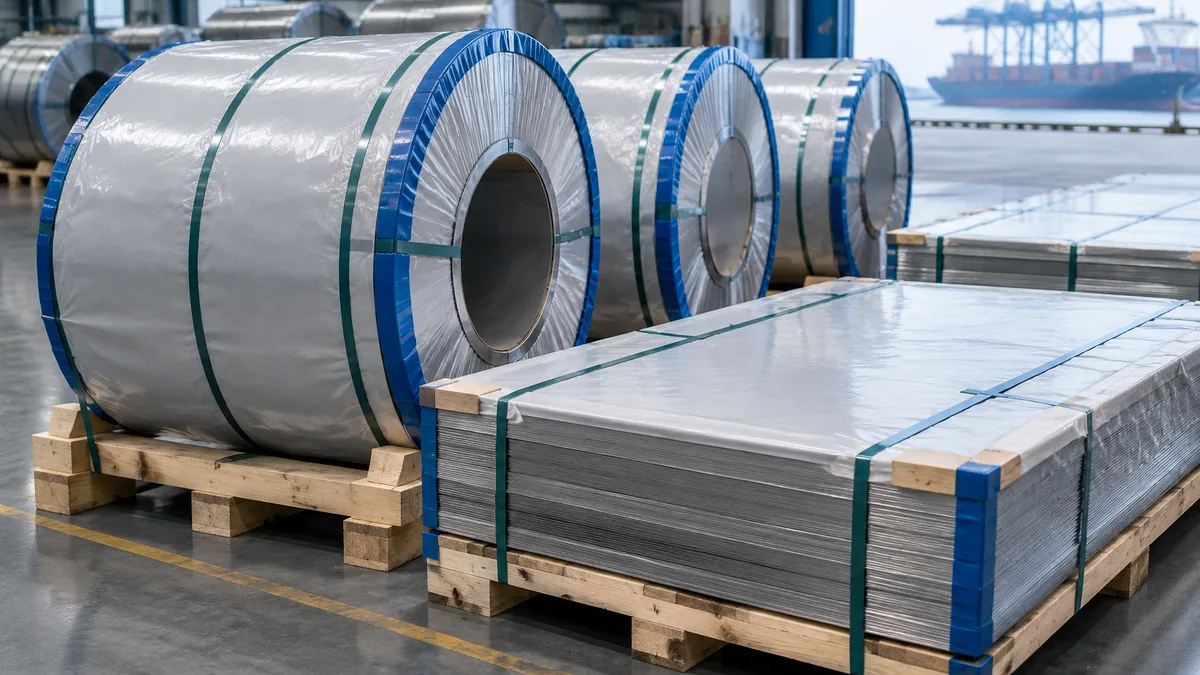
| Packing / preservation | Export and site storage | Seaworthy packing | End caps, desiccant or VCI as specified; no carbon-steel banding contact; Gulf/SEA yard storage notes |
Use the broader stainless steel RFQ checklist for quantity, Incoterms and packing-family fields. Keep purchase order wording examples for the final commercial line after the duty tree is frozen. Certificate-type choice belongs with EN 10204 3.1 vs 3.2; on-product grade screening belongs with the PMI testing checklist.
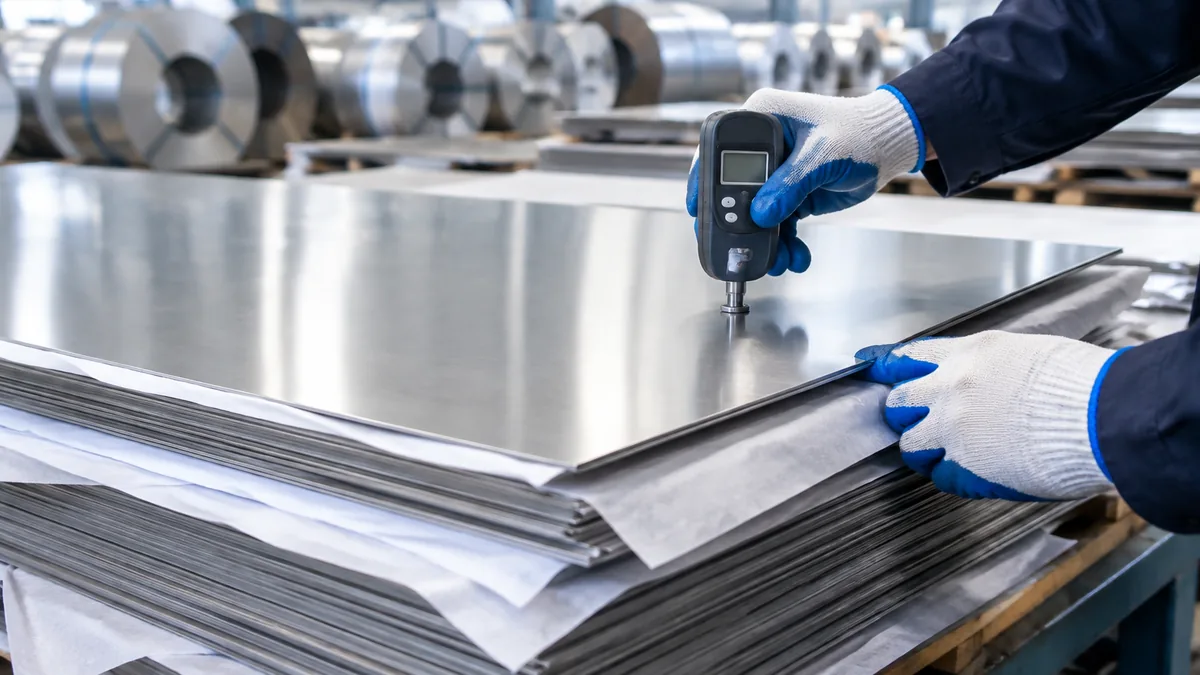
Documents and fabrication controls that freeze the quote
Price-only comparison across 316L, 2205 and 2507 fails when fabrication and documents differ.
- Product form and standard. Plate (A240 family), austenitic pipe (A312 family), duplex pipe (A790 family), fittings and flanges need matching standards and editions on the same line. Dual-stamp language must say which chemistry and mechanical rule wins.
- Weld and heat tint. Duplex and super duplex need procedure control. A 316L WPS copied onto 2507 is not a duplex quote. State purge, filler and any ferrite or phase-balance requirement the project already uses.
- Surface restoration. Seawater duty is sensitive to heat tint, embedded iron and unfinished welds. Name pickling/passivation or an accepted mechanical + chemical restoration route.
- EN 10204 type. Type 3.1 is heat-linked mill inspection documentation for the tests ordered. Type 3.2 adds independent inspection-party involvement as defined by the order. Neither type proves seawater life.
- PMI. Add PMI when warehouse mix-up risk, multi-grade MTOs or owner QA require on-product screening. Name method and sampling so suppliers do not omit cost or scope.
- Substitution hold. Ban silent swaps among 304L, 316L, 2205 and 2507. Any alternate grade needs written buyer approval against the same duty card.
Practical notes from desalination material RFQs
From export RFQs serving Middle East seawater projects and Southeast Asia water plants, the same clarification loops repeat:
- One grade for the whole RO island. Intake, HP feed and product water get mixed on one line. Split the MTO before quoting.
- 316L “marine grade” language. Buyers assume molybdenum equals open seawater approval. It does not. Ask for the corrosion basis or escalate the tag.
- 2205 quoted without weld controls. Fabricators price commodity weld routines; duplex phase balance and heat tint show up later as NCRs.
- Missing summer seawater temperature. Gulf and tropical SEA metal temperatures change localized-corrosion risk; “ambient” is not a duty input.
- MTC requested without type. “Certificate required” yields PDF scans that receiving cannot match to Type 3.1 or 3.2 expectations.
- PMI omitted on mixed-grade containers. 316L fittings land in a 2205 crate; discovery happens at site weld-out.
Treat those as procurement controls, not as mill blame. The cheapest line item is often the one that left chloride, temperature and weld procedure blank.
Freeze the grade and RFQ line before bid
Run the decision tree once per tag: duty inputs → disqualify 304 for seawater/brine → test 316L envelope → compare 2205 vs 2507 (or other owner-approved alloys) → freeze weld, EN 10204 type and PMI. Then send one comparable RFQ package.
Tsingshan (Shandong) Iron & Steel Co., Ltd. (Tsingshan Steel) can review whether a mill-direct or partner-mill route can support the named grade, product form and document package for your water-treatment or desalination line items. Email sales@tsingshansts.com, WhatsApp +86 176 8661 3207, or send the complete specification. We quote 316L, 2205 or 2507 only when the duty fields and supply route can support that commercial line — seawater suitability still follows your project corrosion basis.
Sources and application limits
This guide supports purchasing decisions. The ordered product standard, project specification and approved inspection plan control the final decision.
- Industry practice for SWRO and seawater piping material selection using austenitic and duplex stainless families by plant section
- ASTM A240 / A312 / A790 product-form naming as commonly ordered for plate, pipe and duplex pipe (edition on the PO)
- EN 10204 inspection document types 3.1 and 3.2 as used on water-project purchase orders
- Owner corrosion-basis practice that PREN and grade nicknames are screening aids, not seawater life guarantees
Technical content updated: Sep 12, 2026
Frequently Asked Questions
Is 316L stainless steel enough for desalination plants?
Not plant-wide. 316L can fit moderate-chloride treated-water or carefully bounded utility sections when the owner corrosion basis allows it. Continuous seawater, warm Gulf intake, chlorinated seawater, high-pressure SWRO feed and brine reject commonly need duplex or super duplex routes, or another alloy family approved for that tag.
When should buyers choose 2205 vs 2507 for seawater duty?
Use 2205 only where the project corrosion review accepts the chloride, temperature, crevice and stagnation envelope for that section. Move to 2507 (or another approved higher-alloy route) when warm seawater, brine concentration, gasketed crevices, chlorination or high-pressure SWRO margins compress 2205 localized-corrosion window. Do not pick by PREN nickname alone.
What RFQ fields freeze desalination stainless quotes for Gulf and SEA projects?
Freeze plant section or tag, chloride and temperature (normal and max), oxidant or dosing notes, product form and standard with edition, grade with dual-cert rules if any, seamless or welded route, weld procedure and filler controls for duplex, surface restoration, EN 10204 document type, PMI scope and packing/preservation. Missing duty data produces incomparable bids.
Does an EN 10204 Type 3.1 MTC prove seawater suitability?
No. Type 3.1 supports heat identity and the chemistry or mechanical results named on the order. Seawater or brine suitability still needs the owner corrosion basis, fabrication controls and the correct grade for that plant section. Pair document type with PMI only when mix-up risk or project QA requires on-product screening.
Send the product form, grade and quantity from this guide. We quote the matching stainless route.
Ready to quote your stainless specification?
Send product, grade and quantity. We quote the confirmed supply route.