
Seamless vs Welded Stainless Pipe: A312 Buyer Guide
Choose seamless or welded stainless steel pipe under ASTM A312 with a buyer filter for SML vs WLD, HCW, NDT or hydro options, documents and RFQ wording.
Published Sep 4, 2026 · Technical content updated: Sep 4, 2026 ·Tsingshan (Shandong) Iron & Steel Co., Ltd.
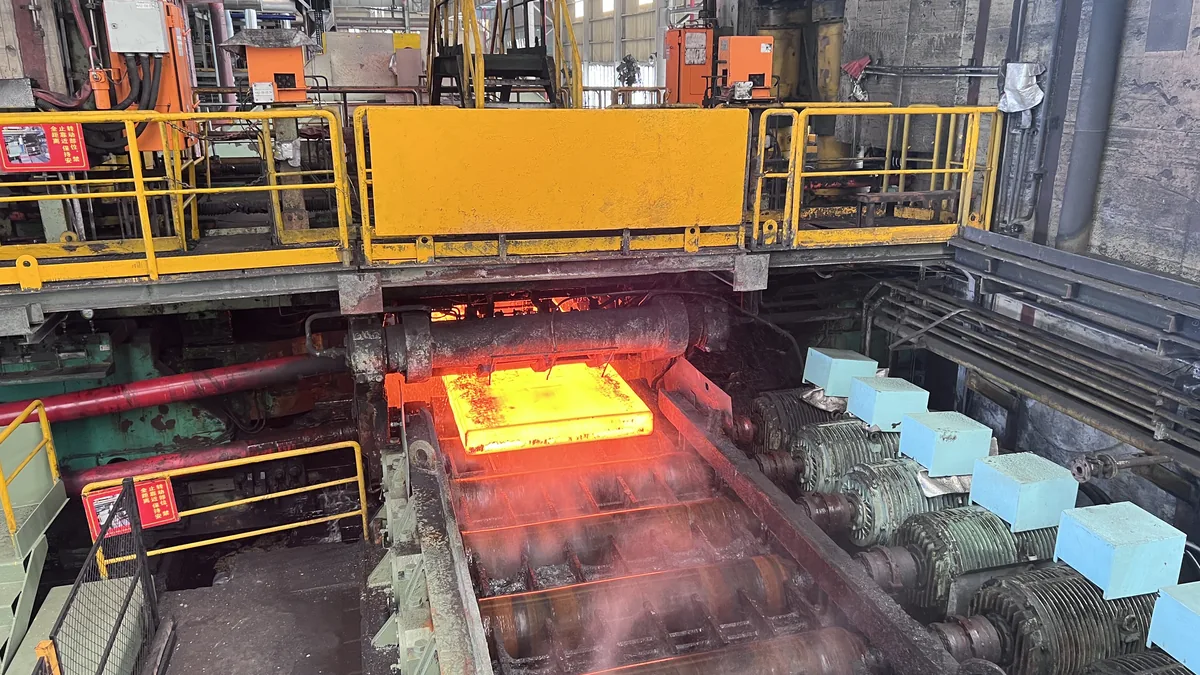
Reference image for this topic; it does not show Tsingshan Steel facilities, inventory or completed orders.
Introduction
Featured answer: For austenitic stainless process pipe ordered to ASTM A312/A312M, treat seamless (SML) and welded (WLD) as named manufacturing routes, not quality adjectives. Choose SML when the project forbids a longitudinal weld seam. Choose WLD when the specification allows an automatic, no-filler welded route and you name the hydro or nondestructive electric test package. Use HCW only when that heavily cold-worked route is intentionally ordered. Write the permitted route on the same line as grade, NPS or wall, ends and documents.
Buyers lose weeks when an inquiry says “316L stainless pipe” and one mill quotes seamless while another quotes welded at a lower price. Both quotes can be valid A312 products and still fail the client list. The dispute is rarely about chromium or nickel. It is about manufacturing route, inspection options and whether substitution was ever authorized.
If you still need to separate pipe from tube, dimensional language or sanitary tube finishes, use the live stainless steel pipe vs tube guide first. This article stays on the seamless-versus-welded purchase decision for stainless pipe.
Direct answer: seamless or welded for stainless pipe
Use this filter before approving a quotation:
- Project document names seamless only: order SML. Do not accept WLD or HCW as an equivalent without a formal revision.
- Project allows welded pipe and names no extra weld examination beyond the product standard: WLD is usually the commercial route if chemistry, heat treatment, size, ends and documents match.
- Project allows welded pipe but demands a named NDE method, weld map or supplementary radiography: keep WLD, and put those controls in the RFQ before production.
- Supplier offers HCW as a “better welded” default: accept it only if the purchase order intentionally names HCW and the certificate can prove the cold-work and pre-cold-work radiographic steps.
- Both routes are acceptable: request separate prices for SML and WLD on identical grade, size, ends, tests and packing. Award one route in writing.
| Buyer condition | Preferred route | RFQ action |
|---|---|---|
| Client list or datasheet says seamless / no weld seam | SML | Ban WLD and HCW substitution |
| Cost-sensitive utility or process line that allows welded pipe | WLD | Name hydro or NDE method if you care which one |
| Need a cold-worked welded product defined by A312 HCW rules | HCW | State HCW explicitly; do not treat it as unmarked WLD |
| Quote compares seamless and welded without a route decision | undecided | Separate prices, then award one route |
Start from the stainless steel product range only after the route rule is clear. A catalogue photo of bright pipe does not disclose SML or WLD.
What A312 SML, WLD and HCW mean on the order
ASTM A312/A312M covers seamless, straight-seam welded and heavily cold-worked austenitic stainless steel pipe for high-temperature and general corrosive service. Confirm the ordered edition on the purchase order. The commercial labels that matter are the manufacturing process designations used in that family of practice:
- SML (seamless): made by a process that does not involve welding at any stage of production.
- WLD (welded): made by an automatic welding process with no filler metal added during welding.
- HCW (heavily cold-worked): starts as welded pipe, receives at least 35% cold reduction of both wall and weld before the final anneal, with 100% radiographic inspection of the weld before cold working.
Buyers often write ERW when they mean electric-resistance welded pipe. That shop shorthand is not a substitute for the A312 route mark. If the project truly restricts welding process, say so after the A312 designation. If it does not, order WLD and stop arguing about informal synonyms.
A312 pipe is still ordered by the stainless pipe size system, commonly NPS and schedule under ASME B36.19M practice. Use the pipe schedule chart for dimensional orientation. Do not convert a seamless-only NPS line into an OD x wall tube description to chase a cheaper mill item.
When seamless stainless pipe is required
Require seamless when any of the following is true:
- the piping class, material requisition or approved-vendor list states seamless only;
- the end user will reject any longitudinal weld seam regardless of NDT;
- the named standard edition or project supplement does not permit welded or HCW product for that service;
- the purchaser cannot manage separate weld-seam traceability, marking or NDE records across cutting and fabrication.
Seamless is not automatically required merely because:
- the fluid is valuable;
- the wall is heavy;
- the buyer wants “better quality”;
- another line on the same project used seamless historically.
Pressure design still depends on code rules, thickness, joint design, temperature and corrosion allowance. A seamless stamp does not replace engineering calculation, and a welded stamp does not automatically make a pipe unfit when the specification allows WLD.
If the only real need is corrosion-resisting alloy and NPS delivery, ask whether the client document actually bans welded pipe before paying a seamless premium.
Welded pipe NDT, hydro and document controls
For welded stainless pipe, inspection language prevents most post-award disputes.
Under common A312 practice, each pipe is subjected to a hydrostatic test or a nondestructive electric test, and the manufacturer may choose which one unless the purchase order says otherwise. That is why a bare “NDE required” note is weak. Name the method if the project cares:
- hydrostatic test;
- eddy-current or other nondestructive electric test permitted by the ordered edition;
- ultrasonic examination if agreed as the named method;
- supplementary radiography where the project or HCW route demands it.
Remember the HCW distinction: 100% radiography of the weld before cold working is part of that manufacturing route. Ordinary WLD pipe does not inherit that radiographic step unless you add it as a purchase requirement.
Documents and marking must follow the route:
- Product standard and edition: ASTM A312/A312M or the project-named pipe standard.
- Grade and manufacturing route: SML, WLD or HCW.
- Size: NPS and schedule, or the allowed wall statement.
- Ends, length tolerance and heat treatment condition.
- Inspection document type, commonly EN 10204 Type 3.1, with heat identity.
- Test method actually performed: hydro or named NDE, plus any supplementary weld exam.
- Marking transfer rules after cutting so the awarded route remains visible in fabrication.
Read certificate fields with the mill test certificate guide. A Type 3.1 document supports identity and reported results. It does not invent a radiography scope that was never ordered.
Use the standards hub to keep the product-standard family consistent across the inquiry. Keep this article on route selection rather than rewriting the full A312 page.
Cost, size range and silent substitution risks
Welded pipe is often more available in larger diameters and lighter walls, and it is frequently lower in price for the same grade and NPS. Seamless pipe can be the only compliant answer on a seamless-only class, and it may be the practical answer where a weld seam is forbidden.
Commercial risk appears when:
- one bidder prices SML and another prices WLD against an ambiguous RFQ;
- purchasing awards the lower welded price while engineering still shows seamless on the datasheet;
- a mill ships dual-marked or loosely described stock and the receiving team cannot see the route on the stencil;
- HCW is offered as a surprise upgrade or downgrade without the cold-work and radiography evidence.
| Risk | What goes wrong | Prevention on the RFQ |
|---|---|---|
| Ambiguous “stainless pipe” line | Seamless and welded quotes are compared as equals | State permitted routes explicitly |
| ERW written, A312 WLD expected | Process argument after award | Use A312 SML/WLD/HCW language |
| NDT added after quotation | Price and lead time reopen | Name hydro or NDE method before bid |
| Silent welded substitution | Client rejects seam on site | Ban substitution or require written approval |
| Route lost after cutting | Fabrication cannot prove award | Marking transfer and heat/route map |
Common Buyer Mistakes
These are the repeating handover failures on seamless versus welded stainless pipe inquiries:
- Ordering “316L pipe” with no route. One supplier assumes seamless. Another assumes welded. Both believe they are compliant.
- Using seamless as a quality word. The purchase then accepts welded dimensions, tests or packing while the datasheet still shows seamless.
- Writing ERW instead of A312 WLD. The mill and the inspector argue about labels that were never aligned to the ordered standard.
- Assuming welded pipe includes full-length radiography. Ordinary WLD practice does not. HCW and supplementary requirements are different scopes.
- Leaving hydro versus NDE to chance when the project cares. Manufacturer option is fine only when the purchaser truly accepts either method.
- Comparing a seamless quote to a welded quote without separating prices and award rules. The cheaper line wins on a spreadsheet and fails on receipt.
- Ignoring packing and marking. Route identity that disappears after export handling cannot be recovered from a vague packing list.
Put the route choice into the RFQ
Copy and adapt this block for the inquiry:
- Product form: austenitic stainless steel pipe (not tube)
- Standard and edition: ASTM A312/A312M, named edition
- Grade: for example TP304 / TP304L / TP316L
- Manufacturing route: SML only / WLD permitted / HCW only / quote SML and WLD separately
- Size: NPS and schedule, or the wall statement allowed by the specification
- Length and ends: fixed or random length; plain or beveled ends to the weld detail
- Tests: hydrostatic and/or named nondestructive electric test; any supplementary radiography or weld NDE
- Documents: EN 10204 Type 3.1 or the project equivalent, with heat identity and route visible on certificate and marking
- Substitution rule: no change of manufacturing route after award without written approval
- Packing: export bundles, end protectors, seaworthy wrap, marks retained through handling
Send the completed line through the stainless steel inquiry form, or use the WhatsApp option there if you need a quick check on whether both SML and WLD can be priced for the same size list. Email sales@tsingshansts.com with the permitted routes, NPS or wall range, test method and destination. A clear manufacturing-route RFQ prevents the lowest welded price from being treated as an automatic substitute for a seamless-only requirement.
Sources and application limits
This guide supports purchasing decisions. The ordered product standard, project specification and approved inspection plan control the final decision.
- ASTM A312/A312M seamless, welded and heavily cold-worked austenitic stainless steel pipe scope
- ASTM A312 manufacturing definitions for SML, WLD and HCW routes
- ASTM A312 practice that each pipe receives a hydrostatic test or a nondestructive electric test unless the purchaser names otherwise
- ASME B36.19M stainless steel pipe dimensional schedules used with NPS ordering
Technical content updated: Sep 4, 2026
Frequently Asked Questions
When should buyers require seamless stainless steel pipe?
Require seamless when the project specification, client approved-vendor list or design package names a weld-seam-free product, when the purchaser will not accept a longitudinal weld under any NDT package, or when the named pipe standard and service class make seamless the only permitted route. Do not use "seamless" as a synonym for higher quality while leaving welded dimensions and tests on the same line.
Is ERW the same as ASTM A312 welded (WLD) pipe?
Not as purchase language. Buyers often say ERW for electric-resistance welded pipe, but ASTM A312 marks the welded manufacturing route as WLD and requires automatic welding with no filler metal. Write the A312 route designation on the purchase order, then add any process restriction the project actually needs.
What NDT is required for welded stainless pipe under A312?
Under common A312 practice, each pipe is subjected to a hydrostatic test or a nondestructive electric test, at the manufacturer's option, unless the purchase order names the method. Standard welded pipe does not automatically include full-length radiography. HCW pipe requires 100% radiographic inspection of the weld before cold working. Name hydro, eddy-current, ultrasonic or any supplementary radiography before production.
Can one RFQ accept both seamless and welded stainless pipe?
Yes, if the project allows both routes. Ask for clearly separated prices on the same grade, size, ends, tests and delivery basis, and state which route will be awarded. Silent substitution of welded for seamless after award is a different product, not a clarification.
Send the product form, grade and quantity from this guide. We quote the matching stainless route.
Ready to quote your stainless specification?
Send product, grade and quantity. We quote the confirmed supply route.