
ASTM A270 vs A269 Sanitary Tubing: Buyer Decision Guide
Compare ASTM A270 sanitary tubing vs A269 general-service stainless tube by hygienic scope, ID finish, testing and RFQ freeze lines that stop wrong-standard awards.
Published Sep 10, 2026 · Technical content updated: Sep 10, 2026 ·Tsingshan (Shandong) Iron & Steel Co., Ltd.
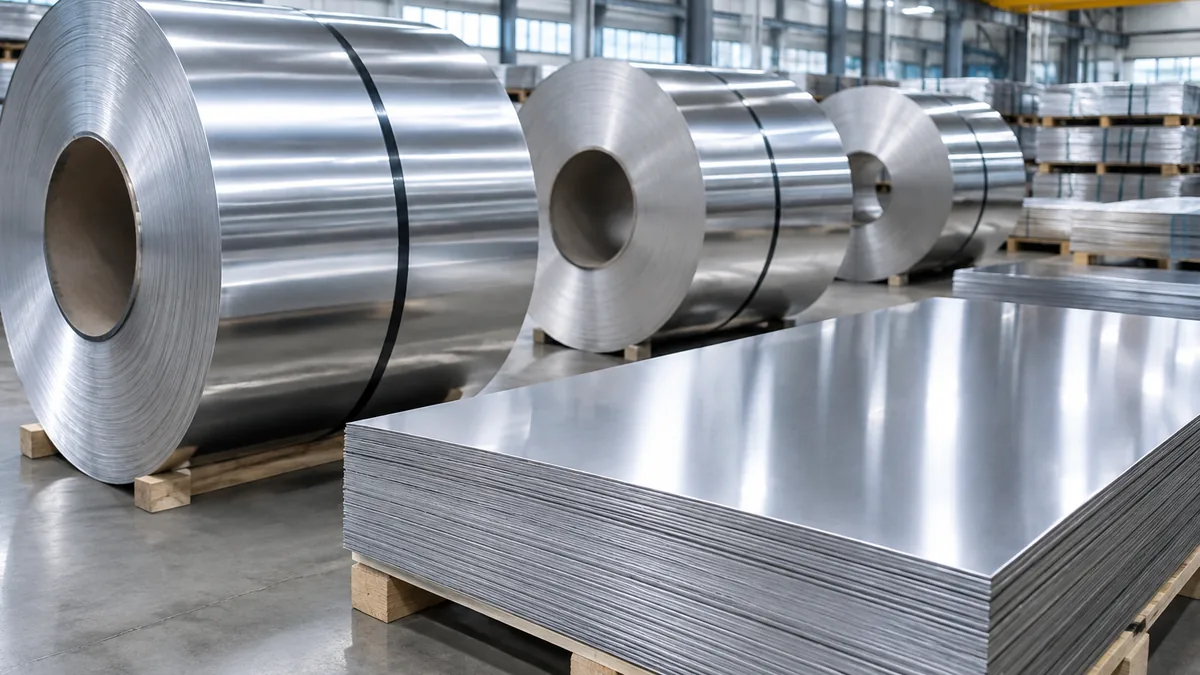
Reference image for this topic; it does not show Tsingshan Steel facilities, inventory or completed orders.
Featured answer
ASTM A270 sanitary tubing vs A269 is a scope decision, not a grade slogan. A269 covers nominal-wall austenitic stainless tubing for general corrosion-resisting and low- or high-temperature service. A270 covers sanitary stainless tubing intended for dairy and food service with special surface finishes; pharmaceutical quality may be requested as a supplementary requirement. Use A269 when general-service integrity is enough. Use A270 when hygienic finish, ID quality and cleanability acceptance must live on the purchase line.
| Decision field | ASTM A269 | ASTM A270 |
|---|---|---|
| Primary duty | General-service stainless tubing | Sanitary / hygienic tubing with special finishes |
| Typical buyer trigger | Corrosion-resistant utility, instrument or process tube without sanitary polish rules | Food, dairy or clean systems that need controlled ID/OD finish |
| Surface ownership | Workmanlike finish; scale removal or bright anneal as ordered — not automatic Ra control | Mill, mechanical polish numbers, electropolish and/or maximum Ra as ordered |
| Pharma / hygienic add-ons | Not owned by A269 alone | Pharma quality only when the supplementary requirement is ordered |
| Tube integrity tests | Each tube hydro or nondestructive electric test under common practice unless the order names the method | Same integrity-test family under common practice; finish evidence is separate |
| Documents | Heat-linked MTC / EN 10204 Type 3.1 for named chemistry and tests | Same heat identity plus finish or roughness reports when Ra/polish is contractual |
Confirm the ordered edition of A270/A270M and A269/A269M on the RFQ. Scope summaries are not licensed contract text.
For measurable 316L finish and Ra callouts after you choose A270, use the 316L sanitary tubing specification guide. Keep NPS pipe versus OD tube language on a separate form decision; this page owns only the A270 versus A269 standard choice.
What each standard owns on the purchase line
Treat the standard title as the owner of acceptance, not as marketing copy.
ASTM A269/A269M owns a general-service tubing framework: grade, seamless or welded route, outside diameter and wall, heat-treated condition, mechanical and hardness controls named by the edition, and tube integrity testing. It does not by itself create a sanitary roughness limit, electropolished ID, drainability rule or hygienic packing package. Use the site ASTM standards hub when comparing the live A269 tube guide to this blog; the purchase order must still name the edition and any owner surface specification.
ASTM A270/A270M owns sanitary tubing for dairy and food service with special surface finishes. Purchasers may order mill finish, mechanical polish finish numbers, electropolish and/or a maximum roughness average on ID, OD or both. Pharmaceutical quality is not automatic; it is a supplementary requirement when the project asks for it. A270 still needs OD, wall, route, ends and documents on the same commercial line.
Do not order “food grade A269” and expect A270 finish acceptance. Do not order “A270” with no finish method and expect a project-validated ID.
Side-by-side buyer decision table
Use this table before prices are compared. It is the unique decision artifact for this vs-pair.
| Buyer question | Choose A269 when… | Choose A270 when… | Freeze on the RFQ |
|---|---|---|---|
| What is the system duty? | General corrosion-resistant service without hygienic polish acceptance | Dairy, food or other sanitary duty needing special surface finishes | Product standard + edition, not “SS sanitary tube” alone |
| Is ID cleanability contractual? | No measurable Ra or polish method is required | ID/OD polish, grit number, electropolish and/or max Ra is required | Surface, side (ID/OD/both), method and measurement rule |
| Is pharma supplementary quality required? | Not applicable under A269 alone | Yes, and the project invokes the A270 pharmaceutical supplementary route | Supplementary requirement name + any sulfur or defect criteria the edition requires |
| Are minor surface imperfections acceptable? | Often yes under general-service workmanship | No when polish or Ra acceptance applies | Visual/polish hold points separate from chemistry |
| What proves the lot? | Heat-linked EN 10204 Type 3.1 for named tests | Type 3.1 plus finish/roughness evidence when finish is ordered | Document list tied to heat and lot |
| How is the tube protected? | Standard export packing may be enough | Caps, sleeves, cleanliness state and contamination-controlled packing usually matter | End protection and reseal rules after inspection |
If the project still allows either seamless or welded manufacturing under the chosen standard, name the permitted route on the same line as grade and size. Route choice does not replace the A270 vs A269 scope choice; keep seamless-versus-welded filters on the pipe/tube manufacturing decision, not as a substitute for sanitary scope.
When A269 general-service tubing is enough
A269 is usually enough when all of the following hold:
- The approved system specification names general-service tubing, not a sanitary product standard.
- No maximum ID Ra, mechanical polish finish number or electropolish acceptance is required for cleanability validation.
- The buyer will accept a workmanlike OD/ID suitable for general corrosion-resistant service after the ordered heat treatment and surface condition.
- Documents need heat identity and the mechanical or NDE/hydro results named on the order, not a hygienic finish report package.
- Packing can follow ordinary export tube protection without sanitary contamination-control rules.
Typical examples: non-hygienic utility lines, many instrument or sample lines where the owner specification does not invoke sanitary polish, and corrosion-resistant tube runs that will be painted, insulated or otherwise finished outside a food-contact cleanability review.
Even then, write OD × wall, grade, route, tolerance basis, ends and EN 10204 Type 3.1 clearly. A269 is not a permission slip for vague “stainless tube” wording. Use the stainless steel RFQ checklist to gather fields before award.
When sanitary duty requires ASTM A270
Specify A270 when any of these break points appear:
- Hygienic scope: dairy, food or other sanitary service that expects special surface finishes under a sanitary tubing standard.
- Finish / ID quality: the project needs mill-plus-polish control, Finish No. 80–240 style mechanical polish ordering, electropolish, and/or a maximum Ra on ID, OD or both.
- Cleanability evidence: CIP/SIP, swab or visual acceptance depends on a measured or polish-defined ID, not only chemistry.
- Pharmaceutical supplementary quality: the owner specification asks for A270 pharmaceutical quality or equivalent hygienic add-ons — order them explicitly; do not imply them from the A270 title alone.
- Handling integrity: capped ends, protected ID and contamination-controlled packing are part of acceptance, not optional warehouse care.
If you already know the duty is 316L sanitary tube with Ra and clamp or orbital-weld fabrication, start from the sanitary specification guide linked above, then freeze A270 vs A269 here so the wrong general-service award cannot slip through on price.
Browse the stainless steel product range when you need the transactional 316L sanitary tube family after the standard choice is locked.
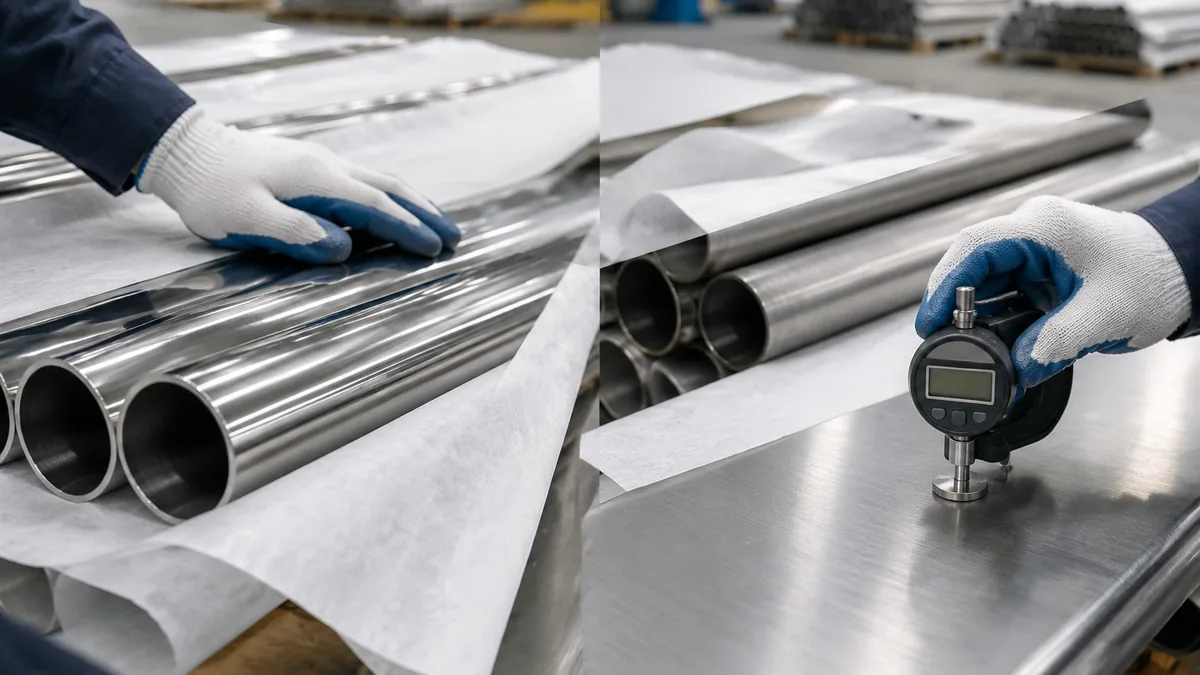
Finish, testing and documentation break points
This is where A270 vs A269 awards fail after the mill has already rolled.
Finish and ID quality
- A269 does not automatically measure or control sanitary roughness. Pickled or bright-annealed general-service surfaces can be chemically correct and still fail a hygienic ID review.
- A270 lets the purchaser order finish tools: mill finish, mechanical polish finish numbers, electropolish and/or maximum Ra. Grit numbers are not automatic Ra guarantees. Measurement practice is commonly referenced to ASME B46.1 style roughness rules; when circumferential polish is used, longitudinal measurement is the usual expectation — write the rule on the RFQ.
- Do not invent clause numbers from memory. Put the ordered edition and the finish paragraph the project actually invokes on the purchase order.
Testing
Under common ASTM tubing practice for both families, each tube is subjected to a hydrostatic test or a nondestructive electric test, often at the manufacturer’s option unless the purchaser names the method. That integrity test does not replace surface-finish acceptance.
Freeze separately:
| Control | What to name | What it does not prove |
|---|---|---|
| Hydro or eddy-current / NDE | Method required, sampling if not 100%, acceptance basis | ID Ra or polish quality |
| Reverse flattening / mechanical tests | As required by the ordered edition and product route | Hygienic cleanability |
| Surface / Ra checks | Surfaces, instrument practice, direction, lot sampling | Heat chemistry by itself |
| Visual bore or polish hold points | Defect classes the project rejects | Full pharmaceutical validation |
Documentation
- Keep EN 10204 Type 3.1 (or the named inspection document) for heat-linked chemistry and ordered mechanical/NDE results.
- Add finish or roughness reports only when polish or Ra is contractual, tied to the same heat and lot.
- Align PO wording with the stainless steel purchase order wording examples so the certificate heading matches the standard you awarded.
Mark uncertain numeric tolerances, hardness maxima and supplementary sulfur ranges as edition-dependent. Confirm them in the licensed A269/A269M and A270/A270M editions named on the order. Do not copy tolerance tables from secondary summaries into the contract.
Practical notes from hygienic vs general-service RFQs
These are repeating export and project handover patterns, not personal anecdotes:
- Lowest A269 price wins a sanitary bid. Chemically correct 316L arrives without ordered ID Ra; fabrication and validation stop.
- “A270” on the RFQ with no finish method. Mills quote mill finish or an undefined bright ID; receiving has nothing measurable to accept.
- Dual-cert language without a conflict rule. The certificate shows both titles, but packing and ID protection followed the cheaper general-service route.
- MTC treated as polish proof. Type 3.1 confirms heat and named tests; it does not invent a missing Ra report.
- Opened caps during casual dock checks. Hygienic lots need reseal and cleanliness rules after any destination inspection.
- Pipe schedule language on a tube RFQ. OD × wall belongs on A269/A270 lines; keep NPS schedule language on pipe standards.
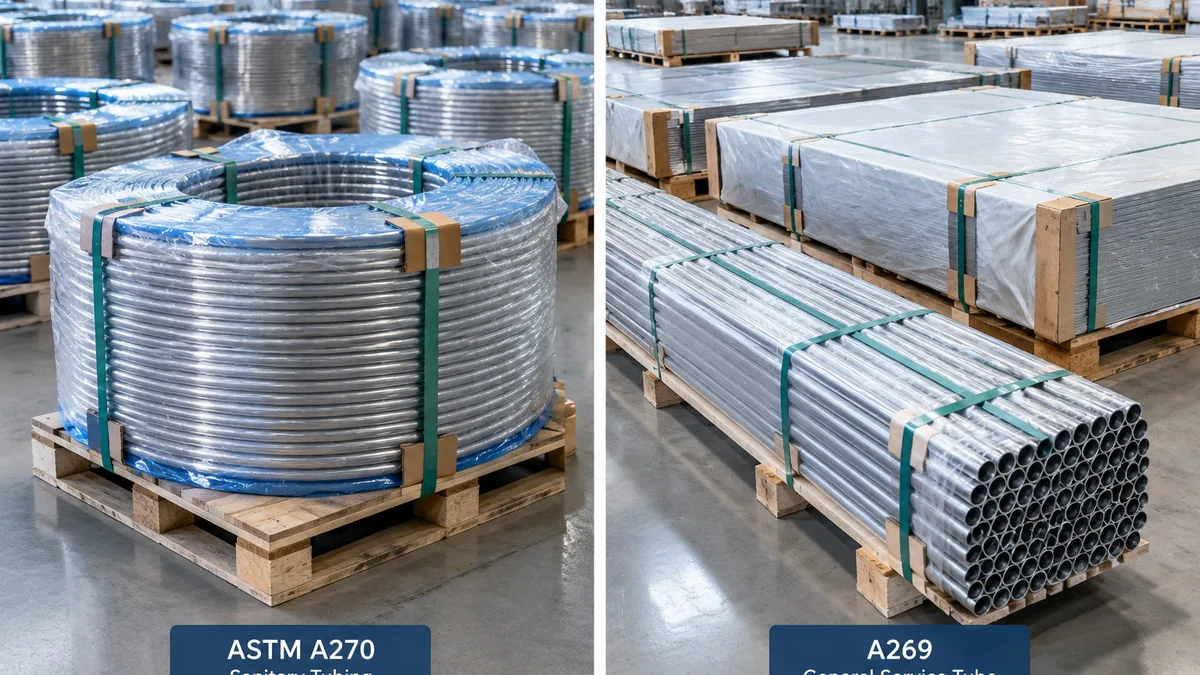
RFQ freeze lines for A270 vs A269
Copy and adapt:
Line 1 — Standard choice:
ASTM A270/A270M [edition] sanitary tubing / OR / ASTM A269/A269M [edition] general-service tubing.
Do not substitute the other title without written buyer approval.

Line 2 — Product identity:
Grade TP316L (or named grade), seamless OR welded route as permitted, OD x wall, length, tolerance basis per ordered edition.

Line 3 — Finish (required for A270; only if owner spec demands it for A269):
ID/OD finish method = mill / mechanical polish Finish No. [ ] / electropolish / max Ra [ ] µin or µm on [ID/OD/both];
measurement practice and direction stated; grit is not a substitute for max Ra when Ra is ordered.

Line 4 — Testing:
Each-tube hydrostatic OR nondestructive electric test — purchaser names method: [hydro / eddy-current / other].
Any surface, visual or roughness sampling plan listed separately.

Line 5 — Documents and packing:
Heat-linked EN 10204 Type 3.1; finish/roughness report if Ra or polish is contractual;
end caps, cleanliness state, contamination-controlled export packing; heat identity on tags and packing list.
Planning an order or need a technical verification?
If you are sourcing ASTM A270 sanitary tubing or confirming when A269 is enough for general service:
- Fast technical quote: Send grade, standard and edition, OD × wall, finish/Ra (if any), test method preference, documents and destination through the stainless steel inquiry form.
- Quality assurance: Heat-linked EN 10204 Type 3.1 mill documents, with finish evidence when polish or Ra is ordered. Third-party inspection can be arranged when the PO names it.
- Urgent commercial follow-up: Email sales@tsingshansts.com or phone/WhatsApp +86 176 8661 3207. Tsingshan (Shandong) Iron & Steel Co., Ltd. can separate sanitary A270 lines from general-service A269 lines before production so quotes, MTCs and receiving checks use the same standard owner.
Sources and application limits
This guide supports purchasing decisions. The ordered product standard, project specification and approved inspection plan control the final decision.
- ASTM A270/A270M sanitary stainless tubing scope for dairy and food service with special surface finishes; pharmaceutical quality as a supplementary requirement when ordered
- ASTM A269/A269M nominal-wall austenitic stainless tubing for general corrosion-resisting and low- or high-temperature service
- Common purchaser practice that each tube receives a hydrostatic test or a nondestructive electric test unless the order names the method
- EN 10204 Type 3.1 inspection document practice for heat identity versus separate finish or roughness evidence
Technical content updated: Sep 10, 2026
Frequently Asked Questions
Is ASTM A270 the same as ASTM A269 stainless tubing?
No. A269 is a general-service austenitic stainless tubing specification focused on chemistry, mechanical integrity and corrosion-resistant service. A270 is a sanitary tubing specification for dairy and food service that adds purchaser-ordered special surface finishes. Confirm the ordered edition of each standard before treating either title as interchangeable.
When is A269 enough instead of A270?
A269 can be enough for general corrosion-resistant utility, instrumentation or process tubing where the project does not require sanitary polish, measurable ID Ra, electropolish or hygienic packing acceptance. If cleanability, CIP/SIP validation or sanitary system approval depends on controlled ID finish, specify A270 or the named hygienic standard with finish rules.
Does an EN 10204 Type 3.1 MTC prove sanitary ID finish?
No. Type 3.1 supports heat identity, chemistry and the mechanical or inspection results named on the order. ID polish, maximum Ra, electropolish and contamination-controlled packing need their own ordered criteria and, when contractual, finish or roughness evidence tied to the same heat and lot.
Can buyers dual-certify A269 and A270 on one tube line?
Only when the mill can meet both ordered editions and every stricter finish, test and document requirement on the same product. Do not write dual certification as a shortcut for missing Ra, polish method or hygienic packing language. Name which standard owns acceptance when the two conflict.
Send the product form, grade and quantity from this guide. We quote the matching stainless route.
Ready to quote your stainless specification?
Send product, grade and quantity. We quote the confirmed supply route.