
316L Sanitary Liquid Preparation System RFQ
Freeze 316L sanitary liquid-prep RFQs: vessel/agitator/transfer/CIP tags, 304 vs 316L, sheet vs A270 tube, Ra, EN 10204 and packing.
Published Oct 26, 2026 · Technical content updated: Oct 26, 2026 ·Tsingshan (Shandong) Iron & Steel Co., Ltd.
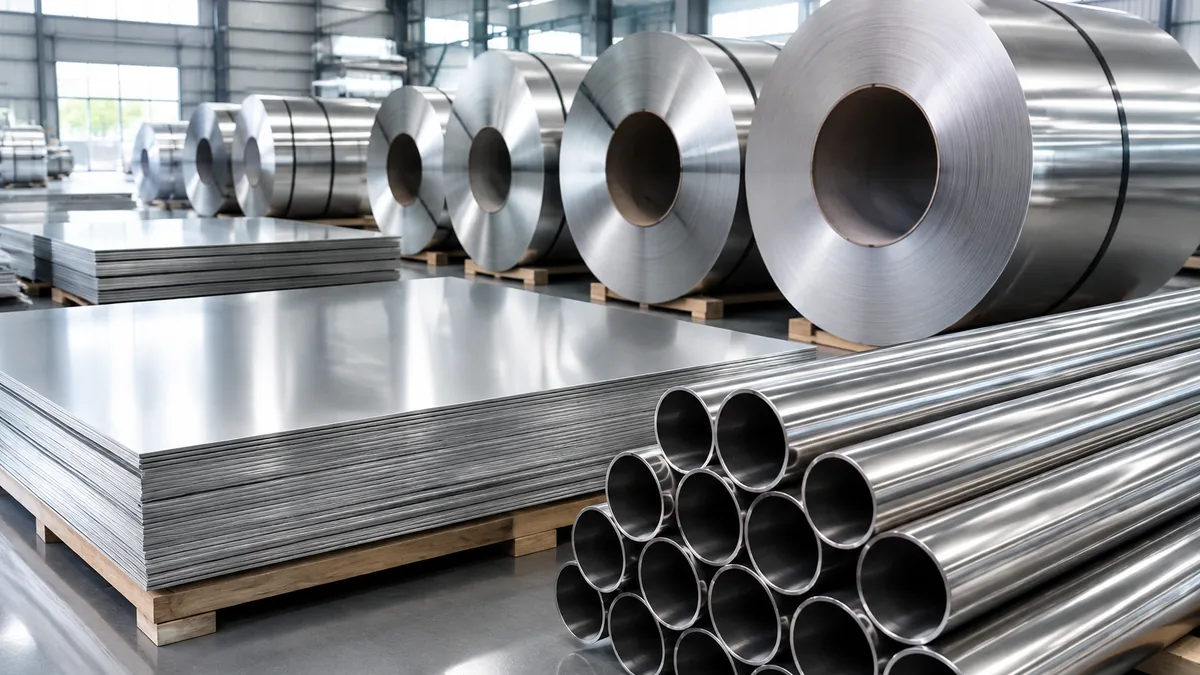
Reference image for this topic; it does not show Tsingshan Steel facilities, inventory or completed orders.
Featured answer
A 316L sanitary liquid preparation system RFQ for MENA and Southeast Asia buyers should freeze system tags first, then grade and form: split product-contact vessel, agitator / wetted shaft, transfer line, and CIP circuit from non-contact frames and guards. Quote 316L on wet product and aggressive CIP tags when brines, acids, chlorides or hot cleaners compress the 304 envelope under the owner basis; keep milder tags only where that basis still accepts them. Lock sheet/plate (commonly ASTM A240) versus sanitary tube (commonly ASTM A270 with finish/Ra), documents (EN 10204), packing and destination so bids stay comparable.
Broad food-plant application context is covered on the industry applications index and the food-equipment RFQ guide. 316L chemistry, density and hardness are covered on the 316L grade page. Hygienic tube finish depth is covered on the A270 vs A269 guide and the 316L sanitary tubing specification guide. Pharma/biotech duty stays on its own application page—do not merge those supplementary requirements here unless the owner PO names them.
| Tag | Typical contact | Grade screen | Form / standard cue |
|---|---|---|---|
| Vessel / tank | Product hold, mix, heat | 316L when chloride/acid/CIP compress 304 | Sheet/plate (A240 edition) |
| Agitator / wetted shaft | Product shear, seals | Match vessel unless basis splits | Bar/shaft + wetted finish note |
| Transfer | Product move between vessels | Usually match product-contact | Sanitary tube (A270 + Ra) |
| CIP circuit | Cleaners, hot rinse | Often 316L under aggressive CIP | Sanitary tube + spray devices |
| Frame / guard | Non-contact structure | Milder tag if drawings allow | Separate RFQ line |
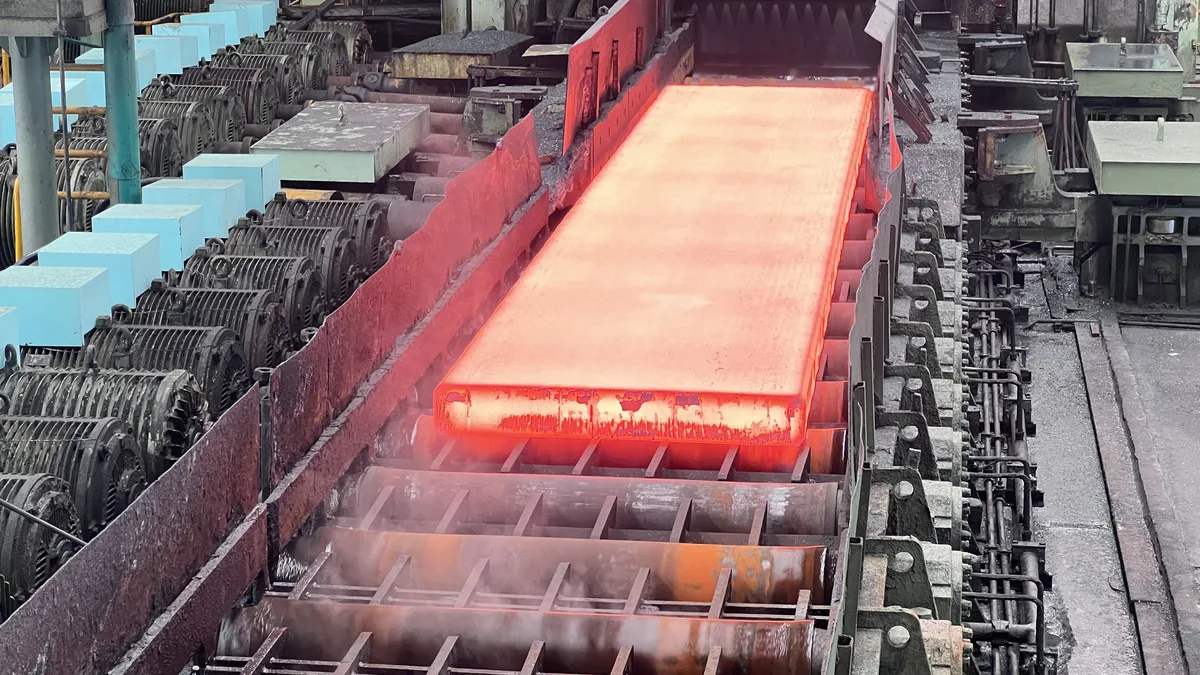
Split system tags before you write 316L
Buyers searching 316l sanitary liquid preparation system usually mean a batch or continuous liquid-prep skid—beverage syrup, dairy mix, sauce, brine or similar—not a whole factory nickname and not a pharma cleanroom package. Write each tag on its own RFQ line:
- Vessel / tank (volume, design pressure/temperature if applicable, agitation ports)
- Agitator wetted parts (shaft, impeller, seals—owner basis)
- Product transfer (OD/wall or tube series, ends, slope/drain notes)
- CIP supply/return (chemistry, temperature, spray devices)
- Non-contact frame, ladders, guards, cable trays
If one line still says only “316L sanitary system,” fabricators will mix vessel plate, utility tube and painted carbon frames into one non-comparable bid.
When liquid-prep duty moves 304 → 316L
Keep the screen duty-led, not brochure-led:
- Chloride, brine or salt carryover in the product or rinse
- Organic acids, tomato/fruit acids or low-pH sauces
- Hot caustic / acid CIP or long wet hold between batches
- Welded tanks where as-welded corrosion margin matters and the owner prefers L grades
304 / 304L can remain on tags the owner materials basis still accepts for mild aqueous or dry non-contact duty. 316L is the usual escalation for product-contact liquid-prep and aggressive CIP—not a claim that molybdenum removes crevice risk, heat tint or poor drain design. Exact chemistry windows belong on the grade page; this page only freezes the tag decision.
Sheet/plate vs sanitary tube on the same skid
Liquid-prep skids almost always mix forms:
- Sheet and plate for shells, heads, jackets and hoppers → freeze grade, ASTM A240 (or project equivalent) with edition, thickness, finish, flatness and weld-finish expectations. Shopping context for flat product is on the sheet/plate category after the form freeze—keep sizes on the quote, not this page.
- Sanitary tube for transfer and CIP → freeze ASTM A270 edition, OD/wall, ID finish method and maximum Ra with measurement rules—not a grit nickname alone. Detail is covered on the A270 and 316L sanitary tubing guides linked above.
- Utility or process tube standards are not automatic A270 substitutes when hygienic Ra acceptance is required.
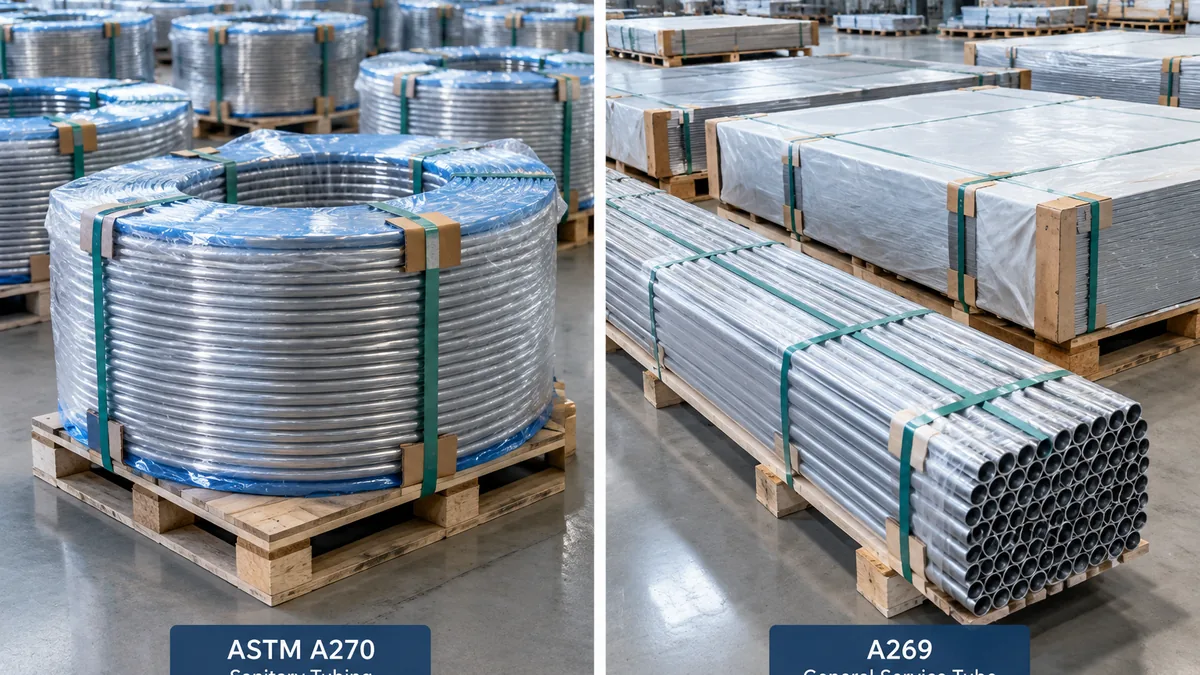
RFQ checklist for sanitary liquid-prep
- System class: sanitary liquid preparation (beverage / dairy / sauce / brine—name it)
- Tag list: vessel, agitator, transfer, CIP, non-contact structure
- Grade by tag: 304/304L vs 316/316L (L-grade rule if welding drives it)
- Form + standard + edition by tag (A240 sheet/plate vs A270 tube)
- Finish / Ra / drainability notes where hygienic
- EN 10204 type, heat marks, PMI scope if required
- Packing (cap ends, desiccant, bundle marks) + destination port
Send the frozen RFQ via /contact/.
Common Buyer Mistakes
- One plant-wide “316L sanitary— line covering frames and product-contact alike
- Ordering sanitary tube by clamp size alone without OD/wall and Ra
- Assuming food-hub or grade-page FAQ wording is enough without a system-tag PO
- Copying pharma electropolish / supplementary language onto a food liquid-prep skid without owner basis
- Awarding mixed crates where vessel 316L heats and frame heats share one unmarked bundle
How this page divides work
| Page | Owns |
|---|---|
| This blog | Sanitary liquid preparation system tag RFQ |
/applications/ (food-processing hub) |
Broad food-processing application page |
/blog/stainless-steel-food-processing-equipment-rfq/ |
Broad food-equipment grade & RFQ narrative |
/applications/pharmaceutical-biotechnology/ |
Pharma/biotech duty and machining RFQ |
/stainless-steel-grades/316l/ |
316L chemistry, density, hardness FAQ |
| A270 / sanitary tubing blogs | Hygienic tube finish and Ra depth |
/contact/ |
RFQ send |
Practical notes from liquid-prep stainless RFQs
On Gulf and Southeast Asian liquid-prep skids we repeatedly see the same quote breakage: the inquiry says “316L sanitary liquid preparation system” but the spreadsheet has one row; vessel plate arrives dual-certified while transfer tube was bought as general-service; CIP loops miss Ra; and painted frames share crate marks with product-contact heats. Freezing tags + form + edition + docs before price comparison cuts that rework. Typical brochure sizes and finishes stay illustrative / to verify on the supplier quote—this page does not invent stock lists, prices or regulatory validation.
Sources and application limits
This guide supports purchasing decisions. The ordered product standard, project specification and approved inspection plan control the final decision.
- ASTM A240/A240M flat-product naming practice for sheet and plate when the PO cites it (edition on the purchase order)
- ASTM A270/A270M sanitary tubing finish ordering practice when hygienic tube is on the line (edition on the PO)
- EN 10204 inspection document types commonly requested on Gulf and Southeast Asia stainless shipments
- Common MENA and Southeast Asia procurement pattern that open "316L sanitary" lines without system-tag split produce mixed vessel and frame bids
Technical content updated: Oct 26, 2026
Frequently Asked Questions
What is a 316L sanitary liquid preparation system RFQ freezing first?
Freeze the system tags—product-contact vessel, agitator/wetted shaft, transfer line, and CIP circuit—versus non-contact frames and guards. Then lock 304 vs 316L by tag, product form and standard (A240 sheet/plate vs A270 sanitary tube), finish or Ra where hygienic, EN 10204 type, packing and destination. Do not leave a single plant-wide "316L sanitary" nickname.
When does liquid preparation duty push 316L instead of 304?
Move vessel, agitator and product-transfer tags to 316L when brines, organic acids, chloride-bearing cleaners, hot CIP, or wet hold between batches compress the 304 margin under the owner materials basis. Keep 304 only where that basis still accepts it for the named tag. Frames and dry guards can stay on a separate milder tag when drawings allow.
Is a sanitary liquid preparation system the same RFQ as pharmaceutical biotechnology stainless?
No. Pharma/biotech product-contact and machining RFQ language is covered on the pharmaceutical application page. Do not copy pharma supplementary requirements onto a food liquid-prep line unless the owner specification names them.
Which tube and sheet standards belong on a liquid-prep stainless RFQ?
Use sheet/plate language (commonly ASTM A240 with edition) for tanks, hoppers and fabricated skins. Use sanitary tube language (commonly ASTM A270 with finish/Ra rules) for hygienic transfer and CIP loops. Utility tube standards are not automatic substitutes for A270 finish acceptance. Put form and standard on each line.
Send the product form, grade and quantity from this guide. We quote the matching stainless route.
Ready to quote your stainless specification?
Send product, grade and quantity. We quote the confirmed supply route.