
2205 vs 304 Stainless Steel: Chloride Duty vs Cost Guide
Compare 2205 duplex vs 304 stainless for Gulf and SEA projects: strength, chloride screening, cost and availability, plus RFQ freeze lines that stop false equivalence.
Published Sep 15, 2026 · Technical content updated: Sep 15, 2026 ·Tsingshan (Shandong) Iron & Steel Co., Ltd.
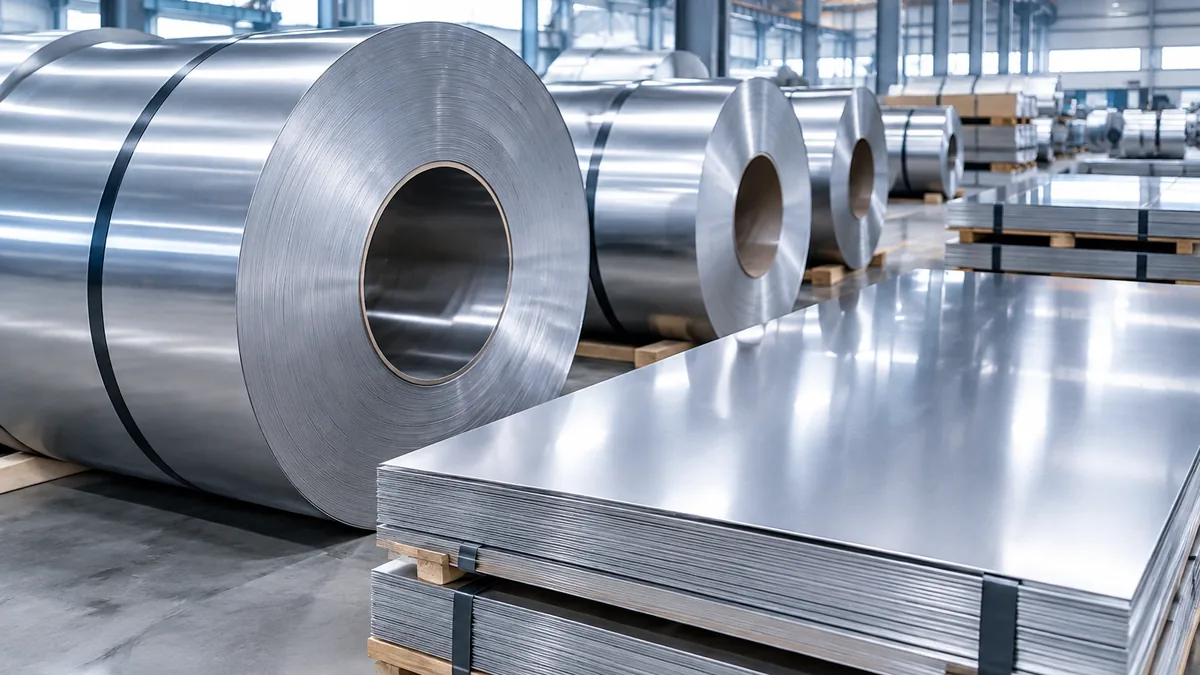
Reference image for this topic; it does not show Tsingshan Steel facilities, inventory or completed orders.
Featured answer
2205 vs 304 stainless steel is a duty and economics decision, not a brand upgrade. 304 (UNS S30400 / EN 1.4301) is the commodity austenitic workhorse: widely stocked, easy to form and weld, and usually enough for mild, low-chloride Gulf and Southeast Asia service. 2205 duplex (modern UNS S32205, EN 1.4462) brings roughly double the design yield strength of 304 plate minima and a higher chloride-localized-corrosion screening rank — at higher kg price, tighter welding controls and less universal mill stock. Choose 304 when availability and cost dominate a mild duty. Choose 2205 when chloride margin or strength compresses the 304 envelope. Keep 2205 vs 316L on the separate compare cluster; this article owns 2205 vs 304 only.
| Decision field | 304 (1.4301) | 2205 (1.4462) |
|---|---|---|
| Family | Austenitic commodity | Duplex (austenite + ferrite) |
| Typical buyer trigger | Mild indoor / low-chloride process; stock speed; easy forming | Chloride-bearing process water, brines, coastal crevice risk, or higher design strength |
| Strength role | Standard austenitic minima (plate context often ≥205 MPa yield — confirm ordered edition) | Much higher yield/tensile minima (plate context often ≥450 MPa yield — confirm ordered edition) |
| Chloride screening | Lower PREN class; no Mo; weak for warm chlorides and crevices | Higher PREN screening class with Mo + N; still not a seawater life certificate |
| Cost / availability | Usually lowest kg cost and widest global stock | Higher kg cost; lead time and heat qualification matter more |
| Fabrication note | Familiar austenitic weld routines | Duplex heat-input, interpass and filler controls required |
What 2205 and 304 own on a Gulf or SEA purchase line
On Middle East and Southeast Asia RFQs, 304 usually owns general fabrication, food-contact equipment in controlled low-chloride cleaning, architectural or indoor utility stainless, and pressure parts where the design code accepts austenitic strength and the corrosion basis stays mild. 2205 owns tags where the process fluid, coastal atmosphere or design calculation needs more chloride margin, higher allowable stress, or thinner wall for the same pressure — provided the fabricator can hold duplex weld quality.
Neither grade “owns” seawater desalination by nickname. Continuous seawater, warm Gulf intake and brine reject are section decisions covered in the desalination grade and RFQ decision guide. This page only settles whether commodity 304 is still legitimate versus stepping to duplex 2205 for a named chloride or strength duty.
For grade-page chemistry and mechanical tables after you freeze the family, use the stainless steel grades hub (2205, 304 and 316L live there). If your shortlist is really 2205 vs 316L, open the compare hub — that pair is a different search intent and must not be collapsed into this 2205-versus-304 brief.
Side-by-side buyer table: strength, chloride screening, cost and availability
Use this table as the break point for RFQ clarity. It is not a licensed ASTM or EN extract; ordered editions and the mill test certificate (MTC) govern acceptance.
| Buyer question | Prefer 304 | Prefer 2205 | Hold / escalate |
|---|---|---|---|
| Is chloride exposure mild, intermittent and mostly indoor? | Yes — 304 often wins on cost | Only if strength still forces duplex | Warm stagnant chlorides or gasketed crevices |
| Do you need higher design yield / thinner wall? | Rarely — austenitic minima | Often — duplex strength is the commercial reason | Confirm design code allowables and welding procedure |
| Is PREN being used as a ranking aid? | Low screening class | Higher screening class (commonly cited ≥34 for S32205 windows) | PREN is not a plant-life guarantee — mark as screening only |
| Is mill stock and lead time critical this month? | Usually better | Check heat qualification and partner-mill route | Do not substitute silently to clear a vessel |
| Can the fabricator control duplex heat input and fillers? | N/A for austenitic commodity | Required | Missing WPS/PQR or filler plan → do not award 2205 |
| Is the real competitor 316L, not 304? | Wrong page | Wrong page | Use the compare hub for 2205 vs 316L |
Direct answer (featured-snippet style): Specify 304 when the service is mild and low-chloride and the project needs fast, economical austenitic supply. Specify 2205 when chloride-bearing process duty or higher strength makes 304 a weak fit. Never award either grade from a PREN slogan alone — freeze duty, designation, weld route and EN 10204 document type on the RFQ.
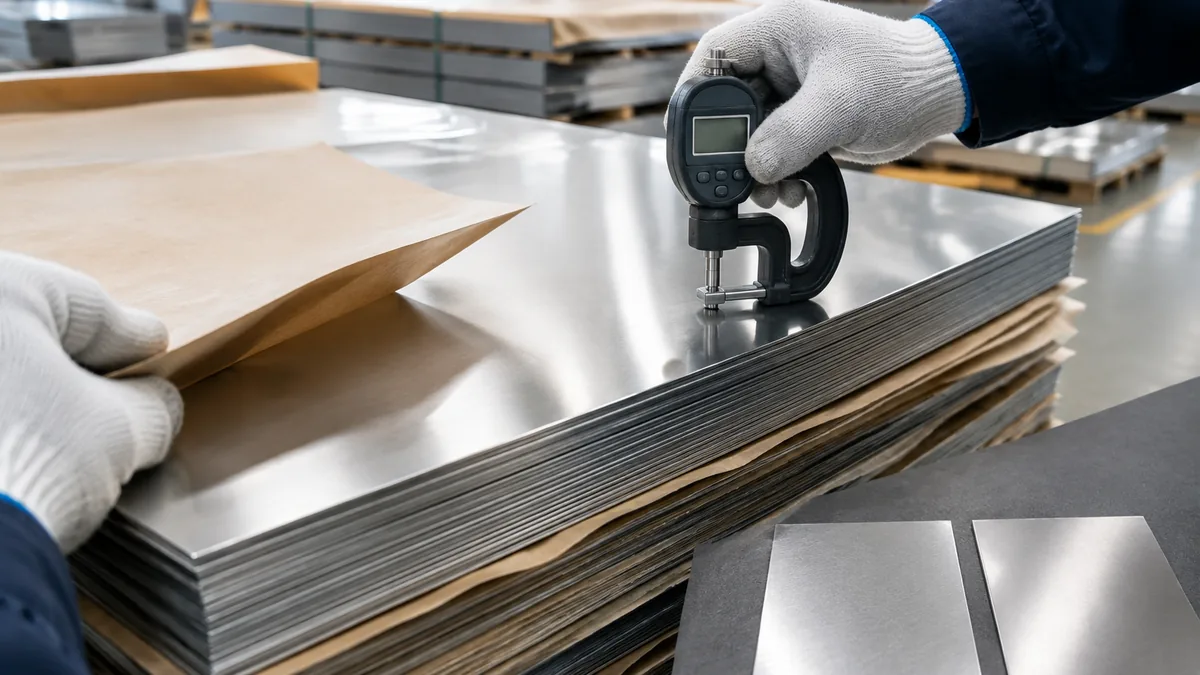
When 304 is enough for commodity austenitic duty
Keep 304 / 1.4301 on the purchase line when most of these are true:
- Chloride and temperature stay mild. Indoor process water, clean utilities, dry structural stainless, or food equipment with controlled cleaning and limited chloride dosing.
- No strength upgrade is required. Design thickness and allowables fit standard austenitic minima for the ordered product form and edition.
- Availability and forming dominate. Gulf and SEA projects often need cut-to-length sheet, welded pipe or fittings from regional stock; 304 usually clears that faster than duplex.
- Fabrication is austenitic-routine. No duplex phase-balance or specialized filler program is in the bid package.
- The owner corrosion basis does not already ban 304 for that tag.
304 is not “enough” merely because a previous plant used stainless. Coastal splash, chlorinated wash water, warm brines, under-insulation crevices and high-stress chloride service regularly retire 304 early. If your MTO mixes food-room frames with chloride process headers, split the lines — do not force one commodity grade across both.
For food-plant context beyond this compare, start at the applications hub and keep hygienic tubing standards on their own blog cluster.
When chloride or process duty requires 2205
Move to 2205 / 1.4462 when one or more of these compress the 304 envelope:
- Chloride-bearing process fluids with meaningful temperature, stagnation or crevice geometry (process water loops, wastewater, chemical brines, coastal utility lines the owner will not accept as “mild”).
- Design strength. Duplex plate and pipe minima are typically far above 304 yield; buyers sometimes choose 2205 to reduce thickness or raise pressure margin when the code and welding procedure support it.
- Chloride stress-corrosion risk narrative on the tag. 304 is a poor starting point once warm chlorides plus tensile stress are credible failure modes; 2205 is the common duplex step — still subject to project review.
- Explicit owner or EPC duplex call-out with weld procedure, filler and NDE language already in the specification.
Do not auto-pick 2205 for every marine-sounding line item. Continuous seawater, high-pressure SWRO feed and hot brine may need super duplex or other approved alloys after the corrosion basis — that path belongs to the desalination decision guide, not to a 304-versus-2205 price sheet.
If 316L is already on the bid tab and someone proposes 2205 as a “stronger 316,” stop and open the compare hub. This article does not replace /compare/2205-vs-316l/.
1.4462 vs 1.4301 naming traps and dual-cert risks
Buyers in MENA and SEA RFQs often mix ASTM names, UNS numbers and EN numbers on one line. Freeze identity early:
| Marketplace name | Family | Common identity anchors |
|---|---|---|
| 304 | Austenitic | UNS S30400 · EN 1.4301 (X5CrNi18-10) · related low-carbon 304L / 1.4307 is a sibling, not an automatic swap |
| 2205 | Duplex | UNS S32205 preferred modern window · legacy S31803 overlap may appear — confirm RFQ · EN 1.4462 (X2CrNiMoN22-5-3) |
Dual-cert traps to block on the PO:
- Writing “304 / 2205 dual cert” as if they were interchangeable carbon variants — they are not.
- Accepting “1.4462 or equivalent” without naming whether S32205 or S31803 chemistry windows apply.
- Letting a stockist ship 304 against a 2205 MTO because the warehouse had austenitic plate ready.
- Treating PREN or “duplex” as proof that 1.4462 meets a seawater or sour-service appendix the PO never named.
Document control still needs an explicit EN 10204 type (usually 3.1 unless the project mandates 3.2) and, on mixed-grade containers, a PMI scope. Use the stainless RFQ checklist; mirror the same wording into the purchase order and PMI sampling plan so warehouse identity matches the awarded grade.
Practical notes from MENA and SEA 2205-vs-304 RFQs
From export inquiries serving Gulf process plants and Southeast Asia fabricators, the same clarification loops repeat:
- “Stainless is stainless.” Buyers paste 304 into a chloride header because the architectural package already bought 304 sheet. Split mild tags from chloride tags before pricing.
- PREN as a purchase decision. Quoting “PREN 35 so OK for seawater” without temperature, crevice or chlorination inputs. Mark PREN as screening only and ask for the corrosion basis.
- Strength sold without weld cost. 2205 wins the thickness calculation, then the fabricator prices austenitic weld routines. Duplex WPS, filler (often ER2209-class for matching duplex) and interpass limits must sit on the RFQ.
- S31803 vs S32205 silence. Older drawings say 2205 / S31803; modern mills prefer S32205 windows. Name which UNS the MTC must prove.
- Availability pressure. Project wants 2205 this sailing; supplier offers 304 “temporary.” Temporary substitutions become permanent site risk — require written buyer approval.
- Mixed crates without PMI. 304 elbows land in a 2205 spool list. Add PMI sampling when multi-grade MTOs share one container.
Treat those as procurement controls. The lowest kg price is often the line that left chloride duty, EN designation and weld procedure blank.
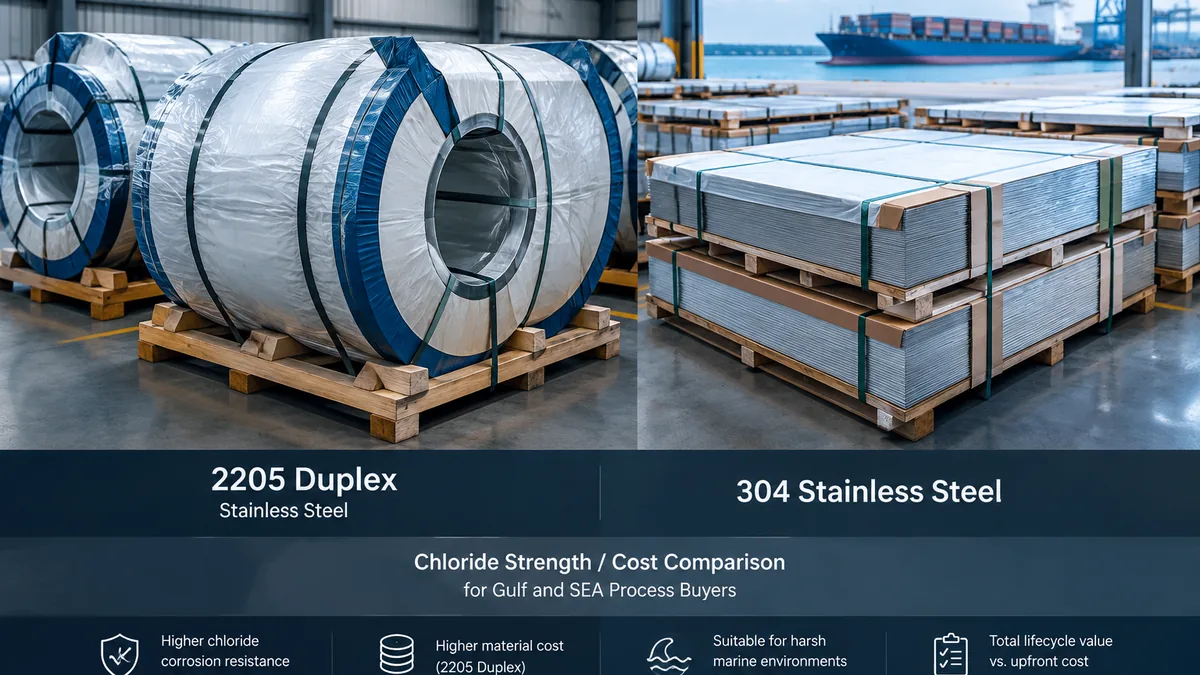
RFQ freeze lines that stop 304/2205 false equivalence
Copy and adapt these lines so 304 and 2205 quotes stay comparable:
- Duty. “Service: [fluid / chloride class / max metal temperature / crevice or stagnation notes]. 304 permitted only if owner corrosion basis classifies this tag as mild low-chloride. Otherwise quote 2205 (or named alternate) against the same duty card.”
- Grade identity. “Grade: 304 / UNS S30400 / EN 1.4301 or 2205 / UNS S32205 / EN 1.4462 — one primary route per line. S31803 accepted only if explicitly allowed. No silent cross-family substitution.”
- Product form and standard. “Form: [plate / sheet / pipe / fitting]. Standard: [e.g. ASTM A240 / A312 / A790] edition on PO. Finish and tolerances as attached.”
- Mechanical / design note. “If 2205 is selected for strength, fabricator shall confirm design allowables, thickness and welding procedure before cutting. Do not assume austenitic weld procedures apply.”
- Documents. “EN 10204 Type [3.1 / 3.2] MTC required. Certificate must show heat identity, ordered chemistry window and mechanical results named on the PO.”
- PMI. “PMI [XRF / OES] on [sampling plan] before shipment when multi-grade material shares packing or when owner QA requires on-product screening.”
- Substitution hold. “Any alternate to the awarded grade needs written buyer approval against the same chloride/strength duty card. 2205 vs 316L decisions are out of scope for this 304 compare line.”
Soft RFQ CTA
Tsingshan (Shandong) Iron & Steel Co., Ltd. (Tsingshan Steel) can review whether a mill-direct or partner-mill route can support 304 or 2205 for your Gulf or Southeast Asia line items — including plate, pipe and related forms — once duty, designation and document fields are frozen. Email sales@tsingshansts.com, WhatsApp +86 176 8661 3207, or send the complete specification. We will not treat PREN nicknames or “duplex upgrade” language as a substitute for your project corrosion and design basis.
Sources and application limits
This guide supports purchasing decisions. The ordered product standard, project specification and approved inspection plan control the final decision.
- ASTM A240/A240M plate and sheet naming practice for 304 (UNS S30400) and duplex 2205 (UNS S32205 / legacy S31803 window) with edition stated on the purchase order
- EN designation practice pairing 304 with 1.4301 (X5CrNi18-10) and 2205 with 1.4462 (X2CrNiMoN22-5-3); dual-cert only when the ordered editions and MTC prove both
- Industry buyer practice that PREN is a chemistry screening aid for localized-corrosion ranking, not a seawater or process-life guarantee
- Common Gulf and Southeast Asia procurement pattern that 304 wins on stock availability and forming ease while 2205 is chosen when chloride margin or design strength compresses austenitic commodity routes
Technical content updated: Sep 15, 2026
Frequently Asked Questions
Is 2205 always better than 304 stainless steel?
No. 2205 is stronger and usually ranks higher on chloride-related localized corrosion screening than 304, but it costs more, needs duplex-aware fabrication controls, and is not automatic stock everywhere. Keep 304 when the duty is mild, low-chloride and the project values forming ease and availability. Escalate to 2205 only when chloride, temperature, crevice or strength demands justify it under the owner corrosion and design basis.
When should buyers use 2205 instead of 304?
Use 2205 instead of 304 when warm chlorides, process brines, coastal exposure with stagnation or crevices, or higher design yield strength make commodity austenitic 304 a weak fit. If the service is indoor, clean and low-chloride with no strength upgrade, 304 is often enough. Do not treat PREN nicknames as a substitute for the project corrosion review.
What is the difference between 1.4462 and 1.4301?
1.4462 is the common EN designation linked to duplex 2205 (X2CrNiMoN22-5-3). 1.4301 is the common EN designation linked to austenitic 304 (X5CrNi18-10). They are different families. Dual-cert language is valid only when the ordered ASTM/EN editions and the mill test document prove both designations on the same heat and product form.
Does a higher PREN mean 2205 will survive seawater or Gulf process duty?
No. PREN helps screen relative pitting resistance from chemistry windows; it does not certify temperature, crevice geometry, chlorination, welding quality or design life. Seawater and warm brine duties still need the owner corrosion basis. For desalination section selection beyond this 2205-versus-304 compare, use the desalination grade RFQ guide on this site.
Send the product form, grade and quantity from this guide. We quote the matching stainless route.
Ready to quote your stainless specification?
Send product, grade and quantity. We quote the confirmed supply route.