
Stainless Steel Export Packing Guide by Product Form
Specify seaworthy stainless steel export packing for sheet, coil, pipe, bar, profiles, fittings and flanges, including moisture, surface, loading and photo checks.
Published Jul 27, 2026 · Technical content updated: Jul 29, 2026 ·Tsingshan (Shandong) Iron & Steel Co., Ltd.
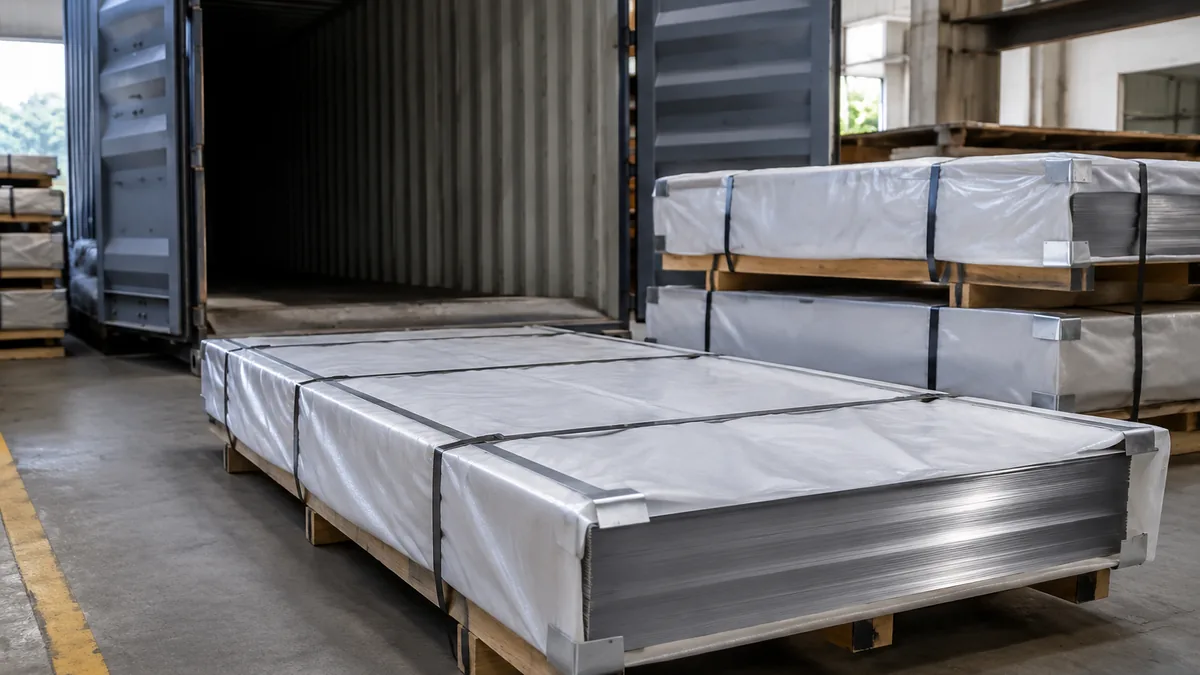
Reference image for this topic; it does not show Tsingshan Steel facilities, inventory or completed orders.
Stainless steel can arrive chemically correct and still be commercially unusable because of wet packing, edge damage, scratches, distorted bundles or unreadable identification. “Standard seaworthy packing” is not enough unless the supplier and buyer agree what it means for the actual product.
This guide turns packing into inspectable purchase-order requirements. For our order workflow, see packing and shipping.
Start with the failure you need to prevent
The packaging plan depends on product form, surface sensitivity, dimensions, package weight, unloading equipment, inland transfers and voyage. Typical risks include:
- moisture trapped against the surface;
- salt or dirty-water exposure during port handling;
- edge, corner or pipe-end impact;
- straps marking polished sheet or crushing tube;
- coil movement or unstable weight distribution;
- loss of heat, item or bundle identification;
- adhesive film aging before fabrication.
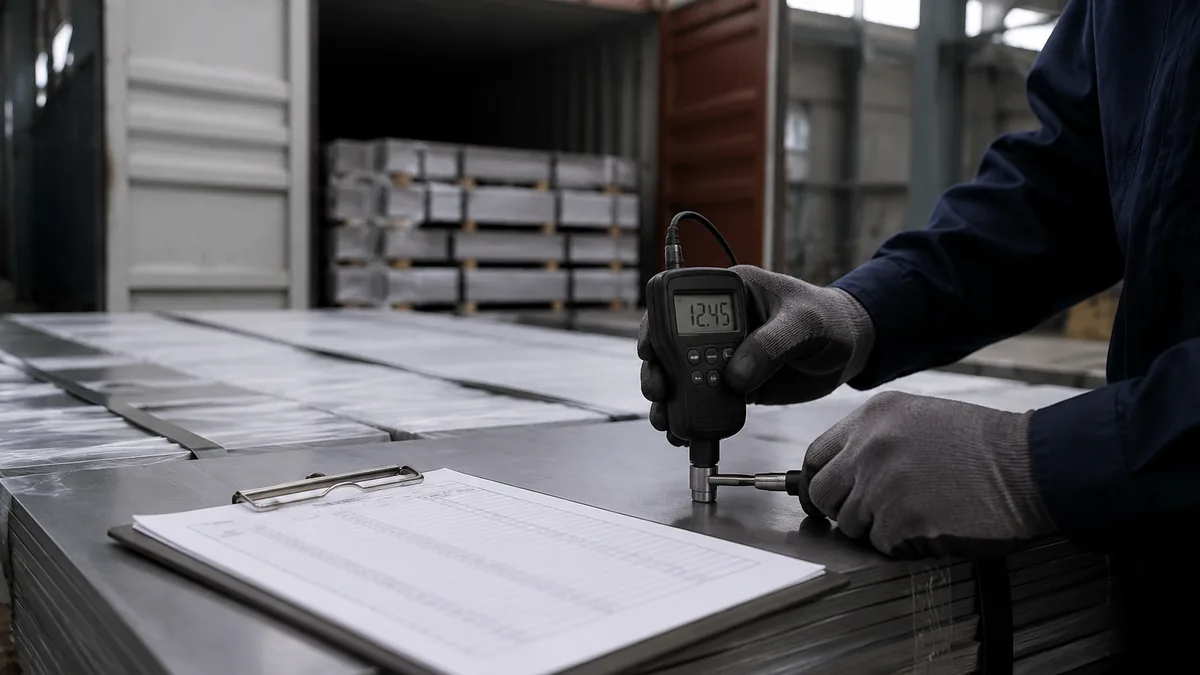
Packing matrix by product form
| Product | Core controls to specify |
|---|---|
| Sheet and plate | Moisture barrier, rigid skid, edge and corner guards, surface film, strap isolation and bundle weight |
| Coil and strip | Eye orientation, skid or cradle, moisture barrier, ID/OD protection, radial and circumferential restraint |
| Pipe and tube | Bundle restraint, end caps, separators for polished tube, case or frame for small or precision material |
| Bar and profiles | Straight bundle support, end protection, lifting points, surface separation and long-length handling |
| Fittings and flanges | Protected machined faces, individual wrapping where needed, labeled cartons or cases and pallet restraint |
The final method should also comply with destination wood-packaging and import rules where applicable. Confirm current regulatory requirements with the freight forwarder rather than copying an old order note.
Moisture control is more than plastic wrap
Wrapping visibly wet or warm material can trap condensation. The packing sequence should include a clean, dry surface; suitable barrier material; drainage or desiccant strategy where appropriate; and storage limits after arrival.
Stainless steel resists corrosion, but free-iron contamination and salt deposits can still cause staining. Keep carbon-steel grinding dust, dirty slings and contaminated packing hardware away from finished stainless surfaces.
Protect appearance as a separate requirement
2B industrial sheet, hairline architectural panels and mirror-polished parts do not have the same acceptance criteria. For decorative work, specify:
- visible side and grain direction;
- protective-film type and identification;
- interleaving or separator material;
- strap pads and corner protection;
- maximum handling steps before final wrapping;
- viewing and scratch-acceptance sample.
Use our finish library to connect packing decisions with the ordered surface.
Container loading and restraint
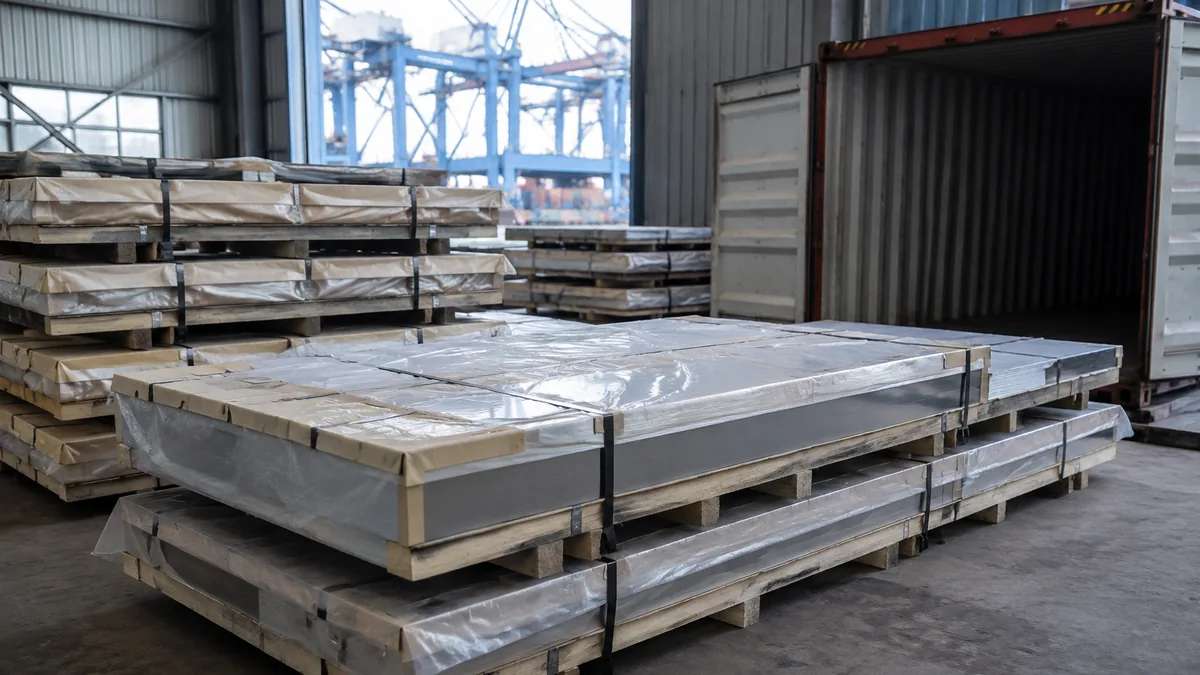
Container loading must control weight distribution, movement and unloading access. Coils need a cradle and restraint designed for their eye orientation and mass. Long products need continuous support. Mixed orders require a loading sequence that prevents a heavy package from damaging a surface-sensitive one.
A useful photo record shows:
- clean and dry container interior;
- package identification before loading;
- each package position;
- blocking, bracing and restraint;
- closed-door and seal information.
The cargo securing plan remains the responsibility of qualified shipping parties and must match carrier and route requirements.
Packing list and physical marks must agree
Every bundle, coil, case or pallet should connect to the commercial packing list and material records. Agree the marking format for item number, grade, size, quantity, heat or lot where required, gross/net weight and package number.
Avoid putting confidential end-user data on an exposed package unless the project requires it. Durable internal identification can be combined with a simpler external shipping mark.
Add these lines to the RFQ
- Product form, dimensions, finish and visible side
- Package type and maximum package weight
- Moisture, edge, end and surface protection
- Coil eye orientation or bundle lifting method
- Wood-treatment or destination requirements
- Marking and traceability fields
- Required packing and loading photos
- Container, breakbulk or other transport assumptions
- Destination port or receiving city
Packing should be quoted with the product, not negotiated after production. Include it in the stainless steel RFQ checklist and send the complete requirement through our contact page.
A package-level inspection sequence
Before wrapping, the supplier and buyer should agree what is inspected and who records it. A practical sequence is: confirm the dry product surface; compare the package mark with the packing list; check edge, corner or end protection; verify that straps, separators and lifting points suit the product; photograph the completed package; then record the container condition and securing method. The sequence is useful for a single coil as well as a mixed container, but the acceptance details must remain product-specific.
For sheet and plate, pay attention to skid support, bundle center of gravity, corner guards and protective film. For slit coil, record eye orientation, ID, OD, maximum package weight and the cradle or saddles used. For pipe and tube, protect ends and prevent movement that can ovalize or scratch the material. For long bar and profiles, use continuous support so the bundle does not sag during lifting. For fittings and flanges, isolate machined faces and keep markings legible after wrapping.
Receiving and storage instructions
Packing cannot correct poor receiving practice. The importer should plan a dry unloading area, suitable lifting equipment, drainage, ventilation and a place to preserve the heat or lot marks. Open wet packaging promptly under a recorded inspection procedure; do not reseal condensation against a polished surface. Store film-protected sheet within the adhesive manufacturer’s limits and keep carbon-steel tools, dirty slings and salt-contaminated dunnage away from the visible face.
If a package arrives damaged, photograph the outer condition before opening, then record the inner material, mark, quantity and surface state. Link the exception to the package number and carrier record. This evidence supports a commercial claim without implying that every surface mark proves a production defect.
For repeat shipments, keep the approved packing drawing, package photographs, packing list and seal record with the order file. A stable package numbering scheme lets the buyer connect a damaged corner, missing mark or wet bundle to a specific item without rejecting an unrelated package. Confirm any carrier, port or destination rule again when the route changes.
Send product form, finish, quantity and destination with the packing failure modes that matter. We quote moisture, edge, film and lifting protection in the quotation. Do not treat seaworthy packing, fumigated pallets or a film brand as a default.
Sources and application limits
This guide supports purchasing decisions. The ordered product standard, project specification and approved inspection plan control the final decision.
- destination wood-packaging and import rules
- carrier cargo-securing instructions
- product-form surface and handling requirements
Technical content updated: Jul 29, 2026
Frequently Asked Questions
What does seaworthy packing mean for stainless steel?
It should define moisture protection, edge or end protection, restraint, lifting and handling for the actual product and voyage. The phrase alone is not a complete packing specification.
Should polished stainless sheet keep protective film during shipment?
Usually yes when agreed for the fabrication route, but film type, surface side, storage temperature and removal timing must be controlled to avoid residue or premature peeling.
What packing evidence should a buyer request?
Request clear photos of identification, completed package, edge or end protection, container condition, blocking and bracing, plus the final package list and seal record where applicable.
Send the product form, grade and quantity from this guide. We quote the matching stainless route.
Ready to quote your stainless specification?
Send product, grade and quantity. We quote the confirmed supply route.