
904L Phosphoric Acid Fasteners: Bar Supply, Specs & RFQ
STS supplies 904L (N08904 / 1.4539) bar for phosphoric acid fasteners; bolts, studs and nuts are confirmed at quote stage. Specs, 3.1 MTC, PMI, price.
Published Nov 3, 2026 · Technical content updated: Nov 3, 2026 ·Tsingshan (Shandong) Iron & Steel Co., Ltd.
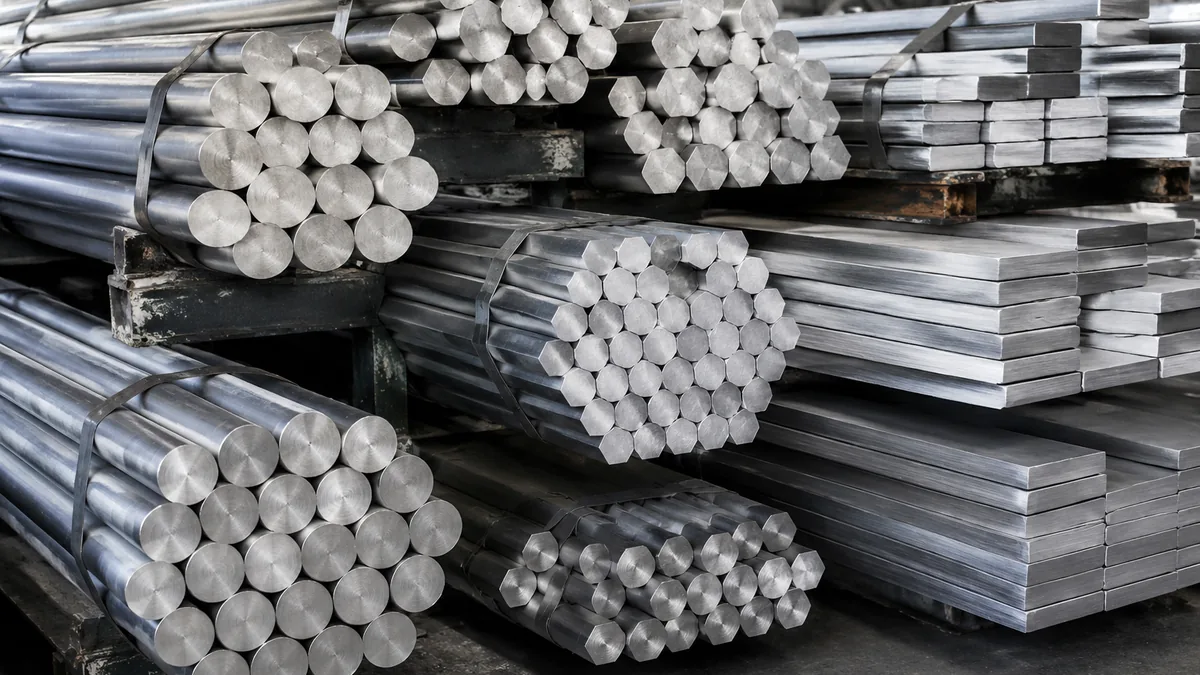
Reference image for this topic; it does not show Tsingshan Steel facilities, inventory or completed orders.
Featured answer
904L phosphoric acid fasteners are bolts, studs, nuts and washers made from UNS N08904 / EN 1.4539 bar for tags in phosphoric acid and fertilizer plants where 316 / 316L bolting has run out of corrosion margin. For MENA and Southeast Asia buyers, the RFQ has to do more work than for ordinary stainless bolting: 904L has no ASTM A193 grade, no ASTM F593 alloy group and no standardized ISO 3506 property class, so the purchase order must name the bar standard and edition, the dimension and thread standards, the mechanical basis, and the documents (typically EN 10204 3.1 MTC, plus PMI) line by line. The grade itself should come from the owner’s acid analysis and temperature - not from a nickname. STS supplies 904L bar; finished bolts, studs and nuts, with their sizes and lead times, are confirmed at quote stage.
Plant-wide grade screening is covered on the chemical-processing grade and RFQ guide; 904L chemistry, equivalents and mechanical data are covered on the 904L grade page.
| RFQ item | What to freeze | Why it matters |
|---|---|---|
| Alloy | UNS N08904 / EN 1.4539, solution annealed | Prevents 316L or “904-type” substitution |
| Bar basis | Bar standard + edition (see below) | No fastener standard carries the grade |
| Dimensions | ASME B18.2.1 / B18.2.2 or ISO / DIN part standard | Head, nut and length rules |
| Thread | UNC / UNF / 8UN or ISO metric coarse / fine, class | Matches existing flanges and tapped holes |
| Mechanical basis | Annealed bar minimums or an agreed strength | Avoids assuming A4-70 / B8M Class 2 levels |
| Documents | EN 10204 3.1 (or 3.2), PMI, heat marking | Traceability from bar heat to each part |
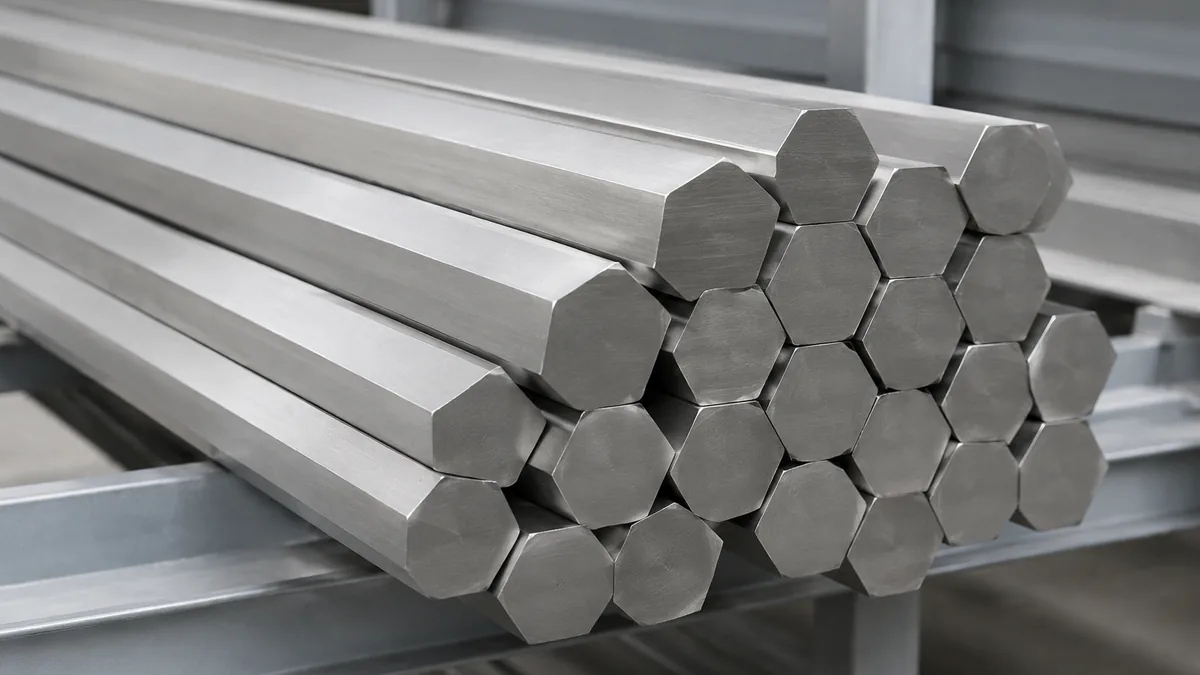
Why 904L appears on phosphoric acid bolting lists
Pure phosphoric acid is only moderately aggressive to stainless steel, and 316L is widely used for clean acid storage and transfer. Wet-process acid is different: phosphate rock digested with sulfuric acid leaves sulfuric acid excess, chlorides, fluorides (largely as fluosilicic acid) and oxidizing or abrasive solids in the stream. Rock origin, washing water and concentration stage all change that mix, which is why two plants in Morocco and Jordan can report different results for the same alloy.
904L - nominally about 20% Cr, 25% Ni, 4.5% Mo and 1.5% Cu with very low carbon - was developed for sulfuric acid service, and the copper and higher nickel help in reducing-acid conditions where 316L becomes active. On fasteners this typically shows up as:
- Reactor, filter and gypsum-handling hardware where 316 bolts thin or seize after acid drips and washdowns
- Wetted studs and nuts on agitator, launder and scrubber internals the owner has already moved to 904L
- Flange bolting on 904L piping or equipment where matching the fastener alloy avoids an obvious weak point
- Splash-zone bolting on acid tank tops, pump bases and platforms exposed to fumes and spills
Use the 904L vs 316L comparison for the general grade difference; this page assumes the owner has already decided that the tag needs more than 316L.
When 316L or 317L still works, and when to step past 904L
Keep the ladder duty-led:
- 316L / 317L - often acceptable for clean or purified acid, cooler storage and non-wetted structural bolting when the owner basis allows. 317L adds molybdenum, but it is still a modest step.
- 904L - a common next step for wetted or splash-zone bolting in moderate-temperature wet-process acid with limited free fluoride and chloride.
- Beyond 904L - published plant and laboratory work shows 904L losing margin as temperature rises (for example, in higher-temperature hemihydrate or concentration stages), as free fluoride or chloride increase, or where abrasive slurry erodes the passive film. In those positions plants have used alloy 20, alloy 28, alloy 31 (6Mo), super duplex grades such as 2507 or 255-type, or nickel alloys.
Two cautions. First, duplex 2205 / 2507 offer much higher strength and good chloride resistance, but their behavior in a specific acid mixture must be confirmed by the owner’s corrosion basis - do not swap 904L for duplex only on a PREN number. Second, alloy 20 (UNS N08020) and alloys 28 and 31 are separate alloys with their own bar standards; if the engineer names them, the RFQ should name them and their standard, not “904L or equivalent”.
This guide does not publish corrosion rates. Ask your process licensor or materials engineer for the acid analysis (P2O5 concentration, H2SO4, Cl, F, solids, temperature) and let that choose the alloy.
Which standards to write on a 904L fastener RFQ
Because no fastener specification carries 904L as a standard grade, a clean RFQ splits the job into four layers:
1. Material (bar) standard. UNS N08904 bar has been ordered to ASTM B649 / ASME SB649, and some projects specify ASTM A479/A479M with A484/A484M. The edition on your PO governs - state the standard and edition your project approves. For EN-based projects, EN 10088-3 covers 1.4539 bar. Plate for washers or special parts is commonly ASTM A240 or B625 (edition on the PO).
2. Dimensional standard. Name the part standard: ASME B18.2.1 heavy hex bolts, stud bolts with lengths set by the ASME B16.5 flange class, ASME B18.2.2 heavy hex nuts, or ISO 4014 / 4017 / 4032 (DIN 931 / 933 / 934) for metric parts. Washers and special parts go to drawing.
3. Thread. UNC, UNF or 8UN (common on larger ASME flange studs) with class, or ISO metric coarse / fine with tolerance class. Say whether threads should be rolled or cut.
4. Mechanical and test basis. Annealed 904L bar typically has minimum strengths well below an A4-70 bolt or a strain-hardened B8M Class 2 stud. If the joint was designed around those higher values, the designer must confirm 904L bolting, or the RFQ must state an agreed strain-hardened strength and how it is tested. For pressure-retaining bolted joints, confirm with the code engineer that the bolting material is acceptable under the governing design code before ordering.
RFQ details that prevent misquoting
Send one line per size with:
- Alloy: UNS N08904 / EN 1.4539, solution annealed (or agreed condition)
- Bar standard + edition: e.g. ASTM A479 / B649 or EN 10088-3 as your project approves
- Part type and standard: heavy hex bolt, stud bolt, nut, washer - ASME B18.2.1 / B18.2.2 or ISO / DIN number
- Size: diameter x length (stud length per flange class if B16.5), thread series and class
- Quantity per size, plus spares
- Mechanical basis: annealed bar minimums or agreed strength, hardness check
- Documents: EN 10204 3.1 MTC from bar heat to finished parts (3.2 if a third party must witness), heat-number traceability on each box
- PMI scope (e.g. per heat or per lot) to confirm Ni, Mo and Cu on finished parts
- Surface and lubrication: pickled / passivated, anti-seize or not - austenitic bolts gall, so say who applies the anti-galling compound
- Packing and destination: cartons in seaworthy wooden cases, marked by size and heat, with the destination port (Jorf Lasfar, Ras Al-Khair, Aqaba, Jakarta, Ho Chi Minh City and so on)
Send the completed list through the RFQ contact page. STS supplies 904L bar; whether finished bolts, studs and nuts can be offered for your list is confirmed at quote stage. Bar in other grades and sizes is listed on the stainless steel bar and rod category.
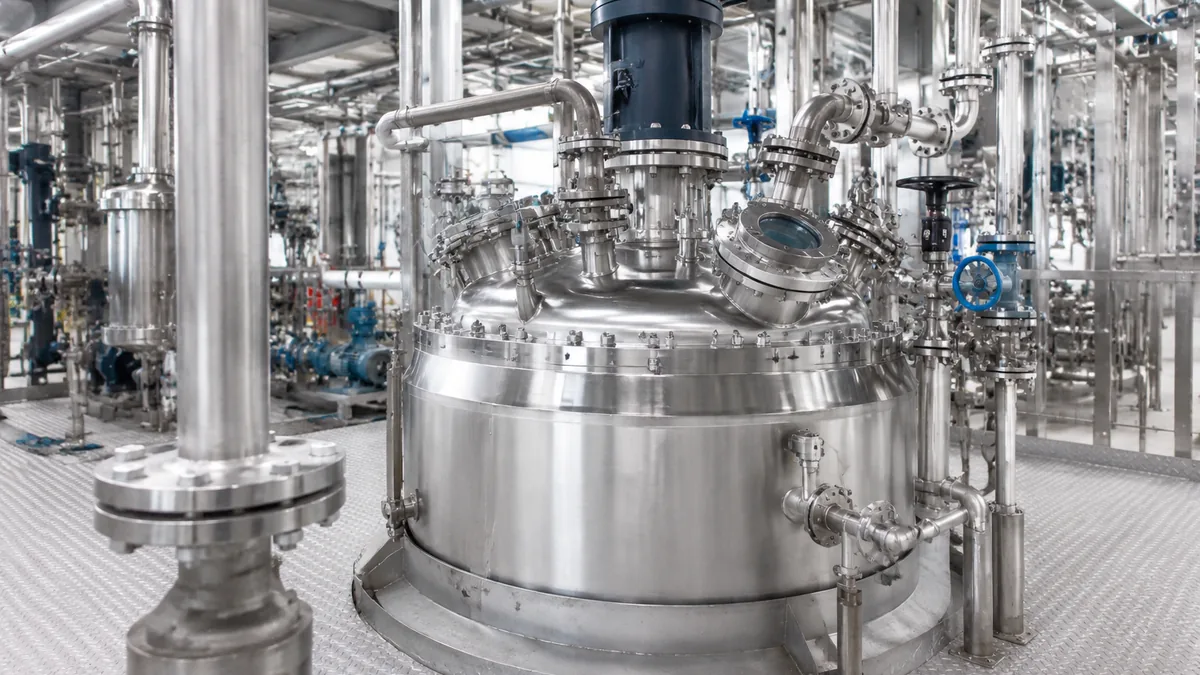
What drives 904L fastener price
We do not quote a generic price per kilogram or per piece for 904L fasteners, because the main drivers move with each list:
- Alloy surcharge - 904L carries far more nickel and molybdenum than 316L, and surcharges change with metal markets at the date of quotation
- Bar availability - common diameters may come from stock bar; odd sizes may need a minimum bar or melt quantity
- Manufacturing route - hot-forged heads versus machined-from-bar parts, rolled versus cut threads, and how many sizes share a set-up
- Quantity per size - a long list of small quantities costs more per piece than a few sizes in volume
- Testing and documents - PMI on every piece, corrosion tests, third-party witness and EN 10204 3.2 add cost and time
- Packing and freight - small, heavy cases to Gulf, North African or SEA ports
Compare quotes only after these fields match line by line.
Common Buyer Mistakes
- Writing “904L bolts to ASTM A193 B8M” - B8M is a 316 grade, so the line contradicts itself
- Asking for “A4-80 in 904L” - 1.4539 is not a standardized ISO 3506 grade, so the class needs a separate agreement
- Ordering 904L studs with 316 or carbon steel nuts, creating mixed-material joints on acid duty
- Leaving out the bar standard edition, so one supplier quotes B649 bar and another A479 bar with different documents
- Accepting an MTC for the bar heat with no traceability to the finished, threaded parts
- Upgrading every bolt in the plant to 904L when only wetted and splash-zone tags justify it - and missing the hotter tags that need more than 904L
How this page divides work
| Page | Owns |
|---|---|
| This blog | 904L fastener RFQ for phosphoric acid / fertilizer plants |
/blog/stainless-steel-chemical-processing-grade-rfq/ |
Plant-wide grade screening by process data sheet |
/stainless-steel-grades/904l/ |
904L chemistry, equivalents, mechanical data |
/compare/904l-vs-316l/ |
General 904L vs 316L grade difference |
/applications/chemical-processing/ |
Chemical-processing application overview |
/contact/ |
RFQ send |
Common pitfalls in 904L fastener RFQs
Common RFQ gaps on phosphate and fertilizer plant enquiries include: a spreadsheet that says only “904L bolts” with an A193 grade copied from a 316 order; stud lengths are given without flange class; threads are left blank on metric-and-inch mixed plants; the MTC covers bar but not the finished parts; and PMI is requested only after goods arrive at the port. Freezing alloy, bar standard and edition, part standard, thread, mechanical basis, EN 10204 3.1 and PMI before price comparison removes most of that rework. Sizes and lead times stay to be confirmed on the quote - this page does not invent stock lists, prices or corrosion data. For the wider chemical-processing context, start from the industry industry applications index and open the chemical-processing page.
Sources and application limits
This guide supports purchasing decisions. The ordered product standard, project specification and approved inspection plan control the final decision.
- ASTM A193/A193M austenitic bolting grade list (B8, B8M, B8MLCuN = UNS S31254, B8ML4CuN = UNS S31726) - no N08904 grade; confirm edition on the PO
- ASTM F593 / F594 alloy groups 1-7 (304/316/321/347/430/410/431/630 families) - N08904 is not an F593 group
- ISO 3506-1:2020 lists 1.4539 among highly alloyed austenitic steels outside the standardized A1-A8 grade/property-class combinations
- ASTM B649 / ASME SB649 and ASTM A479/A479M with A484/A484M as candidate UNS N08904 bar standards - the edition on the PO decides which applies
- EN 10088-3 for 1.4539 bar and EN 10204 inspection document types commonly requested on Gulf and Southeast Asia shipments
- Published wet-process phosphoric acid alloy-selection literature (Outokumpu, VDM/NACE conference papers) on the effect of chloride, fluoride, sulfuric acid, temperature and abrasion on 316L, 904L, alloy 28/31 and super duplex
Technical content updated: Nov 3, 2026
Frequently Asked Questions
Why are 904L fasteners used in phosphoric acid plants?
904L (UNS N08904 / EN 1.4539) adds nickel, molybdenum and copper over 316L, which widens its margin in sulfuric acid and in many wet-process phosphoric acid streams that carry sulfate, chloride and fluoride impurities. Plants use it for bolts, studs and nuts on tags where 316 bolting has corroded but the owner basis does not yet require a higher alloy. It is a tag decision based on acid analysis and temperature, not a plant-wide default.
Is there an ASTM A193 or F593 grade for 904L bolts?
No. ASTM A193 austenitic grades such as B8M or B8MLCuN cover other alloys (B8MLCuN is UNS S31254), and ASTM F593 groups cover 304, 316, 321/347, 430, 410, 431 and 630 families. ISO 3506-1 also lists 1.4539 outside its standardized grade and property-class combinations. A 904L fastener RFQ therefore names the material standard for the bar, the dimensional and thread standards, and the agreed mechanical and test requirements separately.
When should a phosphoric acid fastener move beyond 904L?
When the owner corrosion basis shows hotter acid, higher chloride or free fluoride, more sulfuric acid excess, or abrasive slurry that 904L does not tolerate on that tag. Published plant data commonly points to alloy 28, alloy 31, super duplex or nickel alloys in those positions. The process engineer chooses the alloy; the RFQ should simply state it and its standard.
What drives the price of 904L phosphoric acid fasteners?
Nickel and molybdenum surcharges at the time of quotation, the bar size route and minimum melt or bar quantity, whether parts are hot forged or machined from bar, thread rolling versus cutting, quantity per size, testing scope (PMI, corrosion tests, third-party witness), document type such as EN 10204 3.1 or 3.2, and export packing. Ask for a quote on your exact list rather than a generic per-kilogram number.
Send the product form, grade and quantity from this guide. We quote the matching stainless route.
Ready to quote your stainless specification?
Send product, grade and quantity. We quote the confirmed supply route.